
New IW study maps daseinsvorsorge across nearly 11,000 German municipalities
New IW assessment measures daseinsvorsorge across nearly 11,000 German municipalities, highlighting local gaps in transport, broadband and health services nationwide.
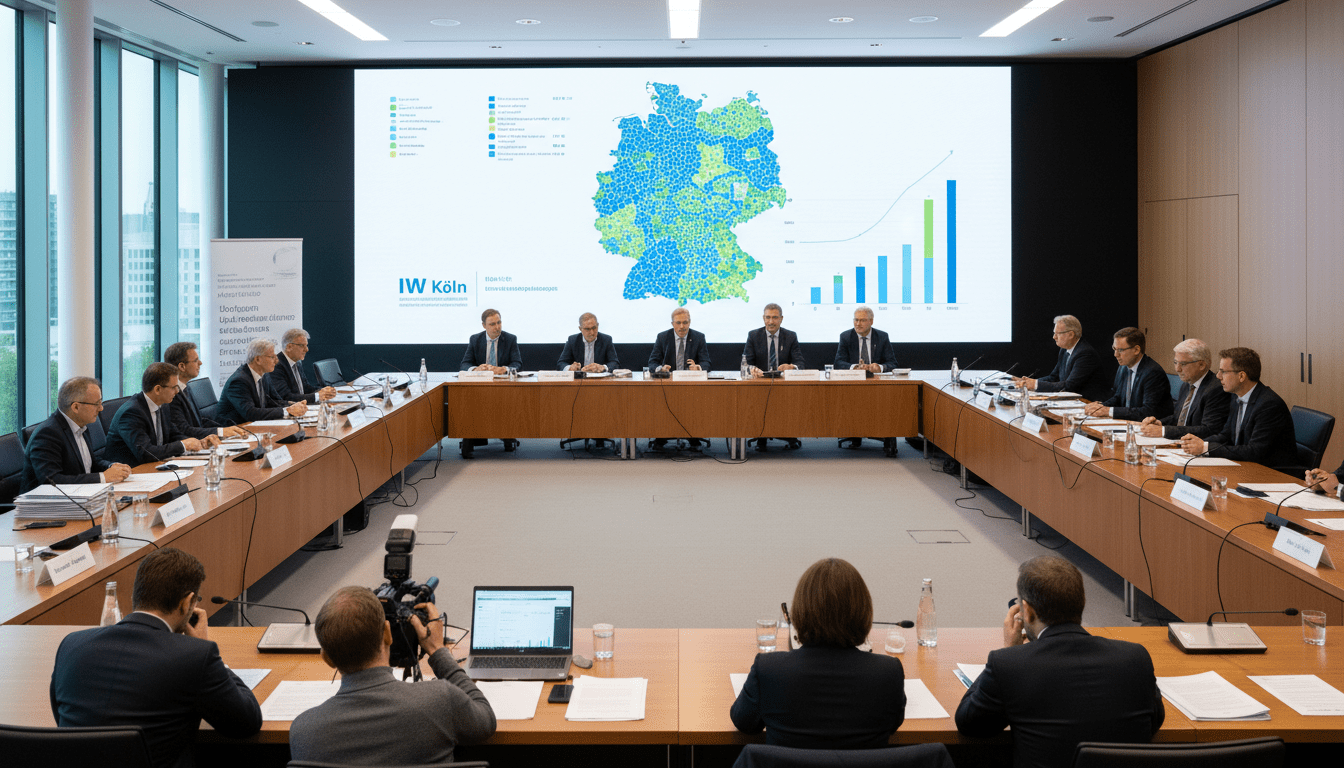
Germany’s Institut der deutschen Wirtschaft (IW) has produced the first comprehensive municipal-level measurement of daseinsvorsorge, assessing how well local public services function across almost 11,000 communities. The report, seen in advance by DIE ZEIT and presented with detailed graphics, evaluates access to core services and reveals surprising patterns that challenge assumptions about urban advantage. Policymakers, municipal leaders and planners are expected to use the findings to target investments and redesign local service delivery.
IW compiles first municipal-level daseinsvorsorge index
The IW’s assessment represents the first time daseinsvorsorge has been measured systematically at the scale of nearly every German municipality. The institute combined multiple indicators to create a comparative view of local service provision, aiming to show where residents can access essential services near their homes. According to the previewed material, the index covers areas such as mobility, digital connectivity, health provision and basic infrastructure.
The scale of the dataset allows comparisons not only between cities and rural areas, but between small towns with similar populations that show markedly different service profiles. IW researchers say the granular approach can illuminate local strengths and deficits that remain hidden in regional or state-level statistics.
Smaller towns can outscore larger cities on local services
One of the headline findings is counterintuitive: living in a major city is not a prerequisite for comprehensive local public services. The IW data show examples of smaller municipalities that achieve high scores for daseinsvorsorge by maintaining reliable public transport links, accessible health facilities and robust broadband. Conversely, some suburban and peri-urban areas with rapid population growth lag behind in aspects of service delivery.
This pattern suggests that proximity to metropolitan centers does not automatically translate into better everyday access to services for residents. The results point to the importance of local planning decisions, the presence of public investment, and the configuration of service networks in shaping outcomes.
Transport, broadband and healthcare emerge as focal gaps
The analysis highlights persistent shortfalls in three domains frequently cited by residents: public transport, high-speed internet and primary healthcare access. Municipalities with lower scores often report sparse bus and train services, limited broadband penetration, and long travel times to doctors and clinics. These deficits can compound, reducing mobility, economic opportunity and quality of life for people who cannot easily travel to larger centers.
IW’s work does not rank every municipality in public order; rather, it identifies clusters of need and strength that can guide targeted interventions. Where transport links are weak, for example, the study flags options such as demand-responsive services and coordination with regional networks.
Implications for regional planning and funding decisions
The new municipal-level measurements provide actionable intelligence for federal, state and local policymakers tasked with allocating funds and designing programs. By pinpointing which municipalities lack specific services, the data can help prioritize investment in broadband rollouts, clinic placements or mobility subsidies. The IW’s index may also inform future conditional funding schemes that tie support to demonstrable improvements in daseinsvorsorge.
Officials responsible for spatial planning and social infrastructure may use the findings to reevaluate zoning, public procurement and partnerships with private providers. The report underscores that effective local governance and strategic coordination across levels of government remain central to improving service access.
How municipalities and stakeholders are expected to respond
Municipal leaders are likely to scrutinize their local profiles in the IW index and to press for targeted resources where deficits are shown. Local councils may seek to publish their own action plans, citing the study to mobilize state or federal support. Civil-society organizations and regional associations could use the data to campaign for reforms and for investment in areas that most directly affect residents’ daily lives.
At the same time, experts caution that improving daseinsvorsorge often requires multi-year commitments and cross-jurisdictional cooperation. Immediate political responses may focus on high-visibility projects, but sustainable change will depend on consistent planning and better integration between transport, health and digital infrastructure.
DIE ZEIT visualizes the results ahead of public release
DIE ZEIT obtained the IW results ahead of a wider public release and published graphical representations that make the differences between municipalities readily apparent. The visualizations support local accountability by enabling residents and officials to compare service provision against neighboring communities. The preview has already sparked debate about which metrics matter most and how best to interpret composite indices when designing policy responses.
Observers say transparent, map-based reporting can be a potent tool to spur action, but they also warn against simplistic conclusions based on single scores. The study’s value will depend on how its findings are contextualized and translated into concrete measures.
The IW’s municipal-level assessment of daseinsvorsorge opens a new chapter in how Germany measures and manages local service provision, offering a detailed starting point for targeted investment, policy reform and local engagement.
