
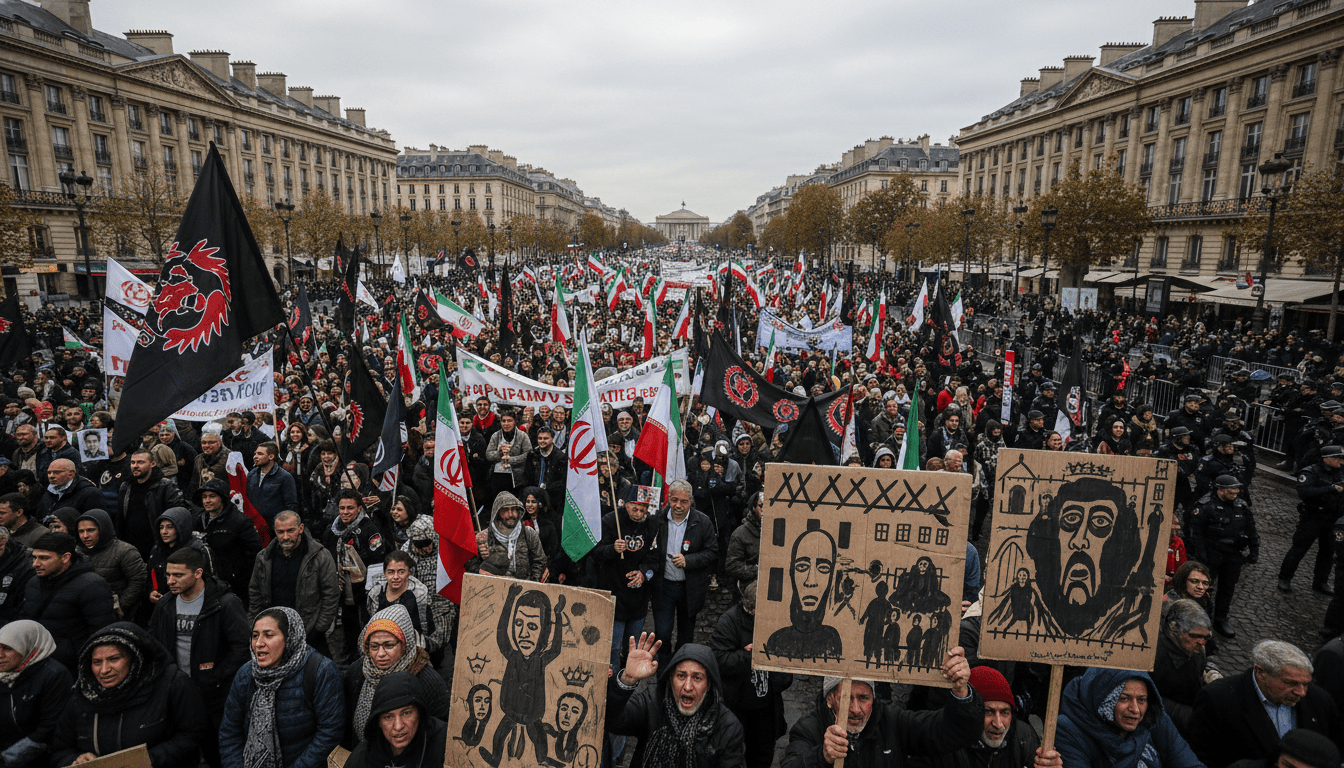
Supporters of Iran’s ex-shah stage European marches carrying Savak flags
Monarchist demonstrators in London, Copenhagen and Regensburg paraded in military-style formations carrying Savak symbols, reviving survivors’ memories of torture and prompting calls for scrutiny.
Supporters of Reza Pahlavi, the son of Iran’s deposed shah, have in recent weeks staged coordinated demonstrations across several European cities that prominently displayed Savak insignia and military-style dress. The displays, which included a black-clad parade in London on April 26 and a khaki-uniform march in Copenhagen on May 9, carried large portraits of Pahlavi and slogans calling for the return of the monarchy and continued attacks on the Islamic Republic. The use of the Savak emblem — associated with the shah’s infamous intelligence service — has rekindled painful memories for those who suffered under the pre-1979 regime and raised alarms among human rights advocates.
Savak imagery resurfaces in European demonstrations
Participants in the recent marches adopted organized formations, folded-arm postures and balaclavas in some instances, echoing military parades rather than civil protest. Organisers led processions with flags and T-shirts bearing the Savak symbol, while attendees chanted monarchist slogans and held banners showing Reza Pahlavi. Organisers said the events aimed to mobilise support for Pahlavi and signal resistance to Iran’s current government, but witnesses reported clashes with other diaspora groups at mixed demonstrations.
Survivors and victims recall Savak’s abuses
For many Iranians who lived through the shah’s rule, the Savak name remains synonymous with arbitrary arrests, enforced disappearances, torture and extrajudicial killings. International human rights organisations documented widespread abuses by the agency in the 1970s, describing interrogation practices and targeted reprisals against dissidents. Former political prisoners and relatives of those executed by Savak have said the public display of its emblem is not nostalgia but a painful reminder of personal loss and trauma.
Younger Iranians respond with ridicule and alarm
Responses within the Iranian diaspora are divided by generation. Younger Iranians born after the 1979 revolution often dismissed the marches as absurd or self-defeating, describing the imagery as out of step with contemporary aspirations for reform and freedom. Older generations, however, expressed deep alarm, arguing that the spectacle trivialises a history of repression and risks normalising symbols of state violence to a public that may not understand their meaning.
Opposition activists warn of intimidation and strategic aims
Long-time exiled activists say the displays serve multiple tactical aims beyond rallying monarchist supporters. According to opposition figures, the parades seek to intimidate rival opposition groups in the diaspora, recruit politically inexperienced youth by romanticising pre-revolutionary imagery, and court sympathy from far-right actors in Europe. Observers noted that the marches have coincided with heightened tensions surrounding the Israel–Iran hostilities and vocal endorsement from some monarchist leaders of strikes on Iranian targets, amplifying controversy.
Historical precedents and the evolution of monarchist movements
The emergence of public monarchist demonstrations abroad sits against a longer history of pro-shah groups that ranged from nationalist militias to state-backed intelligence operations. Savak itself was established in the late 1950s with foreign assistance and became a central instrument of political surveillance and repression. Scholars and former detainees point to earlier movements in the mid-20th century that embraced authoritarian and extremist strains, warning that nostalgia for authoritarian order can resurface under new political alignments.
Calls grow for oversight from rights groups and host countries
Human rights advocates and some members of the Iranian diaspora are urging European authorities and civil society organisations to assess these demonstrations in context, balancing protections for free expression with the need to confront public displays that glorify or rehabilitate tools of repression. Survivors and campaigners argue for clearer responses from watchdogs and for community-led education about the history of Savak to prevent the sanitisation of its record. Several activists also called on diaspora organisations to safeguard pluralistic debate and ensure protests do not intimidate vulnerable participants.
The reappearance of Savak symbolism on European streets has jolted a wide cross-section of Iranians and rights observers, forcing renewed public debate about memory, political legitimacy and the limits of protest in exile. Whatever the organisers’ intentions, the marches have underscored a deep generational divide within the diaspora and revived unresolved questions about how democracies should respond when painful historical symbols are displayed in contemporary political contests.
