
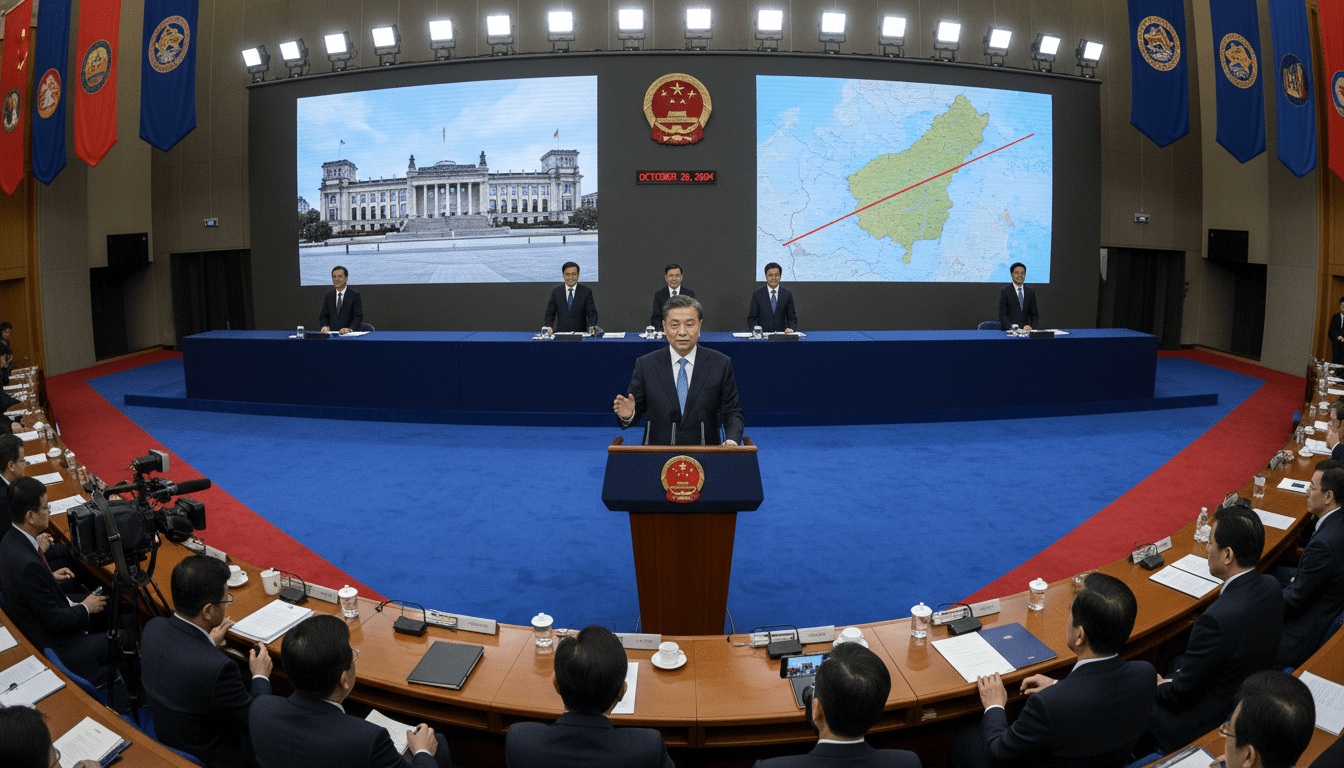
China Condemns German Bundestag Delegation’s Visit to Taiwan
China criticizes Bundestag delegation visit to Taiwan as Beijing warns against official contacts that it says undermine the One-China principle.
China’s Foreign Ministry Voices Strong Objection
China’s foreign ministry spokesperson publicly rebuked the Bundestag delegation visit to Taiwan, reiterating that Beijing opposes any official exchanges between its diplomatic partners and the island. The spokesperson said such trips send “wrong signals” to forces pushing for formal independence and urged the German parliamentarians to adhere to the One-China principle.
The statement frames Taiwan as part of China’s territory and reiterates Beijing’s long-standing policy against official contacts that could be construed as recognition of Taiwanese sovereignty. Chinese officials called on the German delegates to cease activities they view as legitimizing separatist tendencies.
Berlin Emphasizes Separate Diplomatic Practice
The German government maintains that it recognizes the People’s Republic of China diplomatically while preserving substantive ties with Taiwan, a balance that has guided its approach for years. Berlin’s policy differentiates between formal diplomatic recognition and practical cooperation, allowing trade, cultural exchange, and parliamentary contacts to continue.
German officials have previously defended such ties as consistent with international practice and necessary for economic and security interests. The Bundestag’s role in parliamentary diplomacy is often cited by Berlin as distinct from executive-level foreign policy.
Delegation Meets Taiwan Leadership to Deepen Cooperation
A five-member Bundestag delegation arrived in Taipei over the weekend with a stated aim to expand cooperation across political and economic lines. During the trip, members of the delegation were scheduled to meet Taiwan’s president, signaling a high-profile engagement at the island’s executive level.
Delegates described the visit as part of long-term relations and focused on areas such as trade, technology, and democratic exchange. Organizers emphasized that the mission was parliamentary in nature and intended to reaffirm existing partnerships rather than to alter formal diplomatic stances.
Parliamentary Friendship Group Pushes Back on Beijing
The chairman of the parliamentary friendship group linking Berlin and Taipei urged China to refrain from interference and defended the delegation’s right to maintain bilateral ties. He argued that Germany and Taiwan have longstanding, stable relations that both sides seek to preserve and deepen.
Members of the friendship group framed the visit as an effort to strengthen cooperation on practical matters, not as a challenge to Beijing’s position. The parliamentary back-and-forth highlights the routine tension between legislative diplomacy and executive foreign-policy signaling in Berlin.
Beijing Warns of Broader Message to Taipei’s Politics
China’s criticism emphasized concern that visits by foreign officials could embolden pro-independence elements in Taiwan and complicate cross-strait stability. Beijing’s messaging linked the delegation’s actions to a broader narrative about foreign interference in what it considers an internal matter.
Analysts say such public rebukes are part of Beijing’s diplomatic toolkit to deter other countries from official interaction with Taipei. The response also underscores how parliamentary-level engagements can prompt disproportionate political reactions in sensitive geopolitical flashpoints.
Implications for Germany-China and Cross-Strait Relations
The episode exposes a persistent diplomatic calculus for Berlin as it balances economic ties with Beijing and democratic exchange with Taipei. Germany’s extensive trade relationship with China and growing technological cooperation with Taiwan create competing imperatives for policymakers.
Observers expect careful diplomatic language from Berlin in the coming days to manage tensions while affirming parliamentary autonomy. How both governments frame subsequent communications will influence whether the incident becomes an episodic rebuke or a source of longer-term strain.
Germany’s partners in the European Union and beyond will also be watching the fallout, as similar visits have elicited comparable reactions from Beijing elsewhere. The interplay between parliamentary diplomacy and executive foreign policy continues to test the contours of international engagement with Taiwan.
The delegation’s meetings in Taipei proceed amid heightened sensitivities, and officials in Berlin and Beijing will likely calibrate statements to avoid escalation while defending core positions. The outcome of this visit may shape how future parliamentary trips are conducted and how governments communicate their boundaries on Taiwan-related interactions.
