
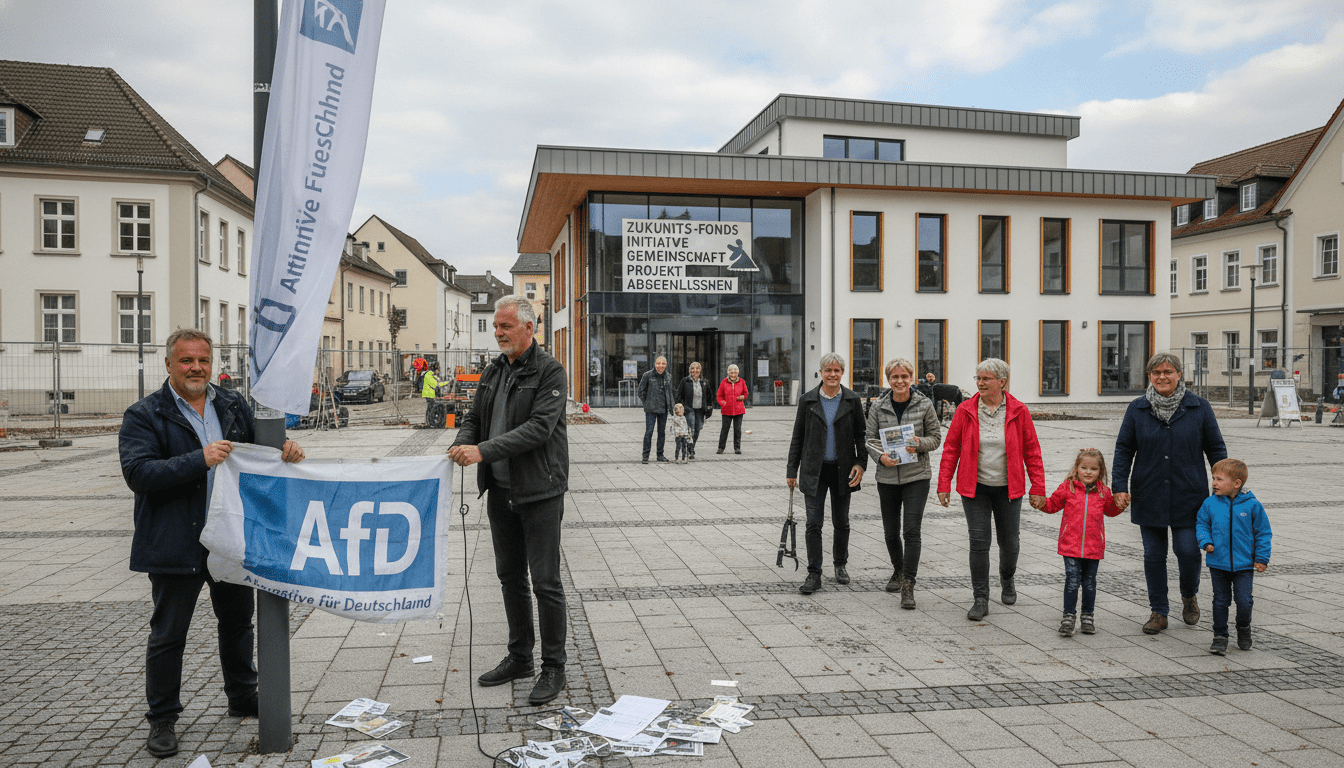
Regional funding can dampen AfD support, study finds
Study shows targeted regional funding reduces AfD support in fragile German regions; visible investments like broadband and schools cut votes and rebuild trust.
A new multi‑institution study finds that targeted regional funding can reduce support for the Alternative for Germany (AfD) in economically fragile areas, offering a potential policy lever ahead of September state elections. The researchers analyzed German regional policy spending under the federal Gesamtes Fördersystem (GFS) and found that visible investments — particularly in infrastructure — correlate with measurable declines in AfD vote shares. The paper argues that regional funding, when appropriately allocated and noticed by local communities, can act as a stabilizing political force in regions facing industrial decline.
Study scope and headline finding
The research team, drawing scholars from Princeton, UC Davis, the University of Düsseldorf and the Bertelsmann Stiftung, examined GFS disbursements and election results to test whether public transfers alter voting behavior. They tracked about €637 million in GFS allocations from 2022 and compared electoral outcomes in counties across Lower Saxony, Bavaria and Hesse. Their headline result: in the most vulnerable areas, an additional €100 per capita in infrastructure funding is associated with roughly a one percentage‑point reduction in AfD vote share.
How the researchers measured effects
The authors used a difference‑in‑differences approach, matching counties that received relatively high GFS support to similar counties with lower receipts and then observing changes in party support. The GFS, created in 2020, bundles 20 federal regional programs ranging from broadband rolls to business subsidies and democratic participation measures. By isolating the timing and type of spending, the team sought to distinguish visible, place‑based investments from transfers that are less directly perceived by residents.
Where the impact is largest
Effects were strongest in regions where industrial employment remains significant but the future of those industries looks uncertain, including areas with higher carbon‑intensive activity. The study finds political responsiveness where economic foundations are visibly under stress: communities that face an expected decline in traditional sectors appear more sensitive to concrete investment signals. By contrast, the political impact was muted in economically stable, innovation‑rich counties where investments tend to flow anyway.
Which investments change votes
Not all forms of regional funding produced the same political returns. Projects with immediate, tangible benefits — faster broadband, new vocational schools, upgraded roads or new commercial zones — were most effective at reducing support for the AfD. Investments that residents could readily see and attribute to government action served as credible signals that the state was addressing local decline. The authors report no stable political effect for firm‑level investment subsidies that the public perceives only indirectly.
Policy trade‑offs and limitations
The study cautions that the observed relationship is conditional, not automatic. The dampening effect on far‑right support depends on the nature, visibility and timing of investments, and on local perceptions of whether the measures meaningfully change economic prospects. The researchers also note that channeling funds into regions already characterized by high innovation or university presence showed little political benefit, echoing concerns that one‑size‑fits‑all programs can miss their intended stabilizing role.
Context for upcoming elections
The findings arrive as the AfD polls strongly in several eastern German states ahead of September contests, feeding debate about how governments should respond in structurally weak areas. The paper references the scale of past structural policy in Germany — including the coal phase‑out package that directed tens of billions into former lignite regions — as an example of how fiscal measures can transform local infrastructure and institutions. Policymakers weighing similar measures now face choices about prioritization, visibility and messaging if they seek political as well as economic returns.
The study’s results suggest a pragmatic course: prioritize highly visible, place‑based investments in communities where industrial decline creates political vulnerability, monitor outcomes closely, and communicate the measures clearly so residents link projects to public action. Such an approach does not promise immediate political realignment, but the evidence indicates it can reduce the appeal of right‑wing populists where perceptions of abandonment are greatest.
