
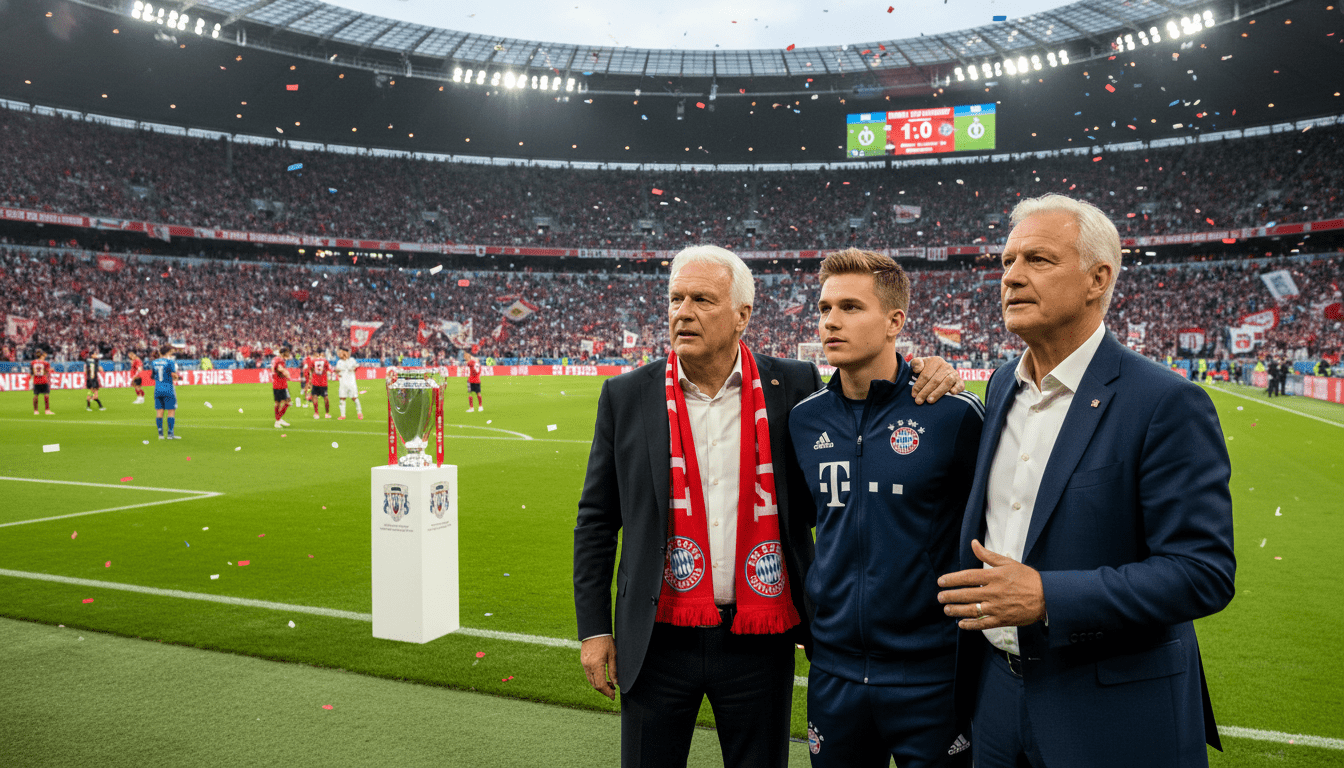
Hoeneß family at the DFB-Pokal final shines a spotlight on German football history
Hoeneß family presence at the DFB-Pokal final brings three generations together as Bayern Munich and VfB Stuttgart meet at the Olympiastadion in a match steeped in history and symbolism.
The DFB-Pokal final in Berlin on Saturday evening united competing teams and the Hoeneß family legacy under one roof. Sebastian Hoeneß, the 44-year-old coach of VfB Stuttgart, faced the club long shaped by his uncle Uli Hoeneß, now 74, whose influence on Bayern Munich is widely acknowledged. Dieter Hoeneß, 73, sat in the stands as father and advisor, completing a remarkable tableau that linked past and present in German football. The match became as much about family history and institutional memory as it was about the silverware on offer.
Family gathering at the Olympiastadion
The Olympiastadion in Berlin provided a visible stage for the Hoeneß reunion as supporters and cameras tracked the three figures across the terraces and technical areas. The meeting underscored how personal narratives still intersect with major fixtures in German football culture. Fans and commentators framed the final as a moment when family biography and club identity met in public view. The presence of Uli, Dieter and Sebastian added a human storyline to an otherwise routine cup final.
Sebastian Hoeneß and Stuttgart’s tactical plan
Sebastian Hoeneß has earned a reputation as one of the emerging coaches in the German game, praised for tactical flexibility and attention to player development. At VfB Stuttgart he has overseen a group that blends youth and experience, seeking to upset a Bayern side long accustomed to domestic dominance. His game plan for the final emphasized compact defending and quick transitions, reflecting a pragmatic approach to facing a more celebrated opponent. The match offered Sebastian an opportunity to define his own coaching legacy distinct from his family name.
Uli Hoeneß and the Bayern imprint
Uli Hoeneß’s influence on Bayern Munich spans decades and encompasses on-field success, commercial expansion and institutional consolidation. As an architect of the club’s modern structure, his tenure helped shape Bayern into a leading European force and a standard-bearer of German football. His presence at the final served as a reminder of the long arc of leadership that continues to affect matches and rivalries today. Observers noted how the Hoeneß name remains closely associated with Bayern’s identity and ambitions.
Dieter Hoeneß the player and advisor
Dieter Hoeneß’s career bridged playing and management roles, and his relationship with both clubs adds further texture to the Berlin meeting. A former striker who later moved into executive positions at VfB Stuttgart and in Berlin, he has advised his son Sebastian while drawing on a long personal history with the game. One of his most vivid memories — a famously bandaged goal in a past cup final — has entered folklore and resurfaced in conversation around the match. As father and confidant, Dieter’s dual role highlighted the personal dimension behind professional decisions and tactical choices.
Cup final as a mirror of German football evolution
The encounter in Berlin functioned as a microcosm of broader trends in German football, where family dynasties, club governance and the commercialization of the sport intersect. The Hoeneß family’s footprint illustrates how individual actors can shape institutional trajectories across generations. At the same time, the tactical and organizational choices on display reflected the sport’s ongoing shift toward data-informed decision making and youth integration. The DFB-Pokal final thus offered both a sporting contest and a moment to reflect on continuity and change within the national game.
Hoeneß remained a repeated reference in post-match commentary, not only as a name but as a symbol of interwoven loyalties and legacies. The final’s outcome will join the Hoeneß story as another chapter, but the evening in Berlin reaffirmed how personal histories continue to animate major fixtures. For supporters of both clubs, the match underlined that German football’s past and present are often bound together by the same families, decisions and memories.
