
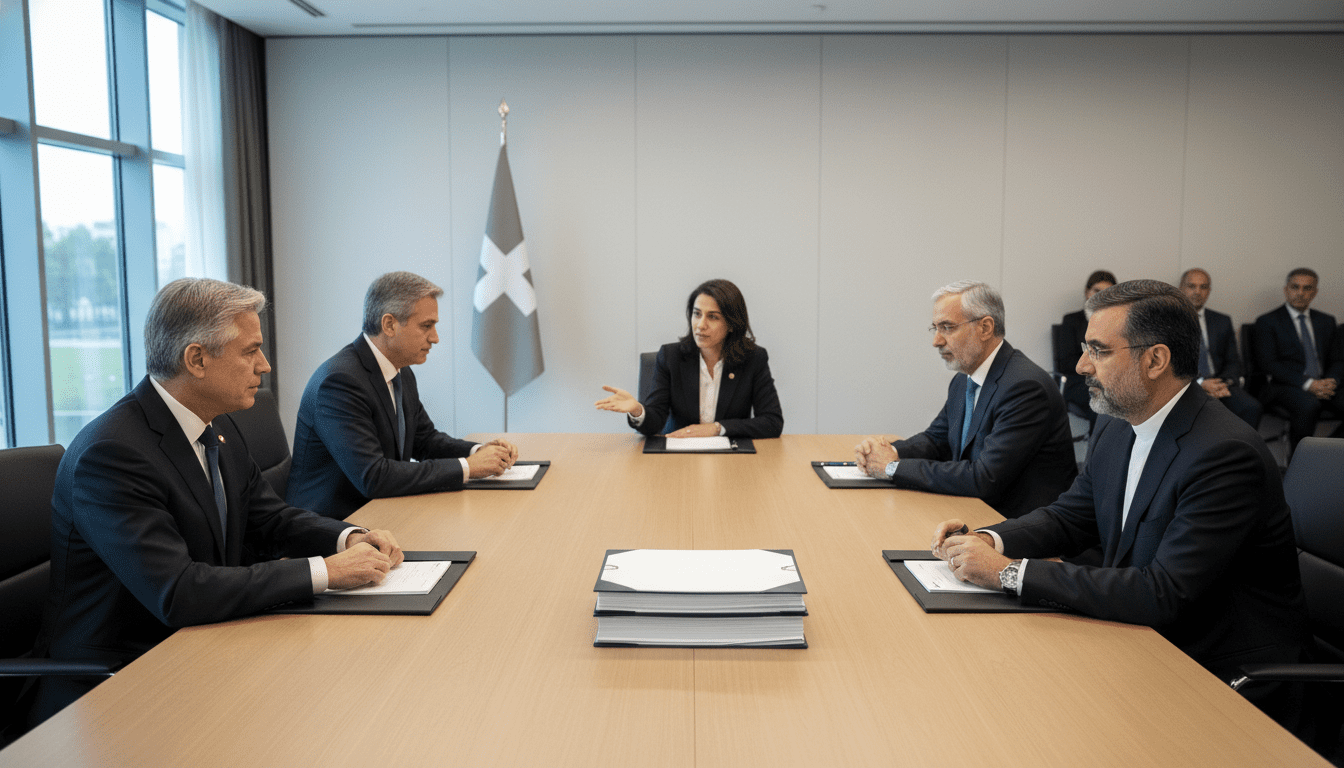
US-Iran mediated talks advance as both sides exchange draft proposals in Tehran
US-Iran mediated talks continue as both sides exchange draft proposals; Pakistani mediators and shifting US military posture shape prospects for an agreement.
Iran and the United States continued US-Iran mediated talks on May 22, 2026, with officials saying messages and draft texts were being exchanged as negotiators sought a formal framework to halt hostilities. The discussions, held through third-party channels in Tehran, coincided with intensified mediation efforts by Pakistani officials and public comments from senior US diplomats. Both capitals stressed a desire to avoid further escalation, even as national leaders signalled different timelines and options.
Draft proposals exchanged in mediated talks
Both sides circulated draft proposals aimed at creating a formal agreement to end the conflict, according to participants briefed on the exchanges. Iranian state media reported that the texts were being refined in parallel with shuttle diplomacy, and one Iranian source said negotiators were “close” to agreed language while cautioning that a final deal had not been reached.
US Secretary of State Marco Rubio described the talks as showing “some good signs,” while the White House reiterated that diplomacy was preferred but that other options remained on the table. The competing public messages underscored how fragile progress remained even as mediators intensified their efforts in Tehran.
Damage to Iran’s public health infrastructure and civilian toll
The talks are unfolding against reports of significant damage to Iran’s health and civilian infrastructure, which Iranian authorities and international observers have highlighted. Medical journals warned that attacks on research facilities had severely affected the Pasteur Institute of Iran, prompting Tehran to call the strike a “war crime” and raising concerns about longer-term public health impacts.
Humanitarian agencies reported large numbers of rescued civilians amid extensive destruction. The Iranian Red Crescent said its teams had extracted thousands of people from rubble, releasing footage of survivors pulled from collapsed buildings that officials said underscored the conflict’s heavy toll on non-combatants.
Diplomatic pressure and shifting nuclear ‘red lines’
Analysts and practitioners said advancing a deal would require both sides to recalibrate entrenched “red lines” on Tehran’s nuclear activities and security demands. Doug Bandow of the Cato Institute told reporters that negotiations would have to move beyond rigid positions on uranium stockpiles and oversight if a sustainable cessation of hostilities is to be reached.
At the same time, US political leaders stressed conditionality. President Donald Trump warned that Washington could take “very drastic” action if Iran did not agree to constraints on its nuclear material, signaling that any agreement would need enforceable mechanisms to satisfy US security demands.
US military posture and reported equipment losses
While diplomacy continued, US forces maintained a high state of readiness in the region as a deterrent and bargaining backdrop. CENTCOM said the USS Abraham Lincoln strike group remained at “peak readiness” in the Arabian Sea and released images of carrier-based aircraft operations as the United States kept pressure on Tehran during talks.
The military posture has been costly: media reports indicated Iran had destroyed more than two dozen MQ-9 Reaper drones since the conflict began, losses Bloomberg estimated at roughly $1 billion and about 20 percent of the Pentagon’s pre-conflict inventory. Washington also announced a pause in a $14 billion arms sale to Taiwan to preserve munitions for the campaign, a decision met with concern from some US lawmakers.
Regional spillover in Lebanon and Palestine complicates negotiations
The wider region continued to feel the conflict’s reverberations, with cross-border strikes and sanctions adding complexity to diplomatic efforts. Israeli forces said an air raid near the Lebanon-Israel frontier killed two people amid heightened activity along the border, and the United States imposed sanctions on individuals it accused of supporting Hezbollah’s destabilizing activities.
Humanitarian advocates warned that civilians in Gaza and the West Bank were suffering amid blockades and attacks, and Palestinian officials appealed for an end to measures they described as collective punishment. Washington urged that detainees from a recent attempt to breach the Gaza blockade be treated humanely, while reiterating its opposition to the flotilla effort.
The outcome of the US-Iran mediated talks will depend on whether negotiators can convert draft texts into binding commitments that address security, nuclear verification and humanitarian concerns. As foreign intermediaries press both sides to bridge remaining gaps, the balance between continued military readiness and diplomatic engagement will likely determine whether a fragile truce holds or whether the conflict re-escalates.
