
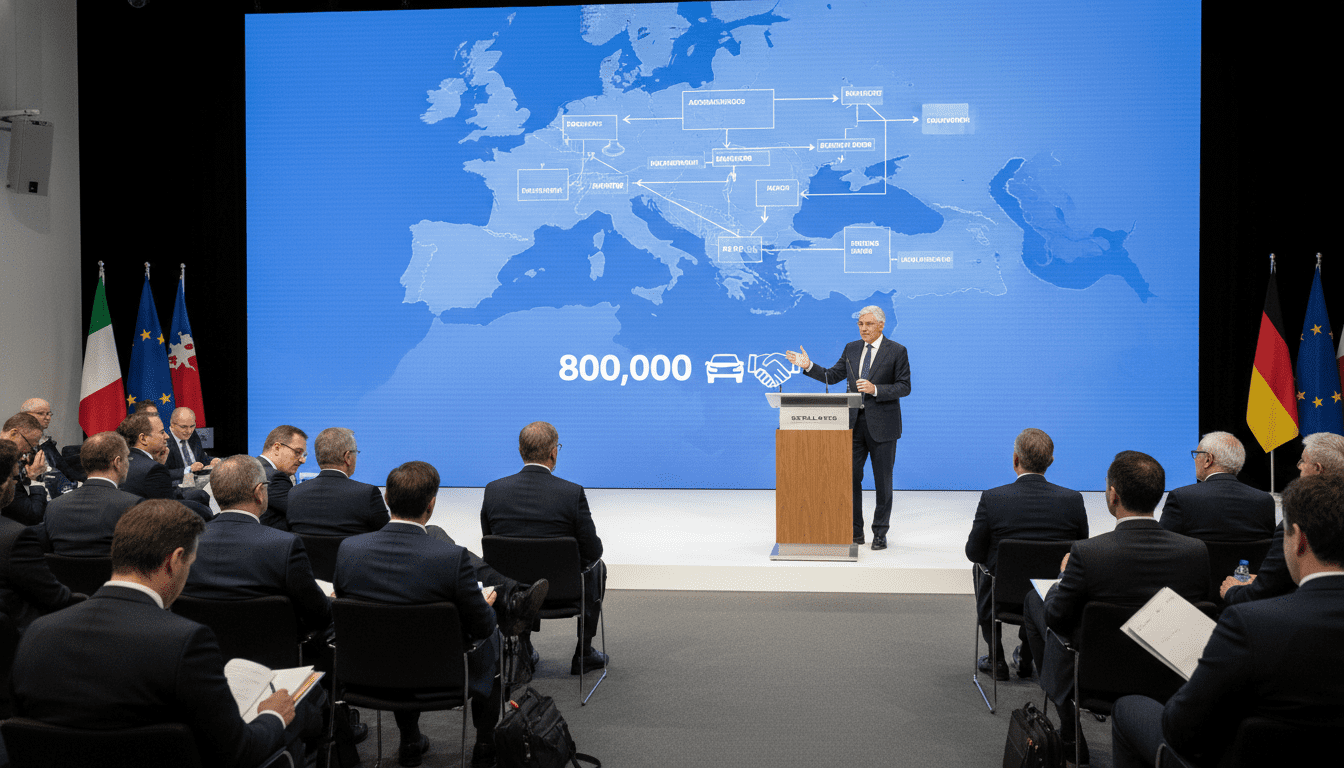
Stellantis to cut 800,000 annual own-brand cars in Europe, repurpose plants for third-party production
Stellantis will cut annual own-brand output in Europe by 800,000 vehicles and repurpose plants for third-party makers; unveils €60bn investment, shares slide.
Stellantis announces major shift in European production
Stellantis said at an investor day in Auburn Hills that it will reassign European manufacturing capacity, reducing annual output of its own brands by about 800,000 vehicles. The company signalled the freed capacity will be made available to outside automakers and partners, part of a wider strategic repositioning across its European footprint. The plan is intended to raise plant utilisation and reshape brand focus while advancing a €60 billion investment programme.
Factory utilisation to rise as output mix changes
Stellantis plans to raise factory utilisation rates from roughly 60 percent to about 80 percent by allocating lines to production for third-party marques. Management framed the move as an efficiency measure that should keep plants busier while lowering unit costs for the group. Executives said the shift would not simply idle factories but change the mix of vehicles built in Europe to reflect new commercial arrangements.
Targeted plants and international partners named
The company indicated specific sites that will see changes, including operations in Poissy and collaborative production in Rennes, Madrid and Saragossa. Stellantis also highlighted planned cooperation with Asian partners such as Leapmotor, Dongfeng and Tata as part of the reallocation strategy. Several German plants were not named in the disclosures, suggesting the reorganisation will be concentrated on selected European hubs.
Investment plan and model roadmap unveiled
Chief executive Antonio Filosa outlined a five‑year investment envelope of €60 billion aimed at restoring competitiveness versus peers. About 70 percent of that spending will focus on four core global brands — Jeep, Ram, Peugeot and Fiat — while Opel will be grouped with regional marques such as Chrysler, Dodge, Alfa Romeo and Citroën. Filosa also announced a product slate that includes 60 new models and 50 facelifts, 29 of which will be battery‑electric vehicles.
Financial targets and cost‑cutting measures
Stellantis set operating margin goals of 3–5 percent for Europe and 8–10 percent for North America by 2030, and said a European savings programme should reduce annual costs by roughly €6 billion versus last year by 2028. Management framed the measures as necessary to reverse a deep 2025 loss of €22.3 billion that stemmed largely from large impairments. The group emphasised the need to prioritise investment in higher‑return brands and technologies to improve profitability.
Markets and analysts express scepticism
The market reacted unfavourably to the announcement, with the company’s stock in Milan sliding more than 7 percent intraday after the investor presentation. Analysts said the targets are ambitious and may take years to deliver, with Jefferies’ Philippe Houchois warning that the timeline leaves substantial execution risk. John Elkann, chairman and heir to the family that controls the group, acknowledged the turnaround would not happen overnight and urged patience from investors.
Wider industry pressures and strategic context
Stellantis’s move comes amid broader turmoil across the auto sector, where legacy manufacturers are wrestling with slowing demand and heavy costs tied to electrification and restructuring. Several automakers have announced factory cuts or capacity reductions recently as competition intensifies and regional market dynamics shift. By offering capacity to third parties and partnering with Asian manufacturers, Stellantis is betting it can monetise excess space while accelerating its own transition.
The company’s roadmap combines a concentrated brand strategy with a willingness to serve outside customers, a commercial pivot that will reshape production patterns across Europe and test the effectiveness of cross‑border partnerships in the years ahead.
