
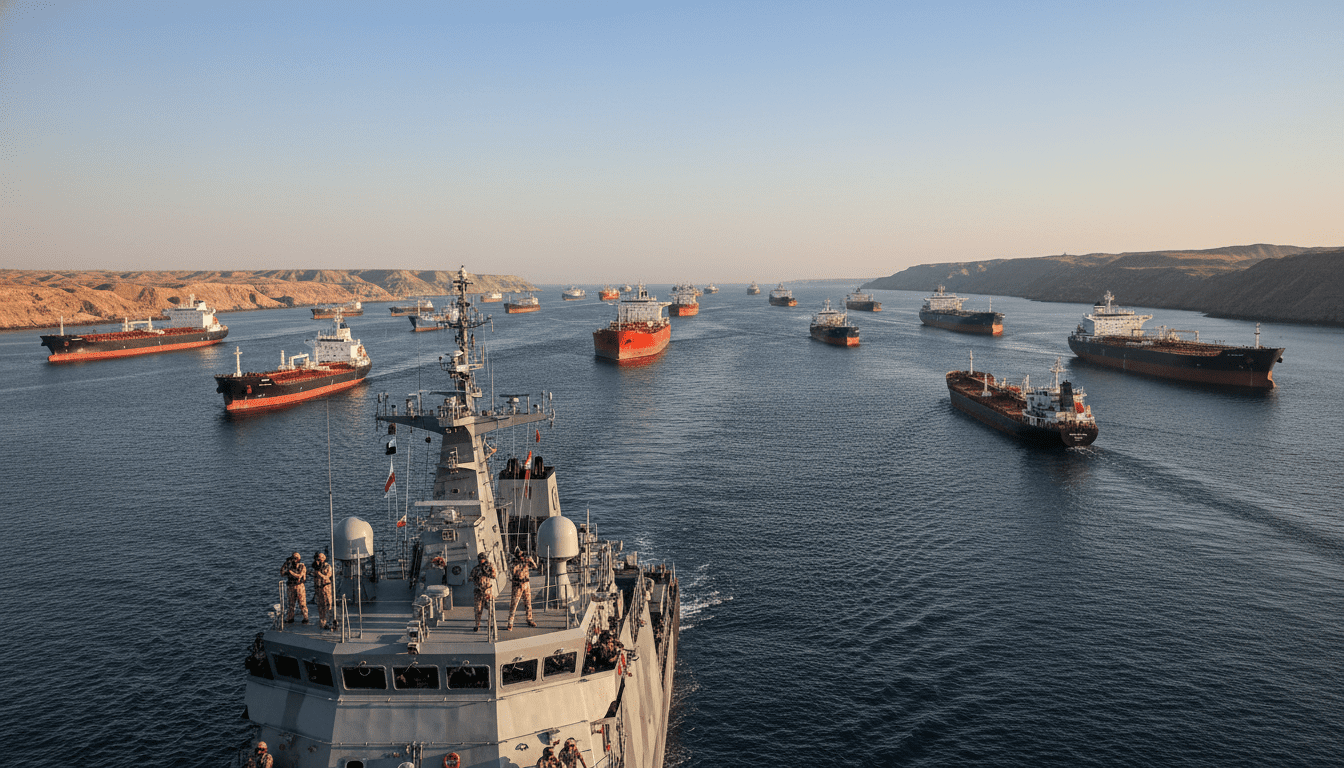
IRGC Says 26 Ships Crossed Strait of Hormuz in Last 24 Hours
IRGC says 26 ships, including oil tankers and container vessels, crossed the Strait of Hormuz in the last 24 hours, underscoring the waterway’s strategic role.
The Islamic Revolutionary Guard Corps (IRGC) reported that it permitted 26 ships to transit the Strait of Hormuz during the most recent 24-hour period, a corridor vital to regional commerce and energy shipments. The IRGC statement said the convoy included oil tankers, container ships and other commercial vessels, and framed the movement as routine maritime traffic under its supervision. The announcement provides a contemporaneous account of activity in one of the world’s most sensitive maritime chokepoints.
IRGC report details the transit numbers
The IRGC released the figure as part of routine operational communications, saying 26 ships were allowed passage through the strait in the last 24 hours. It identified the vessels broadly by type, noting the presence of oil tankers, container carriers and general commercial traffic. The statement did not specify the nationalities of the ships or the exact times of individual transits.
Vessel types and commercial nature of the movement
According to the IRGC, oil tankers and container ships made up a significant portion of the movements, reflecting the strait’s role in global trade and energy supply chains. The corps described the traffic as commercial rather than military, signaling continued use of these sea lanes for freight and energy transport. No immediate reports accompanied the announcement indicating incidents or interdictions during the transit window.
Strategic significance of the Strait of Hormuz
The Strait of Hormuz sits at the entrance to the Persian Gulf and is a crucial route for ships bound for major Gulf ports and global markets. Movements through the strait routinely attract scrutiny because disruptions can affect shipping schedules and energy markets. Control and monitoring of passages in the area remain a focal point for regional authorities and international maritime agencies.
Regional security context and naval activity
The strait has been the scene of heightened military presence and periodic tensions among regional and international navies in past years, factors that shape how transits are observed and reported. Nations with strategic interests in the Gulf maintain patrols and monitoring capabilities to ensure safe passage for commercial shipping. Announcements by regional security forces like the IRGC are often read by foreign navies and shipping operators as indicators of local conditions.
Potential implications for shipping and energy markets
Regular commercial transits, including oil tankers, are closely watched by market participants because they can influence perceptions of supply stability. While a single 24-hour snapshot does not typically alter market dynamics on its own, clustered reports of restricted or diverted traffic can reverberate through shipping insurance rates and freight schedules. Shipping companies, charterers, and energy traders monitor such updates to adjust logistics and risk assessments.
Monitoring, transparency and international responses
Maritime authorities, shipping operators and insurers rely on multiple sources for situational awareness, including local military communiqués and independent tracking services. Clear reporting on the number and type of vessels helps international actors assess whether traffic is proceeding normally or if interventions are occurring. The IRGC’s disclosure contributes to that mosaic of information, though independent confirmation of vessel identities and cargos generally comes from commercial tracking and port authorities.
The IRGC’s announcement that 26 ships transited the Strait of Hormuz in the last 24 hours underscores ongoing commercial use of a strategically critical waterway while highlighting the continuing role of regional security forces in monitoring maritime movements. Shipping firms and international observers will continue to track such reports for signs of escalation or disruption.
