
Experts say Germany emissions projections underestimate 2030 output, risking large CO₂ budget overshoot
Experts say Germany emissions projections underestimate 2030 greenhouse-gas output by up to 100 million tonnes, urging an immediate overhaul of climate policy.
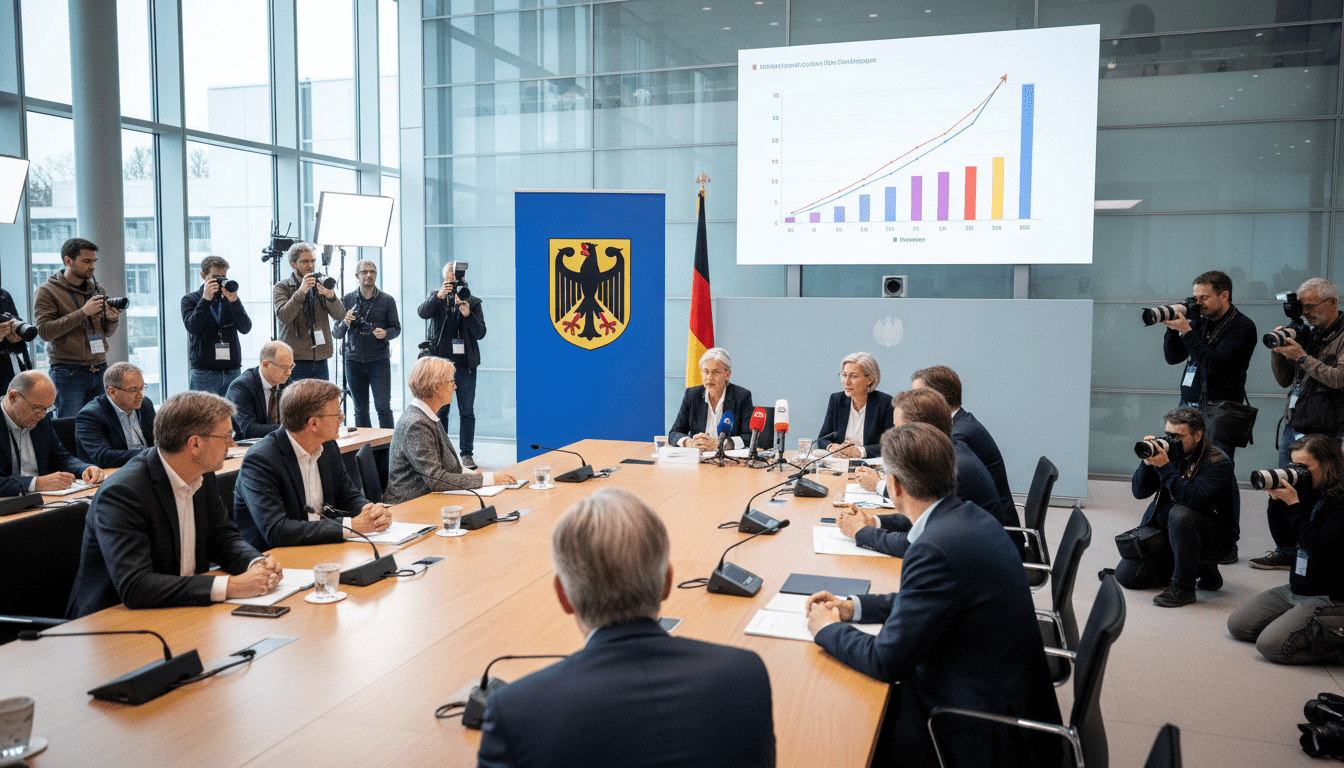
Germany’s independent Expert Council on Climate has concluded that Germany emissions projections published by the Federal Environment Agency (UBA) understate likely greenhouse-gas output through 2030, creating a significant risk of breaching legally binding CO₂ budgets. The council’s review finds that optimistic assumptions in the UBA’s modeling — particularly for the building and energy sectors — leave little room for meeting statutory targets even with the government’s recent climate package. The critique raises the prospect of further legal challenges and demands a rapid reassessment of national planning.
Expert council finds UBA projections underestimate 2030 emissions
The council’s technical review of UBA’s projection dataset for 2026–2050 concludes the agency’s scenario underestimates emissions in the years up to 2030. Where UBA reported a narrow compliance margin, the experts say that margin evaporates once more realistic assumptions are applied. The gap highlights differences in assumptions about policy effects, technology roll-out and energy-sector trends.
CO₂ budget may be exceeded by 60–100 million tonnes
According to the council’s calculations, the shortfall could translate into an overshoot of the national CO₂ budget by roughly 60 to 100 million tonnes of CO₂-equivalent through 2030. That volume is equivalent to around one to two months of Germany’s total national emissions and would reverse any modest progress expected in the near term. The UBA had previously estimated a small buffer of 4.5 million tonnes, a figure the experts now consider far too optimistic.
Buildings and energy sectors flagged for optimistic assumptions
A central source of discrepancy lies in the projected emissions reductions in buildings and the energy industry. The council says UBA’s forecasts assume faster heat-pump uptake, more rapid replacement of fossil heating systems and higher renovation rates than are currently realistic. In the energy sector, the experts point to overly sanguine assumptions on CO₂ price trajectories, the relative cost gap between coal and gas, and the pace of renewable capacity additions, including wind capacity factors onshore and offshore.
Legal and European compliance risks grow
The council warns that underestimation of emissions carries legal and financial risks for Germany at both national and EU levels. Since 2024 Germany has begun missing the EU effort-sharing targets, and the council estimates nearly 260 million tonnes of excess emissions could accumulate by 2030 if trends continue. That exposure may force the state either into infringement proceedings or to purchase emissions allocations from other member states, creating a potential fiscal burden for taxpayers.
Land use sector and peatlands fail to pull their weight
Beyond energy and buildings, the report highlights land use, land-use change and forestry (LULUCF) as a growing problem area that undermines national plans. Instead of acting as a net sink, the sector is projected to remain a source of greenhouse gases through 2050 under current measures, largely because drained and degraded peatlands continue to emit substantial carbon. The experts welcome policy interest in paludiculture — the rewetting and productive use of peatlands — but say proposed measures are far too limited to change the sector’s trajectory.
Experts urge revision of Schneider’s climate programme
The Expert Council is explicit in recommending a revision of the government’s climate programme, saying the existing package rests on assumptions that overstate mitigation effects. Even if all 67 measures in the current plan were fully implemented, the council judges that the reductions achieved would likely fall short of the statutory paths to 2040 and 2045. The panel’s chair warned that the program’s real-world impact will probably be significantly smaller than governmental estimates.
The council’s findings also have a statutory trigger: if the independent panel determines twice in succession that the national emissions budget has been exceeded, the government is legally obliged to adopt an emergency package within three months unless it can demonstrate that a new, compliant climate programme is already in place. The experts note this threshold could be reached in the coming year if corrective action is not taken.
The appraisal adds to mounting pressure on the government after earlier court rulings that the state’s climate plans were inadequate, and it places a fresh spotlight on the assumptions underpinning national policy. With both legal and fiscal consequences possible, the council’s call for revised projections and more robust measures is likely to become a focal point of political debate in Berlin in the months ahead.
