
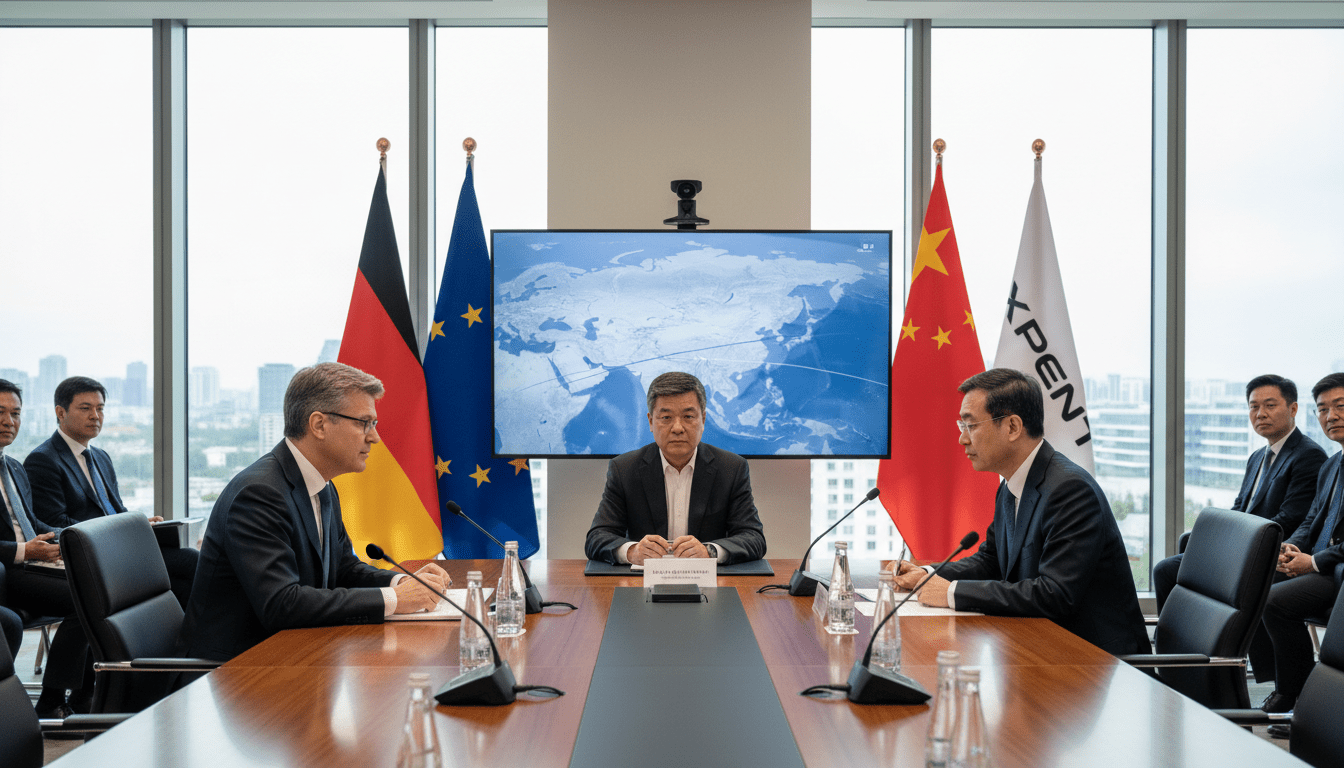
VW Unyx 08 headline-grabber sparks renewed push for China–Europe production deals
VW Unyx 08: China-made electric SUV combines 800‑volt fast charging and automated driving, renewing debate over partnerships to build Chinese models in European factories.
The VW Unyx 08 has arrived in China with a futuristic design and technology that has impressed European motor journalists, and the model’s capabilities have intensified discussions about whether Chinese-developed electric cars could be produced in European factories. The keyword VW Unyx 08 appears as the vehicle that embodies the new dynamic between Volkswagen and Chinese manufacturers, bringing advanced 800‑volt charging and sophisticated driver assistance to a more affordable segment. The launch highlights both technological convergence and political and industrial questions about production, market access and jobs in Germany and beyond.
Design and technology that surprised reviewers
The Unyx 08 presents a spaceship‑inspired exterior and a roomy interior, while under its hood it uses a technical platform supplied by Volkswagen’s Chinese partner. Test drivers praised its automated driving functions for feeling calm and capable, and reviewers noted charging performance thanks to 800‑volt architecture normally reserved for premium models within the VW Group. That combination of accessible packaging and high‑end systems has made the Unyx 08 a talking point among European car writers and industry watchers.
Platform and partnership: Xpeng’s engineering at the core
Technically, the Unyx 08 is a product of co‑development with Xpeng, which supplied the underlying platform and much of the high‑voltage powertrain architecture. The car wears the VW badge but relies on “high‑tech from China for China,” underscoring how joint ventures now mix design, branding and component sourcing across continents. For Volkswagen this model illustrates the trade‑off between leveraging fast, cost‑effective Chinese development and preserving elements of German engineering identity.
Europeans now weighing production alliances
Although the Unyx 08 is not scheduled for a European launch today, its capabilities have sharpened debate about whether similar co‑produced models could be built on European soil. Executives and politicians have begun to consider production alliances that would use underutilized plants in places such as Emden, Zwickau or elsewhere to assemble cars in Europe. Advocates argue this would speed the arrival of affordable electric vehicles while improving factory utilization amid overcapacity.
Political pressure and regional calculations in Germany
German regional leaders have entered the conversation, arguing that targeted cooperation could preserve jobs and keep factories running. Officials from states with large Volkswagen stakes have publicly suggested integrating Chinese partners into local production as a pragmatic response to shrinking volumes and the costly alternative of plant closures. Those proposals reflect a shift from outright protectionism toward selective engagement aimed at safeguarding regional employment.
Unions, works councils and analysts voice caution
Worker representatives and unions have reacted cautiously. Company works councils have emphasized the need to retain German design and engineering roles, warning that partnerships must not hollow out local know‑how. Analysts likewise point to risks: beyond competitive tensions, there are concerns about transferring sensitive technologies and about Chinese partners becoming direct competitors within Europe. For many stakeholders the central question remains how to balance short‑term industrial relief with long‑term strategic autonomy.
Existing templates and the lure of tariff avoidance
Several recent alliances provide a template for faster development cycles and local assembly. One major European manufacturer is already co‑developing an electric SUV with a Chinese partner, planning production in Spain under a compressed timetable. For Chinese firms, assembling cars in Europe offers a way to accelerate market access and, in some cases, to sidestep EU import tariffs imposed in 2024. That economic incentive makes joint ventures attractive to both sides, though it raises competitive and regulatory complexities.
Europe’s carmakers face a pivotal choice between resisting a wave of well‑priced Chinese models or embracing partnerships that could secure factories and speed product rollouts. The VW Unyx 08 has become emblematic of that dilemma: a vehicle that combines competitive technology with a development model tied firmly to China. Whether such models will be built in German plants or largely remain China‑bound depends on political decisions, labour agreements and commercial calculations that are still unfolding.
As Volkswagen weighs “intelligent solutions” for its idled capacity and other firms push ahead with co‑development programs, the industry is watching to see if cooperation with Chinese manufacturers will become a broader strategy to preserve jobs and competitiveness in Europe. The coming months will determine whether the Unyx 08 remains a China‑only curiosity or the herald of a new era of China–Europe production partnerships.
