
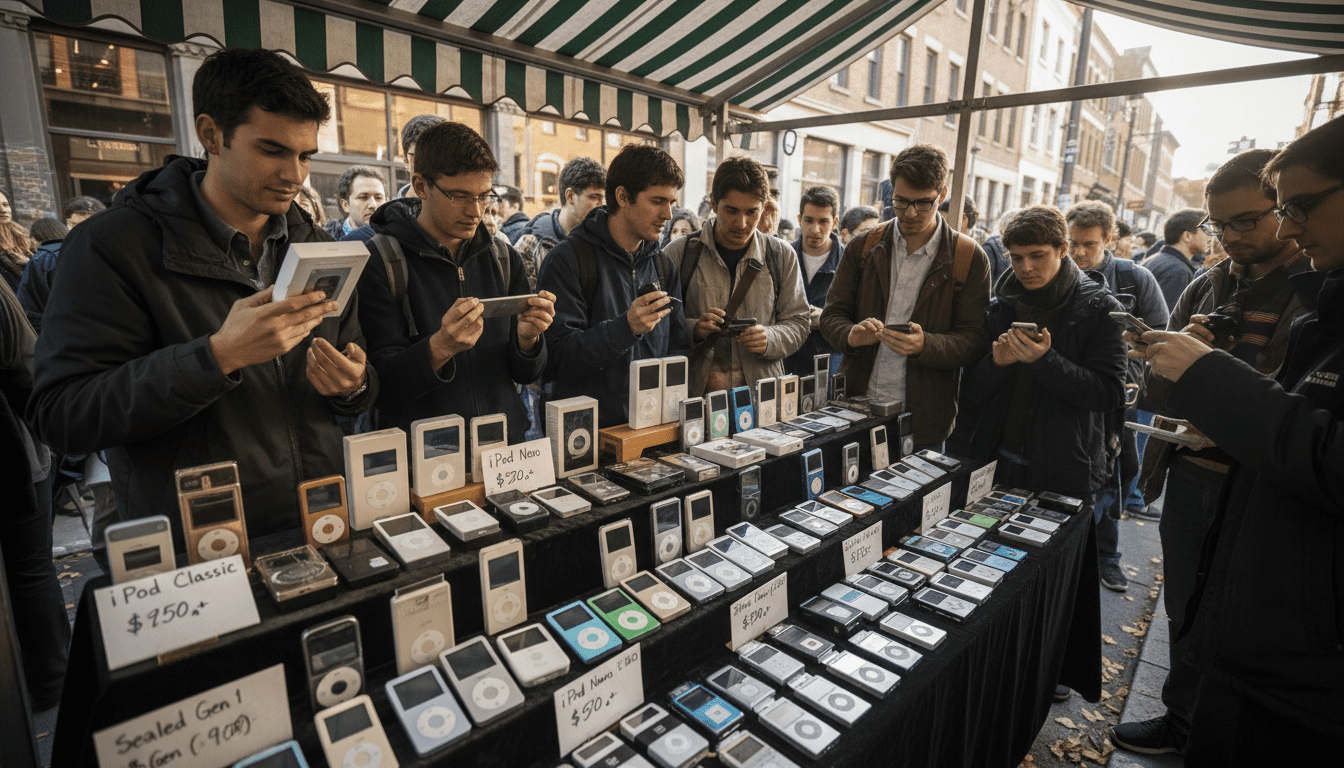
iPod Resurgence: Nostalgia and School Rules Fuel Renewed Demand for Apple’s Iconic Music Player
iPod demand climbs as collectors and students seek distraction-free music players; eBay reports surging searches and German resale prices rose to €80 in 2025.
Jobs introduces the iPod
In October 2001, Steve Jobs unveiled the iPod, promising a tiny device that could store up to 1,000 songs and change how people carried and played music. Priced at $399 at launch, the player was presented as a simple solution to the era’s portable-music limitations, replacing bulky CD collections with a pocket-sized library. Jobs framed the device as both a technical and cultural shift, forecasting it would become a major holiday gift and reshape listeners’ expectations.
iTunes and the 99‑cent download model
The iPod arrived as the music industry was grappling with online piracy and file-sharing services that had eroded traditional revenue models. Apple paired the hardware with iTunes and later a 99-cent single-download system that made digital purchases straightforward and legal for consumers. Making iTunes available on Windows in 2003 widened the iPod’s addressable market and turned what had been a niche Mac accessory into a mainstream product.
From niche player to mass phenomenon
Apple did not invent portable digital music, but the iPod’s capacity and minimalist design set it apart from earlier players that held only a few dozen tracks. The product line expanded rapidly: the iPod Mini, introduced in 2004, and subsequent Nano, Shuffle and Touch models broadened appeal with lower prices and varied form factors. At its peak in 2008, Apple sold about 55 million iPods in a year, and the device at times accounted for more than half of the company’s revenue.
iPhone emergence and the iPod’s decline
The launch of the iPhone in 2007 marked a turning point, offering music playback alongside mobile internet, apps and phone calls. Apple acknowledged the overlap, noting it was prepared to “cannibalize” its own product lines as multifunction devices supplanted single-purpose players. Over the next decade streaming services further reduced paid downloads’ relevance, and Apple gradually retired iPod models, ending production of the last iPod Touch in 2022.
Resurgence driven by nostalgia and distraction-free listening
Despite being out of Apple’s active catalog, the iPod has shown signs of renewed interest among buyers and collectors. Online marketplace data indicate a spike in searches and transactions, with eBay reporting that “iPod” ranked among the most-searched terms globally and that query volumes averaged more than 1,300 per hour at points last year. Resale prices on Germany’s platform rose from about €65 to over €80 between early and late 2025, suggesting both nostalgic demand and collectible value.
Practical reasons behind renewed interest
Sellers and refurbishers point to practical motives beyond nostalgia. Platforms such as Back Market say some consumers are turning back to single-purpose devices to avoid the constant notifications and distractions of modern smartphones. School policies banning or restricting smartphones have also created a niche for iPods as an acceptable way for students to listen to music during permitted times, increasing demand in younger cohorts.
Legacy and industry impact
The iPod’s influence extends beyond sales figures; it reshaped Apple’s strategy by showcasing the value of tightly integrated hardware, software and services. Former Apple engineers and managers have credited the iPod with creating the design and product-development pathways that led to the iPhone and iPad. Its white earbuds and compact form became cultural touchstones, and the device demonstrated how a well-executed ecosystem could revive and redirect an entire industry.
The recent uptick in iPod interest underscores how technology cycles can revive legacy devices for new practical and cultural uses. Whether the revival remains a niche driven by collectors, students and nostalgia, or evolves into a broader market trend, the iPod’s role in transforming music consumption is secure: a product that helped move the industry from physical media to digital ownership and, ultimately, to streaming and multifunction mobile devices.
