
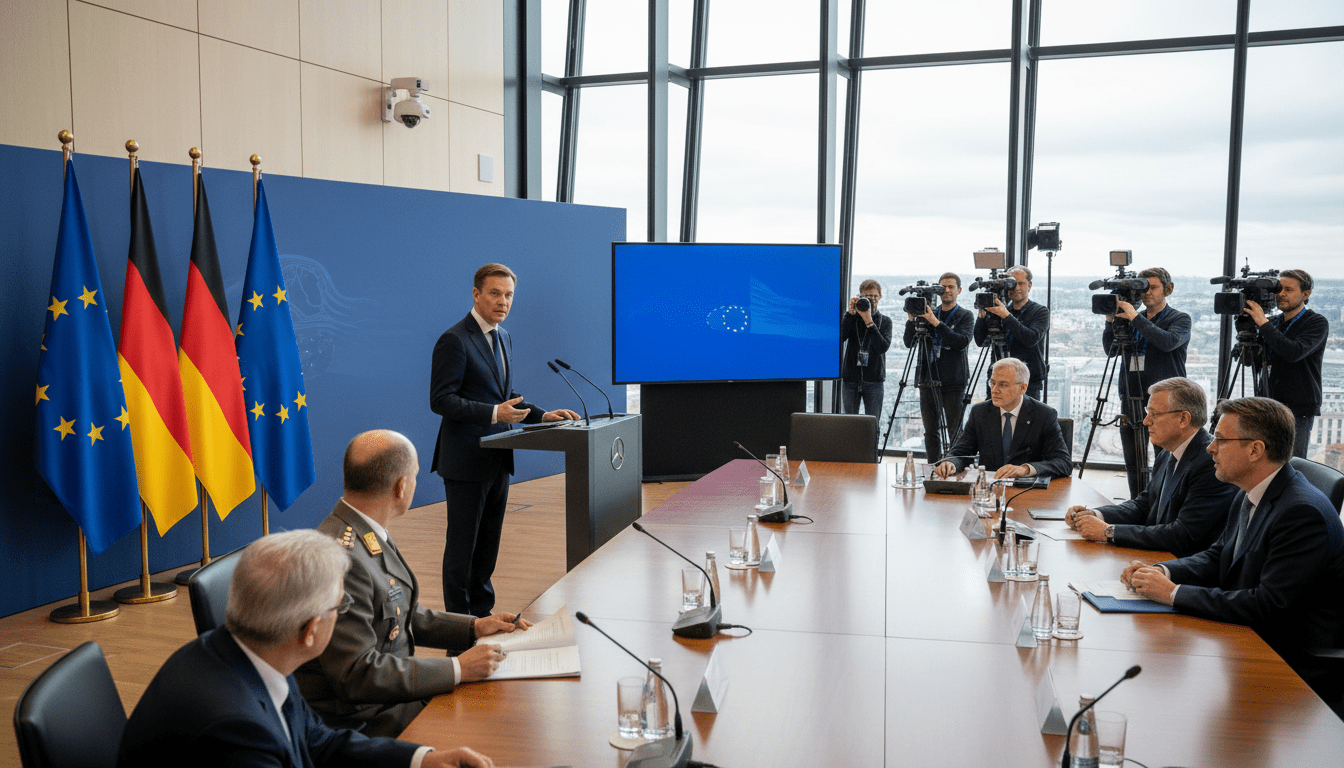
Mercedes-Benz Arms Production Eyed as Automaker Weighs Defense Manufacturing
Mercedes-Benz arms production is being considered by CEO Ola Källenius, who told The Wall Street Journal the company could play a role in bolstering Europe’s defense capabilities if the move is economically viable.
Mercedes-Benz is evaluating a potential entry into defense manufacturing, the company’s chief executive said in an interview with The Wall Street Journal. Ola Källenius framed the consideration as a response to what he described as a more unpredictable global security environment and growing calls in Europe to strengthen defence capacity. He emphasized any shift toward arms production would need to make economic sense and would represent only a limited addition to Mercedes‑Benz’s core automotive business.
Källenius frames defense work as strategic and conditional
Källenius told the newspaper that Europe must enhance its defensive readiness and that industrial contributions could form part of that effort. He said Mercedes‑Benz would be willing to participate if the work complemented the company’s capabilities and delivered viable returns. The CEO also signalled that any defence activity under consideration would be limited in scale relative to the automaker’s primary vehicle production.
Scope described as niche, not a strategic pivot
According to Källenius’s comments, potential defense contracts would likely remain a niche element of Mercedes‑Benz’s overall portfolio rather than a corporate strategic pivot. The company would focus on products and services that leverage its engineering, manufacturing and logistics experience rather than entering heavy weapons manufacturing. Mercedes‑Benz has not released an official policy document or procurement plan detailing which types of military systems it might build.
Industry context: Volkswagen and wider auto pivot discussions
Mercedes‑Benz’s statement follows similar signals from rival automakers earlier this year, notably Volkswagen, which has publicly considered producing military transport vehicles at its Osnabrück plant. Volkswagen’s leadership has stressed that the company would not move into making weapons or main battle tanks, a distinction that industry executives say would likely shape Mercedes‑Benz’s own deliberations. The parallel discussions reflect a broader reconsideration inside Europe’s auto sector about diversifying revenue streams amid shifting market pressures.
Economic pressures driving corporate interest in defense work
Germany’s carmakers have faced mounting economic headwinds, including tariff uncertainty, rising competition from Chinese manufacturers and uneven demand in key European markets. Executives point to those pressures as one reason to explore adjacent markets where demand is rising, such as defense and security systems. Company leaders have framed such moves as pragmatic responses to cyclical weakness in vehicle sales rather than ideological endorsements of militarisation.
Defense sector expansion and labour market signals
The defence industry’s growth has been evident in recent financial and hiring trends, with major suppliers reporting higher order books and profit forecasts. One leading German defence firm projected substantial revenue increases and has reported a surge in applications, underscoring a tight labour market in the sector. That dynamic has prompted probe-level interest from automakers seeking to redeploy manufacturing capacity and skilled staff into defence-related production lines.
Political sensitivity and procurement hurdles
Any move by a prominent consumer brand into arms production will attract political scrutiny in Germany and across the EU, where defence procurement rules and export controls complicate entry to the market. Policymakers and civil society groups are likely to press companies on transparency, end‑use guarantees and the kinds of military systems involved. Automotive boards must also weigh reputational and stakeholder risks, especially for a brand long associated with premium consumer vehicles.
A decision by Mercedes‑Benz to enter defence manufacturing would be closely watched across industry and government circles, given the company’s size and technical capabilities. Company executives have signalled caution, insisting that any engagement would be small relative to the automaker’s core business and contingent on clear economic justification. Observers say the next steps will likely include internal feasibility studies, regulatory assessments and consultations with defence customers before any public commitments are made.
