
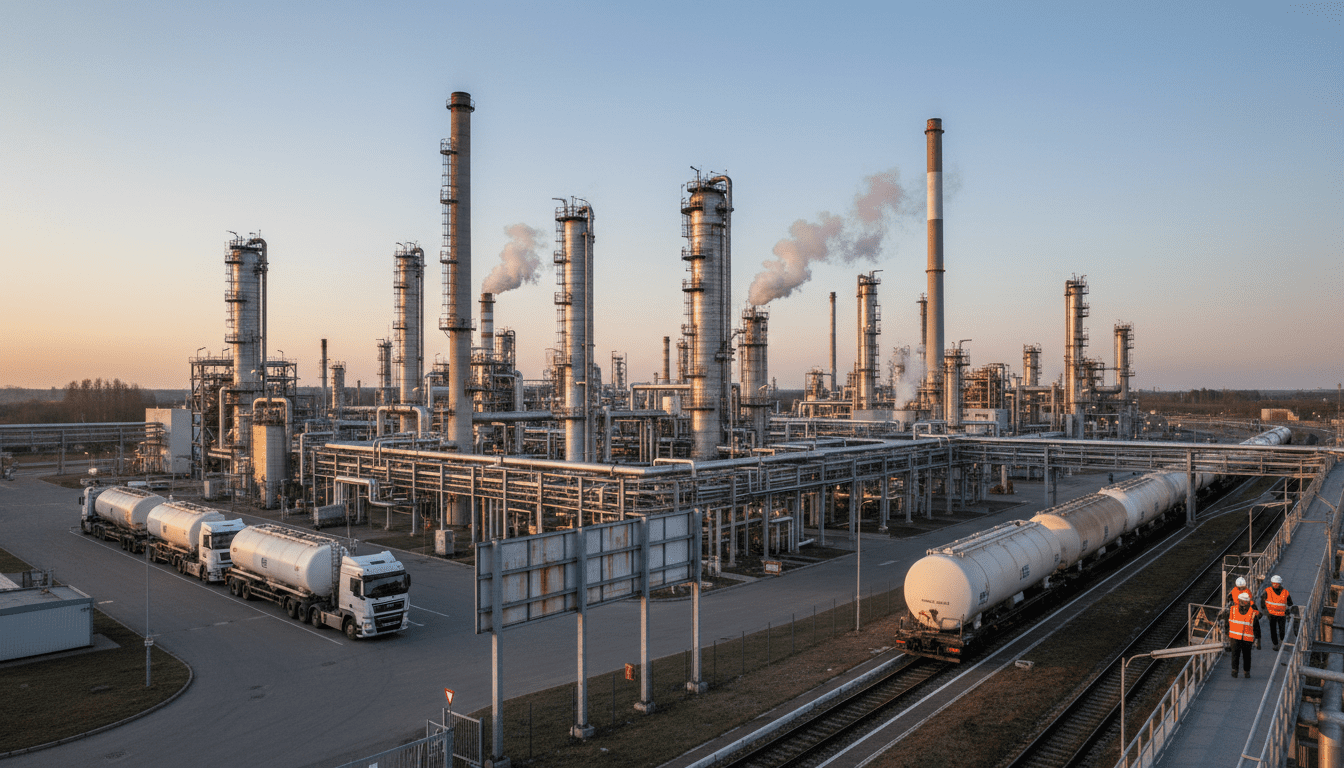
PCK refinery in Schwedt draws political focus as Katherina Reiche praises staff resilience
Germany’s PCK refinery in Schwedt, once owned by Rosneft, is operating under new arrangements after the 2022 Russian invasion, and Katherina Reiche emphasized its strategic role and staff resilience during a recent visit.
Katherina Reiche visited the PCK refinery in Schwedt this week and described a site functioning to supply kerosene, gasoline and chemical feedstocks for Germany. The visit underscored the refinery’s continued operation after it was separated from its Russian parent following Moscow’s 2022 invasion of Ukraine. Reiche’s remarks focused on the technical continuity at the plant and the morale of its workforce.
Reiche’s on-site observations
Reiche reported that refinery operations were running and that employees displayed optimism despite recent upheavals. She highlighted the plant’s capacity to produce aviation fuel and other essential products, stressing the importance of uninterrupted output for domestic supply chains. Her comments reflected a visit aimed at assessing both technical performance and staff conditions on the ground.
Legal and ownership transition after Rosneft
The refinery was formerly owned by Rosneft and was legally separated from the Russian parent after the 2022 invasion to prevent foreign control over critical infrastructure. That separation involved regulatory measures and transitional governance designed to keep the facility operating under German oversight. Local and national authorities have since monitored the site closely as ownership structures were reconfigured to secure energy supplies.
Role in Germany’s fuel and chemical supply
PCK’s production lines supply kerosene for aviation, gasoline for transportation, and base chemicals used by downstream industries, making the Schwedt site a strategic asset. Interruptions at the refinery would have ripple effects across logistics, airlines and chemical manufacturers, which is why political and industry observers regard its continuity as a national priority. The plant’s output therefore factors into broader discussions about energy security and industrial resilience in Germany.
Workforce resilience and local impact
Employees at the Schwedt refinery were described as “brave and optimistic,” reflecting a workforce adapting to new management and heightened scrutiny. The facility is a major local employer and its stability affects the regional economy, including supplier firms and municipal budgets. Reiche’s visit emphasized the human dimension of the transition, noting that preserving skilled jobs remains central to regional recovery and social cohesion.
Oversight, security and investment needs
With the refinery now operating under non-Russian arrangements, officials are weighing long-term security and investment plans to modernize infrastructure and reduce vulnerability. Measures under consideration include increased regulatory oversight, targeted capital improvements, and contingency planning for supply chain disruptions. Policymakers view sustained investment as necessary to ensure both environmental compliance and reliable production capacity.
Implications for energy policy and regional planning
The case of the Schwedt refinery has wider implications for Germany’s approach to energy independence and industrial policy. Ensuring domestic access to refined fuels and chemical precursors has become part of strategic planning that balances short-term operational stability with a longer-term shift toward diversification and decarbonization. Local leaders and national agencies are increasingly coordinating to align refinery operations with broader energy transition goals.
The visit by Katherina Reiche to the PCK refinery in Schwedt spotlighted a facility that continues to supply critical fuels and chemicals while navigating a complex ownership change, and it underscored both the operational challenges and the workforce resilience that will shape the site’s future.
