
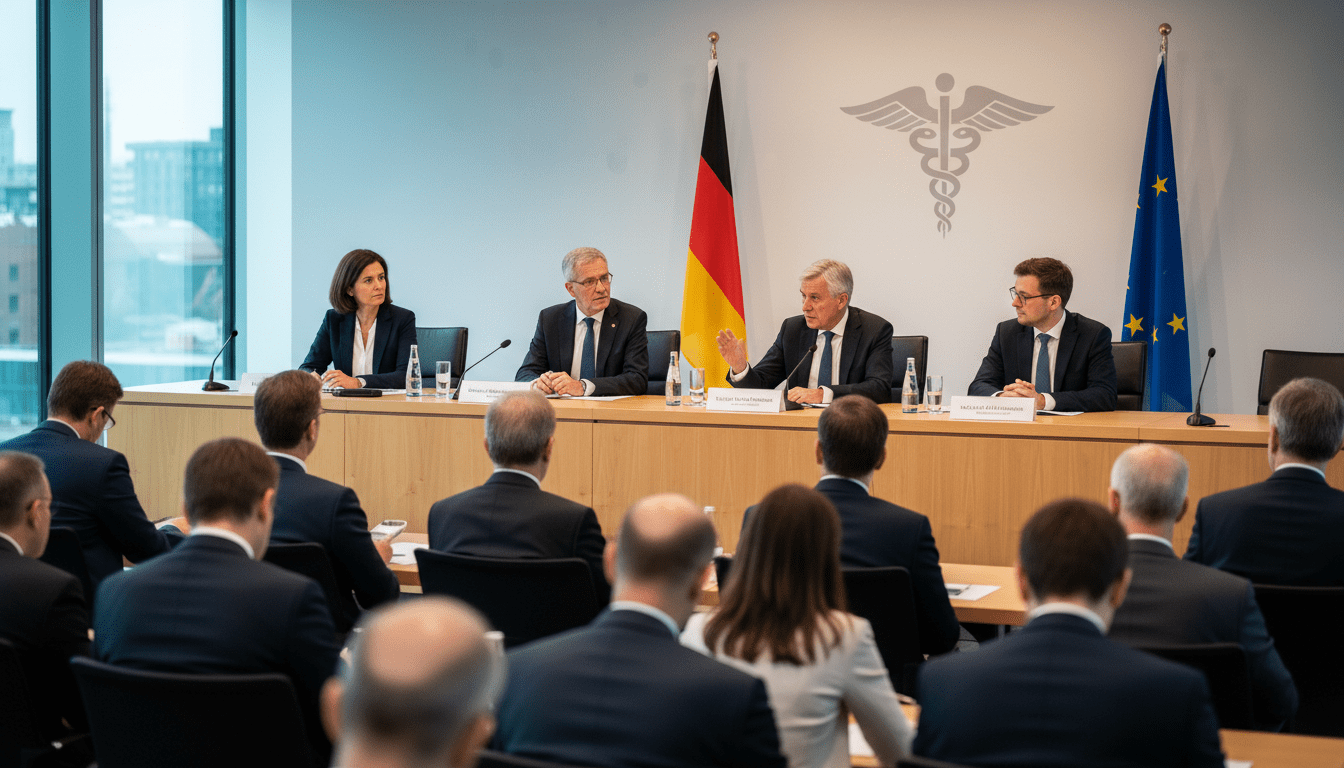
130th German Medical Assembly in Hanover: Doctors Protest Federal Healthcare Funding Cuts
At the 130th German Medical Assembly in Hanover, delegates voiced sharp opposition to planned federal healthcare funding reductions and called for systemic efficiency reforms. The 130th German Medical Assembly became a focal point for debate over a €1.75bn reduction in the federal subsidy to the statutory health insurance system. Physicians and medical students gathered to press ministers for clearer plans to shield care quality while trimming wasteful spending.
Delegates Confront Budget Cuts
The assembly spotlighted a drop in the federal transfer to the statutory health insurance (GKV) from €12.75bn, a reduction of €1.75bn that has alarmed many practitioners. Delegates argued the cut would tighten already stretched practice budgets and increase pressure on fee negotiations and service provision. The mood at the conference mixed professional restraint with pointed criticism of the wider fiscal choices that have left the health portfolio among the harder hit ministries.
Finance Ministry Justifies Reduction
Officials in the finance ministry framed the reduction as part of broader fiscal constraints shaping the 2027 budget framework. Finance Minister Lars Klingbeil (SPD) has defended the decision as necessary in light of competing priorities and tight public finances. Nevertheless, physicians and association representatives countered that the cut shifts costs to providers and patients, heightening tensions between fiscal policy and healthcare delivery.
Contested Claim on Bürgergeld Healthcare Costs
A central point of dispute at the assembly concerned the financing of healthcare for Bürgergeld recipients and other groups perceived as having contributed little to the GKV. Some delegates argued that the federal lump-sum payments fell short of actual treatment costs and that contributory members were subsidising care for non-contributors. Health-policy analysts at the assembly responded by pointing to the GKV’s founding principle of social solidarity, which deliberately pools risk and cost across the population rather than matching payments exactly to services used.
Financial Commission Sees €17.4bn in Savings
The conference heard findings by an independent financial commission that identified around €17.4bn in potential savings across the healthcare system for 2027. Experts said those savings could be realised without raising contribution rates, reducing entitlements or introducing new levies for precarious groups. The measures proposed ranged from eliminating low-value services to restructuring special payments, and proponents argued the savings would close budget gaps while preserving core benefits.
Proposals to Cut Low-Value Services
Health Minister Nina Warken (CDU) has proposed targeting services characterised as ineffective or unnecessary to lower system costs. Specific measures under discussion include ending routine skin screenings that lack clear benefit in certain contexts, removing questionable fee items for appointment mediation, trimming payments for administrative tasks such as automated ePA (electronic patient record) filling, and curbing contested surgical indications and homeopathic reimbursements. Supporters say such steps would improve value for money; critics warn of blunt cuts that could undermine patient access if not carefully designed.
Doctors Urged to Lead Efficiency Reforms
Speakers at the assembly urged doctors to join, rather than resist, transformative efficiency reforms, noting that medical services account for roughly one-sixth of total GKV expenditures. Advocates for reform argued physicians have both the expertise and credibility to champion evidence-based spending reductions that protect care standards. Several delegates acknowledged the political sensitivity of asking high-earning professionals to support measures that would ultimately be paid for in part by broader fiscal changes.
The fiscal debate also exposed a political reality: higher public funding for the GKV would require either increased taxation or reallocation of existing revenues, a prospect that would disproportionately affect higher-income taxpayers. Analysts highlighted that the top decile of taxpayers contribute a large share of income tax revenue in Germany, and that many full-time physicians fall into that bracket, complicating their political calculus.
Reform proponents noted potential wider benefits beyond immediate budget balancing, saying that more efficient health spending could lower contribution rates for workers and employers, boost economic competitiveness and restore public trust in policy ahead of regional elections. Detractors cautioned that promised savings would demand sustained implementation, monitoring and possibly hard choices about which services to prioritise.
Despite disagreements, the assembly concluded with a clear common denominator: a call for transparent, evidence-based decisions on what the statutory health insurance should fund and how resources can be used more effectively. Delegates left Hanover pressing for concrete follow-through from ministries and for physicians to play an active role in shaping reform details.
