
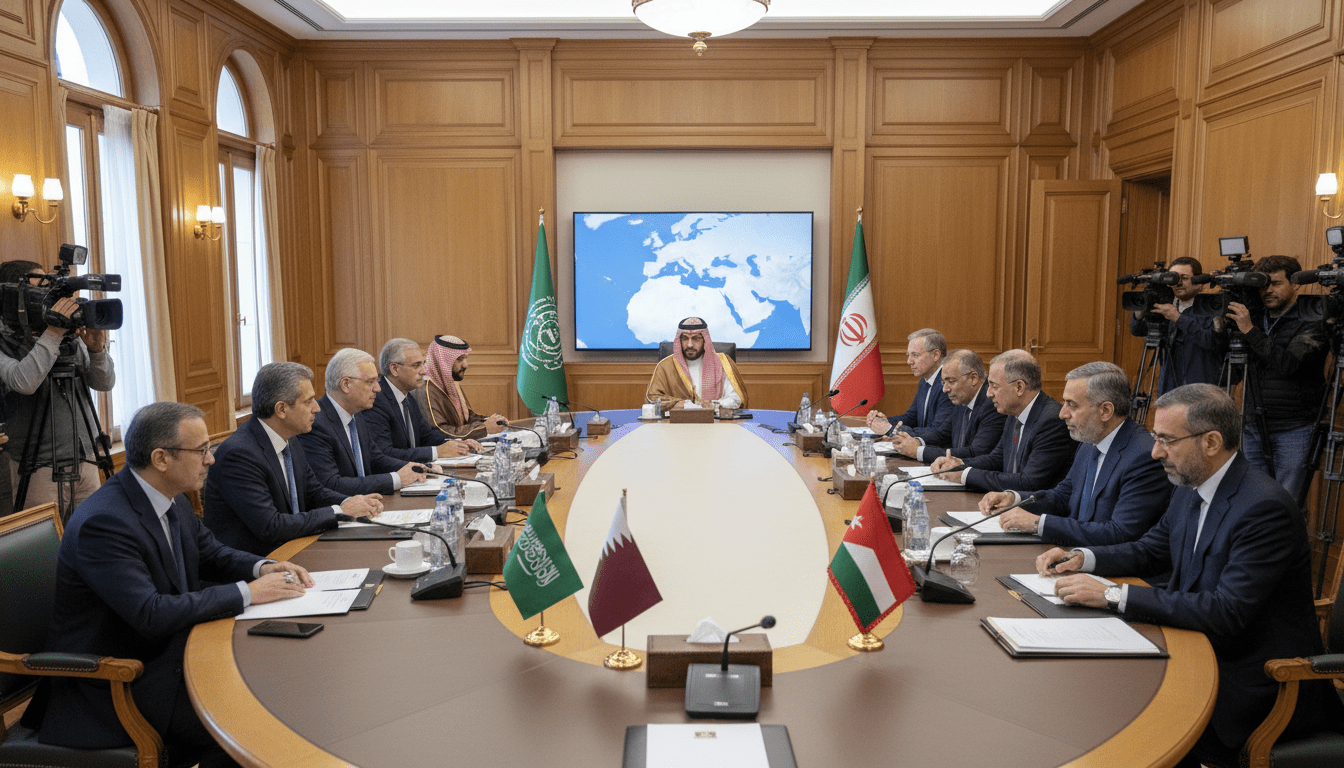
Saudi Arabia non‑aggression pact proposal invokes Helsinki model to calm regional tensions
Saudi Arabia’s non‑aggression pact proposal with Iran uses a Helsinki 1975 model, winning European backing amid Gulf splits and uncertain U.S.-Israeli support.
Saudi Arabia has advanced a proposal for a Helsinki-style non‑aggression pact between Iran and other Middle Eastern states, aiming to reduce tit-for-tat strikes and stabilize the region. The Saudi Arabia non‑aggression pact concept draws on the 1975 Helsinki Accords framework and has attracted interest from several European capitals and EU institutions, though support from the United States and Israel remains unclear. Regional diplomats say the plan is seen as palatable by many Arab and Muslim states, but hard strategic questions — including control of the Strait of Hormuz and the disposition of foreign military bases — could derail formal endorsement. The initiative comes amid a divided Gulf response to the war involving Iran, with competing security strategies adopted by Riyadh and Abu Dhabi.
Saudi proposal models non‑aggression pact on 1975 Helsinki framework
The Saudi plan explicitly borrows elements from the Helsinki Accords, which in 1975 secured mutual recognition of borders and included commitments on human rights, economic cooperation and confidence‑building measures. Riyadh’s diplomats view the Helsinki template as a way to create broad, binding norms that would constrain aggressive state behavior without demanding immediate political alignment. Proponents argue that formalized commitments on non‑aggression, navigation rights and dispute resolution could reduce miscalculation and provide a platform for incremental cooperation. Critics caution that the Cold War context that enabled Helsinki differs sharply from today’s fragmented Middle East, where state and non‑state actors, proxy networks and asymmetric capabilities complicate enforcement.
European capitals signal conditional backing
Several European governments and EU institutions have expressed interest in the concept, viewing it as a diplomatic avenue to limit escalation and protect commercial routes. European support reportedly centers on the idea of multilateral confidence‑building, technical verification mechanisms and parallel economic and humanitarian track engagements. Officials in Brussels and national capitals see the pact as complementary to sanctions, deterrence and support for de‑escalatory channels. However, Europeans remain cautious about how to reconcile guarantees with existing security partnerships and whether they can credibly enforce compliance.
Gulf rift widens between Saudi and UAE approaches
The proposal exposes a growing divergence in Gulf policy toward Iran, with Saudi Arabia favoring mediation and a framework that could reintegrate Tehran into regional norms, while the United Arab Emirates has taken a more hawkish posture. Abu Dhabi’s security posture has moved closer to Israel in recent months, and some Emirati leaders have resisted Saudi‑led mediation initiatives. Differences over how to respond to Iranian missile and drone attacks, and over who should mediate talks, have complicated unified Gulf action. Those splits reduce the immediate prospects for a region‑wide signature on any formal agreement.
Strategic disputes over the Strait of Hormuz
One of the most sensitive elements for any pact is the status of the Strait of Hormuz, a crucial chokepoint for global energy flows where Tehran has sought to assert navigation controls. Iranian insistence on a stronger role in the strait, including its own navigation protocols, raises questions about freedom of navigation principles that many Gulf states and Western navies prioritize. Any diplomatic package would need to address transit rights, maritime security cooperation and mechanisms to resolve incidents at sea. Without clear, mutually acceptable arrangements, maritime tensions could continue to provoke crises even if a land‑based ceasefire framework were agreed.
Mediation efforts and stalled talks between Washington and Tehran
Parallel diplomatic tracks have been uneven. Third‑party mediation efforts, including initiatives led by regional countries, have at times brought interlocutors together but recent talks have largely stalled. Intelligence assessments cited by officials suggest Iran retains much of its missile capability and shows no internal fracturing that would pressure leadership concessions, complicating bargaining dynamics. The United States has been a pivotal actor whose endorsement would greatly boost the pact’s prospects, yet Washington’s position appears unsettled; Israeli opposition likewise could be decisive given security linkages and military cooperation in the region. Without clear U.S. engagement and at least tacit Israeli acquiescence, the pact risks remaining a conceptual framework rather than a binding settlement.
Political and military obstacles to formal pact
Beyond maritime questions, the pact would have to navigate competing demands over foreign bases, proxy networks and verification protocols. Tehran has publicly called for the closure of U.S. bases in the Gulf, a demand incompatible with the security doctrines of several Gulf monarchies that rely on external deterrence. Verification clauses modeled on Helsinki would require intrusive monitoring and dispute‑resolution mechanisms that many regional governments may resist on sovereignty grounds. Military incidents, covert operations and the involvement of non‑state armed groups further undermine the mutual trust necessary for a legally enforceable non‑aggression pact.
The Saudi Arabia non‑aggression pact proposal represents a bold diplomatic attempt to reimagine regional security architecture, but it faces a gauntlet of political, military and strategic hurdles. European interest gives the plan external diplomatic traction, yet divergent Gulf policies, unresolved maritime disputes and the need for U.S. and Israeli buy‑in mean the initiative will require sustained shuttle diplomacy and pragmatic compromises. For now, the proposal is a framework in search of consensus, and its fate will depend on whether regional and global powers can translate a Cold War template into a workable 21st‑century pact.
