
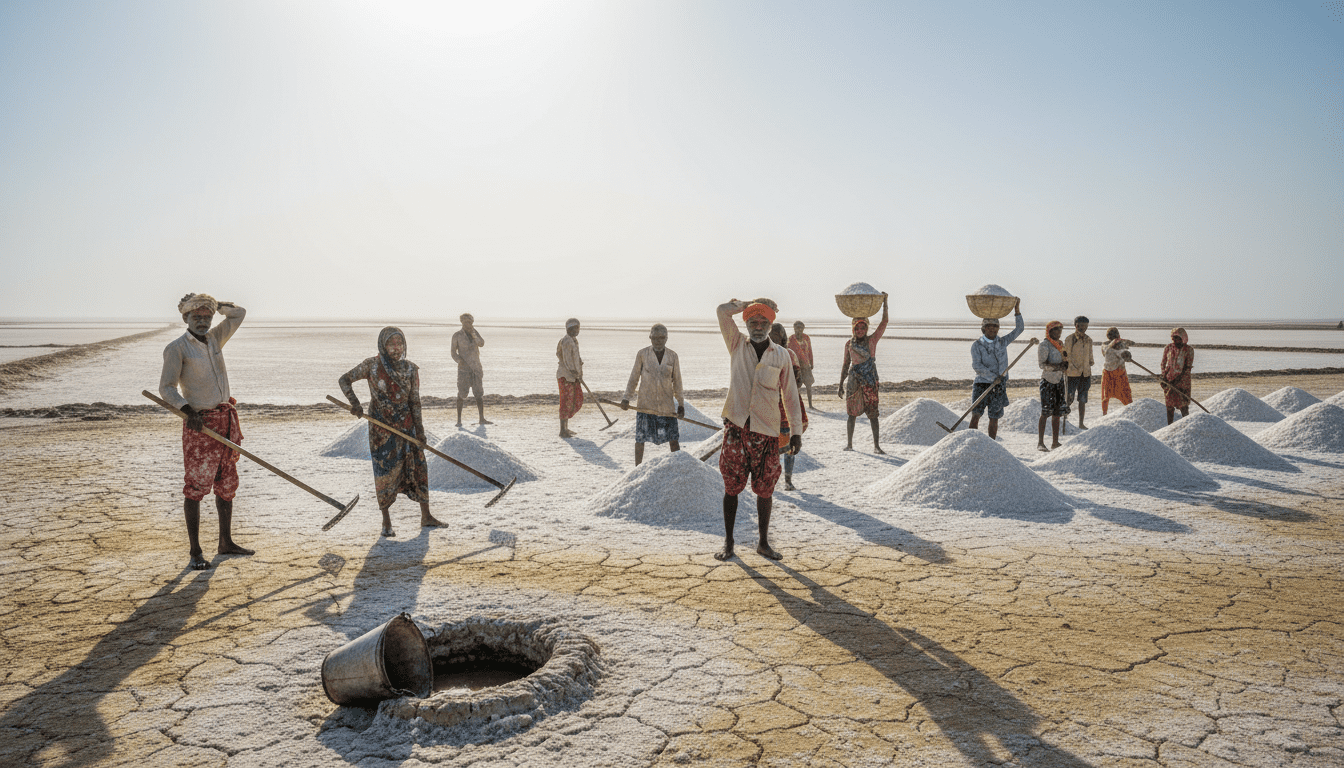
Gujarat salt workers face crippling heat as solar pumps extend season in Little Rann of Kutch
Gujarat salt workers endure extreme heat, scarce water and mounting health risks as solar pumps extend the salt season in the Little Rann of Kutch now.
The Little Rann of Kutch’s salt pans have become a furnace for tens of thousands of seasonal labourers who migrate each year to harvest India’s most profitable mineral. Gujarat supplies roughly three-quarters of the country’s salt, and the shift to cheaper solar-powered pumps has stretched work deeper into India’s hottest months. For labourers, stretched seasons mean prolonged exposure to temperatures that routinely surpass 45°C and climbing risks of heat-related illness.
Extreme temperatures and scarce water deliveries
Workers in the salt fields describe daytime conditions as intolerable, with thermometers often reaching 47–48°C during peak heat. There are no trees or permanent shade on the flats, and water is delivered by tanker on a severely limited schedule, sometimes once every 25 days. The scarcity of potable water complicates both drinking and basic hygiene for families living in makeshift camps on the pans.
How solar pumps changed the work calendar
Producers moved from diesel to solar pumps to lower costs and expand output, effectively extending the operational season into months that were once dormant. The pumps allow saline water to be supplied to shallow evaporation pans for longer periods, increasing crystalline yield but prolonging exposure for workers. Officials and producers say the technology has reduced fuel costs, but it has also shifted the burden of higher temperatures onto labourers.
Makeshift shelters and improvised cooling
Without access to durable housing, many salt workers construct lightweight shelters from stick frames, coarse fabric and even animal dung for insulation. Workers adopt staggered schedules to avoid the hottest midday hours, concentrating labor in early morning and evening shifts. Improvised methods—such as suspending bottles wrapped in damp cloth for evaporative cooling and drinking hot beverages to induce sweating—are common coping strategies described by residents.
Rising health risks and early warning signs
Medical assessments of salt-pan communities report chronic dehydration, heat stress and early indicators of kidney malfunction among workers who endure prolonged heat exposure. Symptoms such as dizziness, nausea and extreme fatigue are reported frequently and, if left untreated, can progress to organ failure. Meteorological forecasts predicting an above-normal number of heatwave days this season add urgency to calls for better protective measures.
Economic pressures and the cost of loss
Despite the risks, low incomes and the lack of alternative livelihoods keep migrants returning annually to the flats. Families pooled their earnings from a season of work can amount to modest sums: reported household profits after expenses remain small relative to the months of labour. Unseasonal storms and dust events can wipe out entire harvests; one dust storm recently destroyed salt stock valued at roughly 200,000 rupees, erasing a significant share of seasonal income for affected families.
Calls for workplace protections and local solutions
Advocates and community members are urging targeted interventions to reduce exposure and health harms, including scheduled water supplies, shaded rest areas, emergency medical access and enforced limits on midday labour. Some producers and local authorities have been urged to coordinate on cooling shelters and more frequent water deliveries, while public health groups recommend screenings for dehydration and kidney disease. There is growing recognition that technological gains in production must be coupled with worker protections.
Seasonal migration to the Little Rann of Kutch remains a stark reflection of limited rural options and mounting climate pressures, as workers continue to balance daily survival against rising occupational hazards.
Most families see little short-term choice but to return, even as the environment that makes salt production profitable becomes increasingly hostile to human life.
