
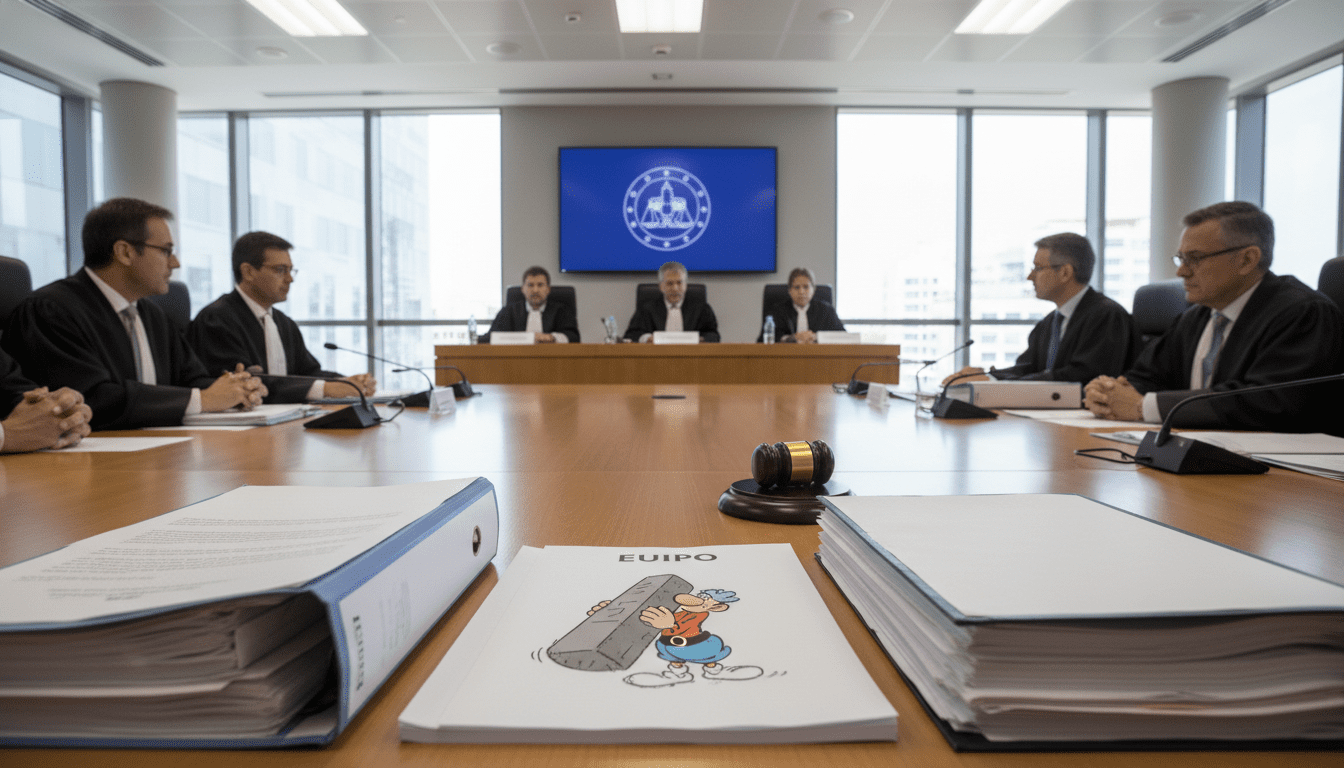
EU General Court Gives New Hope in Obelix Trademark Dispute
EU General Court tells EUIPO to reexamine the Obelix trademark, boosting Les Éditions Albert René’s quest to annul a Polish arms firm’s EU registration.
The EU General Court on Wednesday, May 13, 2026, ordered the European Union Intellectual Property Office (EUIPO) to reassess its refusal to cancel a contested Obelix trademark registration, handing Les Éditions Albert René renewed grounds to challenge a Polish arms maker’s mark. The ruling addresses whether the registration of the Obelix name for weapons, ammunition and explosives infringes the reputation and prior rights associated with the comic character. The decision revives a legal contest over brand protection and cross-sector trademark use that has drawn attention across Europe.
Court Sends Case Back to EUIPO for Reexamination
The General Court concluded that EUIPO’s earlier refusal to declare the newer registration invalid was based on an incomplete factual and legal assessment. The court found specific errors in how the office weighed evidence of the older mark’s reputation and the likelihood of association for the contested goods and services. As a result, the case will return to the EUIPO for a fresh examination of Les Éditions Albert René’s deletion request.
The ruling does not itself annul the Polish company’s registration, but it requires EUIPO to address the deficiencies identified by the court and to reassess the evidence in light of those findings. The publisher may still seek further review: an appeal to the Court of Justice of the European Union remains possible under case T‑24/25.
Origins and Scope of the Obelix Trademark
Obelix is a central character in the Asterix and Obelix comics, created in 1959 by René Goscinny and Albert Uderzo, and remains a global cultural brand with decades of commercial exploitation. Les Éditions Albert René registered the word mark “Obelix” in 1998, covering categories including books, clothing and games, reflecting the character’s long-standing use across media and merchandise.
In 2022 the EUIPO recorded a separate EU-wide registration of “Obelix” for a Polish company, applying to goods and services in the defence sector such as firearms, ammunition and explosives. That cross-sector registration prompted immediate concern from the French publisher, which argued that the mark’s use in the arms market could damage the character’s reputation and lead to public confusion or association.
Publisher Argued Reputation and Risk of Harm
Les Éditions Albert René filed a deletion request, contending that the Polish registration exploited the renown of the earlier Obelix mark and risked harming its image. The publisher argued that the fame of the Asterix universe and the close cultural association of the name Obelix with family-friendly entertainment would make a weapons registration particularly injurious to reputation and consumer perception.
EUIPO initially dismissed the deletion request, citing insufficient proof of the older mark’s level of recognition across the EU and doubting that purchasers of defence-related goods would associate those goods with a comic-book character. That finding prompted the publisher to appeal to the General Court, which has now identified shortcomings in the office’s evaluation of evidence.
General Court Identifies ‘Incomplete and Erroneous’ Analysis
In its written reasoning the General Court criticized EUIPO for failing to account fully for the context in which the Obelix name appears, including use of the ® symbol and joint usage with the Asterix mark in marketing and packaging. The court stressed that such indications can reinforce the existence of a registered and well-known mark, and EUIPO should have given them appropriate weight.
The judges also pointed out that EUIPO overlooked relevant evidentiary material showing linked usage and public recognition, and that the office erred in its analysis of the likelihood of association between the marks across distinct product classes. By setting aside the EUIPO decision, the court directed the office to reassess both the evidence of reputation and the potential for adverse association with the contested registration.
Implications for the Polish Arms Registration and Wider Trademark Law
The immediate practical effect of the ruling is procedural: EUIPO must reexamine the deletion request in line with the General Court’s guidance. Substantively, the judgment signals judicial willingness to scrutinize cross-sector trademark registrations where a famous mark might be tarnished or exploited outside its core market. Brands with strong reputations in consumer entertainment and merchandising may now expect closer scrutiny when identical or similar signs are registered for unrelated and potentially sensitive sectors.
For the Polish defence firm, the decision places its EU registration at greater legal risk, pending EUIPO’s fresh analysis. If the office ultimately finds in favour of the publisher and invalidates the defence-related registration, the firm could lose EU-wide protection for those classes and face constraints on using the sign commercially in the single market.
A possible appeal to the Court of Justice could still shape the final legal standard on how reputation and cross-sector harm are assessed at EU level. The outcome may therefore influence future disputes where cultural or entertainment marks collide with registrations in unrelated industries.
The General Court’s order underscores the tension between broad trademark protection and the need to prevent reputational damage across sectors, and it compels EUIPO to apply a more rigorous approach when dealing with marks that enjoy widespread public recognition.
