
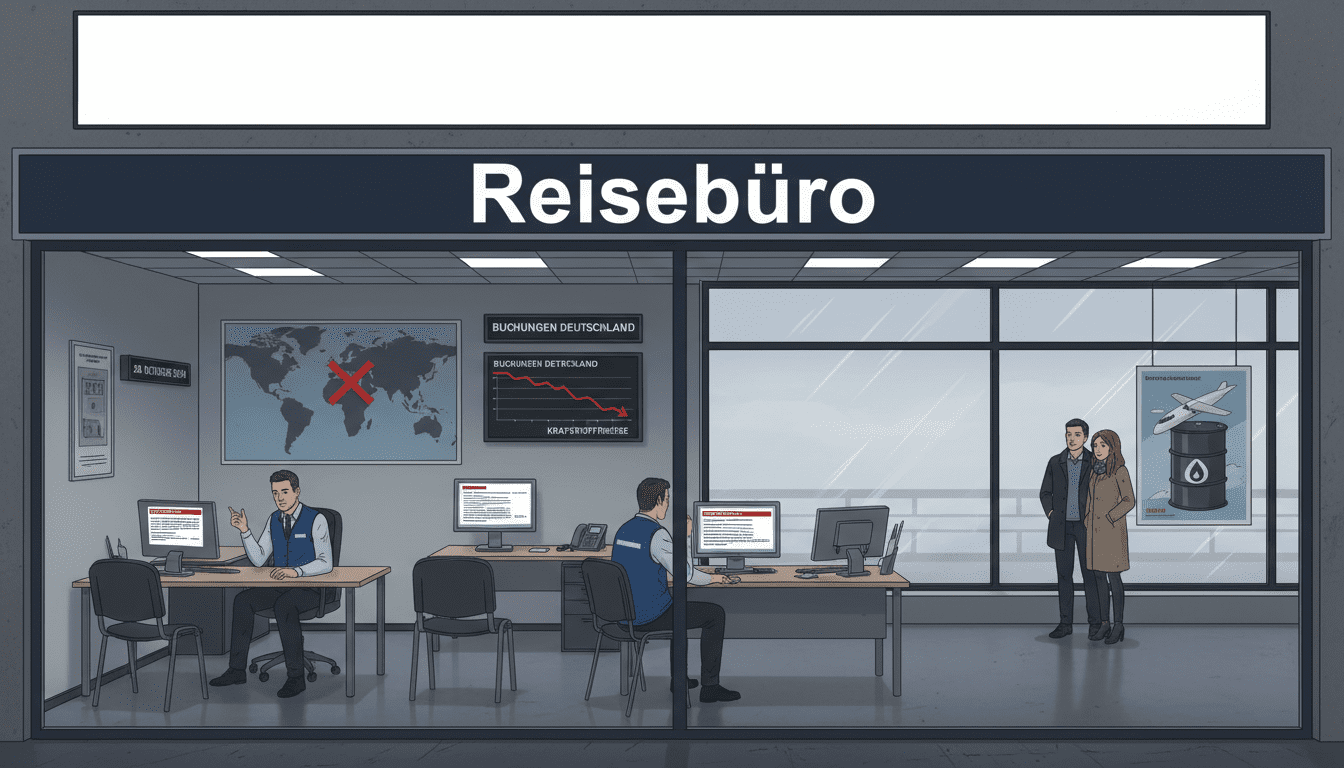
Iran war dents German travel industry confidence as ifo index falls to -43.5
Germany’s travel industry faces growing uncertainty as the Iran war weighs on bookings and fuel costs, pushing the ifo business climate for travel firms down to -43.5 in April.
The ifo Institute in Munich reported a renewed decline in the business climate for travel agencies and tour operators, with the index dropping to -43.5 in April from -41.8 in March, reflecting worsening sentiment across the sector. The Iran war has emerged as a key factor in the downturn, and the institute noted that rising fuel and energy costs are intensifying price pressures for travel companies.
ifo index falls to -43.5 in April
The ifo Institute’s survey of travel firms showed a deeper contraction in confidence in April, as businesses revised assessments of current conditions and expectations downward. More companies signalled that they expect higher prices in the months ahead, driven largely by rising fuel inputs and broader energy costs.
Analysts at ifo highlighted that the decline was not limited to one segment of the market; both travel agencies and tour operators registered the fall, underlining sector-wide concern about demand and margins.
Majority of providers describe demand as weak
More than half of the travel providers surveyed by ifo characterized demand in April as weak, with many reporting cancellations or postponements tied to geopolitical uncertainty. Patrick Höppner, ifo’s industry expert, warned that travelers waiting to see how the Iran war develops could suppress bookings for the tail of the 2026 summer season and for the 2026/27 winter season.
That caution is being felt at the point of sale, where travel advisers report more tentative consumer behaviour and longer consideration cycles for international trips, particularly to destinations perceived as vulnerable to geopolitical spillover.
Fuel and energy price surge adds inflationary pressure
Rising energy prices are compounding the sector’s problems. Germany’s Federal Statistical Office recorded a 10.1 percent increase in energy prices in April, a primary driver of the country’s broader inflation rate, which recently rose to 2.9 percent. The spike in oil and gas prices since the start of the Iran war has pushed airlines and tour operators to factor higher fuel costs into planning.
Regional pump prices are also climbing, affecting road travel within Europe. The ifo Institute noted that in early May 2026 pump prices for Super E5 and diesel were substantially higher year‑on‑year in Austria, Italy, France and Croatia, increasing costs for motorists and tour operators that rely on road transfers or coach travel.
TUI maintains reduced profit target and notes booking shifts
TUI, Germany’s largest travel group, said it is maintaining a previously reduced profit outlook for the 2025/26 financial year and has abandoned an earlier target of 7–10 percent profit growth. The company is now focused on closing the gap to the prior year’s profit of €1.4 billion, while leaving revenue guidance suspended amid ongoing uncertainty.
TUI executives reported observable changes in customer behaviour: shorter booking lead times, a stronger preference for western Mediterranean destinations over Eastern shores, and an elevated share of travellers who have not yet booked for the coming summer. The operator also noted that average prices for hotels and cruises are rising, partly reflecting higher input costs and package repricing.
Short‑term bookings and destination choice reshape summer demand
Industry data indicate that nearly half of consumers planning summer travel have not finalized bookings, a trend that could translate into last‑minute spikes or sustained downturns depending on political and cost developments. Travel firms expect a mix of outcomes: some markets may see recovery through late bookings, while others could suffer if the Iran war prompts travel advisories or further price escalation.
Demand for road travel within Europe could receive a modest lift if air travel becomes more uncertain, but rising petrol and diesel prices are likely to blunt this effect. Operators and transport providers are monitoring fuel availability and kerosene supplies closely, as any constraints would hit flight schedules and lifting capacity.
The coming weeks will be critical for pricing and capacity decisions, as tour operators balance the need to protect margins with competitiveness in a market where many consumers remain undecided.
Sentiment across the German travel sector has hardened as geopolitical risk and energy inflation converge, leaving businesses to navigate squeezed margins and fickle demand. The industry is watching developments in the Iran war, fuel markets and consumer booking patterns closely, with the shape of the late summer and winter seasons hinging on how those factors evolve.
