
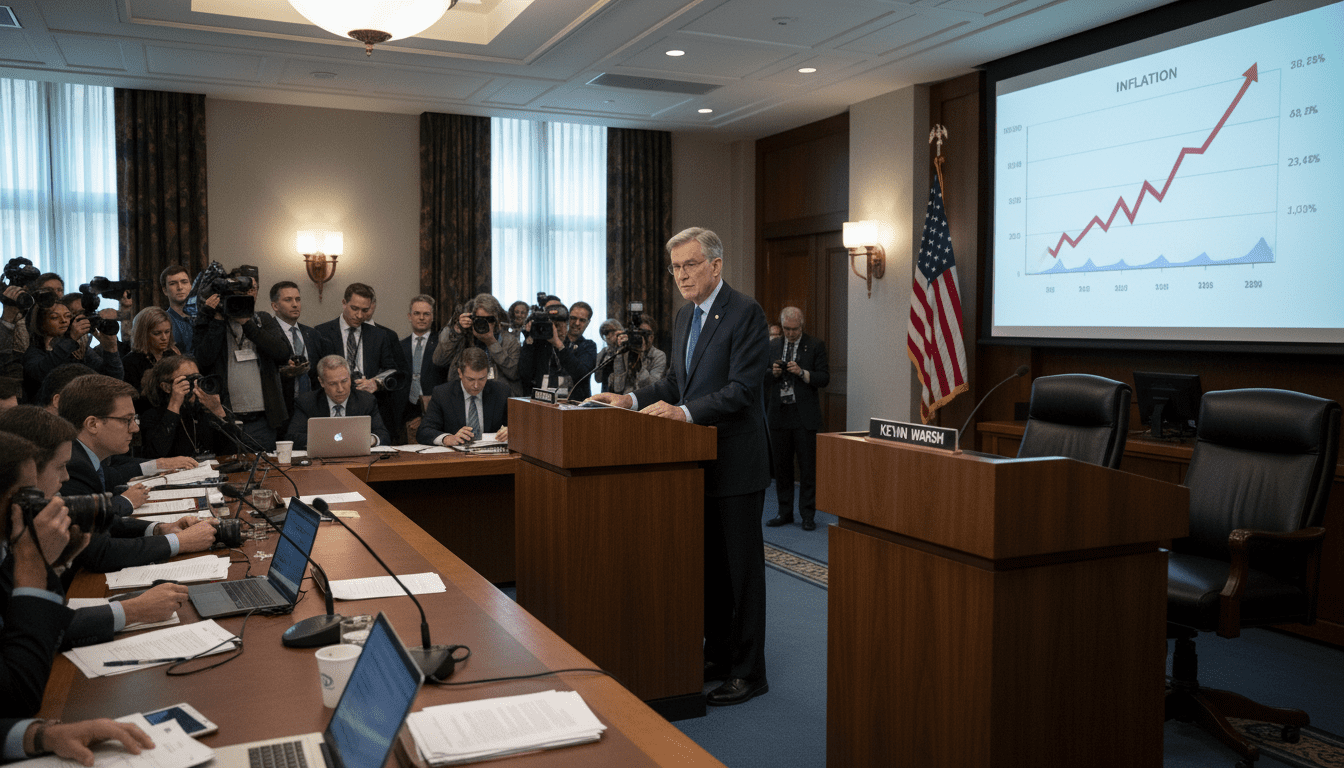
Federal Reserve faces higher inflation as leadership shifts; April CPI up 0.6% month, 3.8% year
U.S. consumer inflation accelerated as the Federal Reserve prepared for a leadership change, with headline consumer prices rising 0.6% in April and 3.8% over the past year. The higher readings complicate the incoming chair’s task and add urgency to debates inside the central bank about the path for interest rates. Policymakers will weigh strong energy-driven monthly gains and persistent core inflation against calls for further easing from parts of the Fed.
April headline CPI posts notable monthly and annual gains
The Consumer Price Index rose 0.6% in April following a 0.9% increase in March, pushing the year-over-year pace to 3.8%. These figures mark a pickup in inflation during the week the central bank is due to change leadership. The monthly jump exceeded many expectations and signals that near-term price pressures remain elevated.
The timing of the report adds a political and policy dimension, because the Fed will assume new leadership amid these hotter-than-target readings. Markets and officials will watch incoming data closely to judge whether the recent rise is temporary or the start of a renewed trend.
Energy and housing account for a large share of the April increase
Energy prices were the largest monthly contributor, climbing 3.8% and explaining more than 40% of April’s overall CPI increase. A sizable portion of the monthly uptick therefore reflected volatile commodity and fuel movements rather than broad-based services inflation. Housing costs also rose by 0.6% in April, adding to the upward pressure on households.
Food prices increased 0.5% during the month, contributing to the broader cost-of-living rise. Over the past year energy has surged about 17.9% and food roughly 3.2%, accentuating the uneven nature of recent inflation dynamics.
Core inflation edged up and remains above target
Excluding energy and food, core CPI rose 0.4% in April, lifting the annual core rate from 2.6% to 2.8%. The pick-up in core inflation suggests underlying price pressures are persisting beyond volatile commodity swings. While still below peak levels seen in previous years, core inflation remains above the Federal Reserve’s 2% objective on several measures.
Analysts view the core reading as an indicator of more durable price trends that are harder for policymakers to reverse without weighing on growth and employment. The uptick complicates any near-term case for swift policy easing.
PCE gauge signals continued policy challenge for the Federal Reserve
The Fed’s preferred inflation measure, the Personal Consumption Expenditures (PCE) price index, rose 0.7% in March after a 0.4% gain in February. On a 12-month basis the PCE index is 3.5% higher, substantially above the central bank’s 2% target. Core PCE, which excludes food and energy, stands at about 3.2% year-over-year, reflecting sustained domestic price pressures.
Because the PCE measure feeds directly into the Fed’s policy framework, its current trajectory underscores the difficulty of justifying aggressive rate cuts. Officials will likely cite these readings when framing the outlook for monetary policy in coming meetings.
Fed officials remain divided over the timing of rate cuts
Minutes and public statements indicate the Federal Reserve has not reached a consensus on the pace or timing of future rate reductions. In the bank’s most recent meeting, officials opted not to cut interest rates, a decision taken under outgoing Chair Jerome Powell. That meeting highlighted a split between those urging caution and others favoring accommodation.
Some policymakers signaled they wanted to move away from a rate-cutting stance, aiming to avoid giving the impression of premature easing. The divergence complicates communications for the incoming leadership and could lead to a period of heightened market sensitivity to Fed remarks.
Kevin Warsh to assume Fed leadership amid expectations and political pressure
Jerome Powell’s term as Fed chair concludes Friday, and Kevin Warsh is slated to take over the role, pending an imminent Senate confirmation expected this week. Warsh’s appointment carries political expectations from the administration that the new chair will pursue rate cuts. His prior reputation as a monetary hawk has been reshaped recently by public comments supporting reductions in rates, in part citing anticipated productivity gains from advances in artificial intelligence.
Warsh will inherit control of the Federal Open Market Committee at a moment when officials are divided and key inflation gauges remain above target. His early decisions and public framing will be watched closely by investors, business leaders, and global central banks.
The April data underscore the narrow margin for error the new leadership faces, as stronger-than-expected inflation readings reduce the policy buffer and heighten the risk that premature easing could reignite price pressures.
