
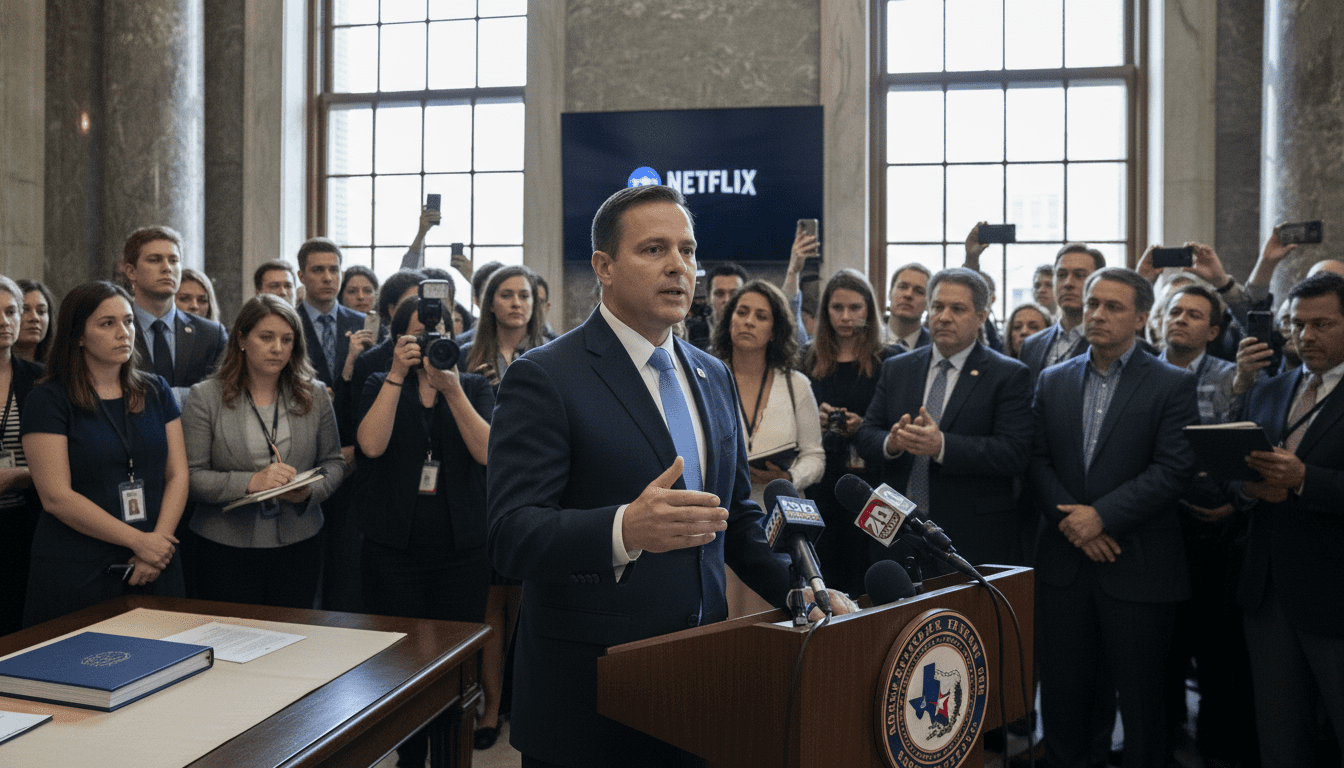
Texas sues Netflix, alleging the streamer ‘spied’ on children and engineered addiction
Texas sues Netflix: Attorney General Ken Paxton alleges the streamer collected and monetized user data, including children’s profiles, and used autoplay to drive binge-watching.
State files complaint in Dallas-area court
The state of Texas filed a 59‑page lawsuit on May 11, 2026, accusing Netflix of secretly collecting and monetizing detailed user data while representing to consumers that it did not. The complaint, brought by Attorney General Ken Paxton under the Texas Deceptive Trade Practices Act, says the company tracked viewing habits, devices, household networks and other behavioral signals and disclosed that information to third parties. (texasattorneygeneral.gov)
Paxton’s office framed the filing as a consumer‑protection action, saying it targets harms to families and minors. The complaint requests injunctive relief to stop what the state calls unlawful data practices and seeks civil penalties and other remedies. (texasattorneygeneral.gov)
Allegations detail data flows and third‑party sharing
Texas alleges Netflix did more than log viewing behaviour for product improvements, and instead converted every interaction into monetizable data points. The suit contends those signals were combined with outside data from commercial brokers and advertising technology firms to build rich consumer profiles for sale or use. (texasattorneygeneral.gov)
The complaint specifically highlights children’s profiles, arguing that tracking on kid profiles and in households exposed minors to the same data collection practices the company had publicly downplayed. Paxton’s office says those disclosures contradict years of messaging that Netflix was “ad‑free” and uninterested in advertising‑style data harvesting. (theguardian.com)
Autoplay and ‘dark patterns’ said to extend viewing time
A central charge in the lawsuit is that Netflix intentionally designed features to keep users watching longer, generating more data in the process. The state points to autoplay and other interface choices it labels “dark patterns” as mechanisms that encourage binge‑watching and prolonged engagement, including on children’s profiles. (theguardian.com)
Paxton asked the court to require Netflix to disable autoplay by default for kids’ profiles and to take other steps to limit what the complaint characterizes as design choices intended to heighten addiction. The suit links those features to the alleged business model of harvesting attention to extract value from user information. (texasattorneygeneral.gov)
Remedies sought: deletion, injunctions and penalties
In addition to seeking orders to halt the alleged collection and disclosure of data, Texas wants the court to force Netflix to delete unlawfully obtained user information and to implement safeguards for minors. The complaint asks for statutory penalties and injunctive relief that would change default settings and data‑handling practices. (texasattorneygeneral.gov)
Swiss and other international reporting of the filing noted Texas is seeking civil fines that can reach substantial sums under state law, including per‑violation penalties that plaintiffs say could amount to thousands of dollars per infraction. The Texas complaint frames its relief requests as both consumer protection and deterrence. (swissinfo.ch)
Legal context and potential challenges
Legal experts say the case sits at the intersection of privacy law, consumer protection and product‑design litigation that has expanded since recent high‑profile verdicts about social platforms. Texas is pursuing the matter in state court, where theories under deceptive‑trade‑practices statutes have been used to challenge corporate conduct beyond traditional data‑breach claims. (theguardian.com)
Defendants in similar suits have mounted First Amendment and preemption defenses, and courts have required plaintiffs to show concrete consumer harm tied to the alleged practices. Observers expect Netflix to challenge the factual assertions and the legal theories and to argue that routine logging for service operation differs from the intentional sale of personally identifiable data. (kelo.com)
Netflix response and next steps in the litigation
Major outlets covering the filing reported that Netflix had not immediately responded to requests for comment at the time of publication. The company typically issues statements in high‑profile litigation, and its formal response — either in court pleadings or in a public comment — will shape the next phase of the dispute. (theguardian.com)
The suit will move through Texas state court procedures, where initial hearings, motions to dismiss and jurisdictional challenges are likely. If the case survives early procedural tests, discovery could probe internal engineering practices, data‑sharing arrangements and executive communications the state cites in its complaint. (texasattorneygeneral.gov)
The case marks a notable escalation in state scrutiny of streaming services and digital platforms more broadly, and it may prompt other attorneys general or private litigants to consider similar claims if Texas’s theories gain traction in court.
