
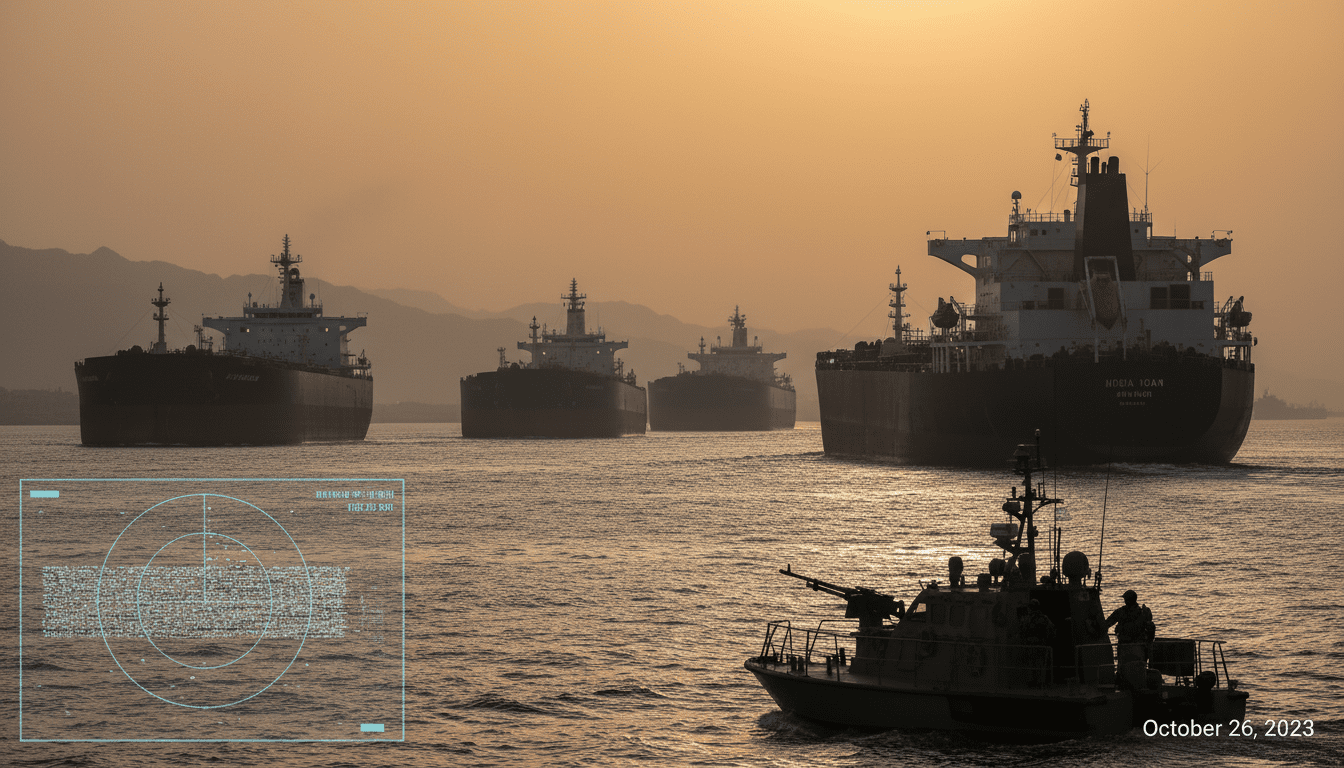
Three Oil Tankers Turn Off Tracking Systems While Transiting Strait of Hormuz
Three oil tankers switched off tracking while transiting the Strait of Hormuz, each carrying about 2 million barrels, Reuters cites Kpler and LSEG data.
Two very large crude carriers and a third laden tanker passed through the Strait of Hormuz with their automatic identification systems apparently deactivated in what shipping data and Reuters reporting described as an effort to avoid potential Iranian attacks. The vessels involved were the Agios Fanourios I and the Kiara M, each loaded with roughly 2 million barrels of Iraqi crude, and the Basrah Energy, which was carrying about 2 million barrels of Upper Zakum crude from an Abu Dhabi National Oil Company terminal. Reuters cited shipping intelligence from Kpler and LSEG in its report, and noted that the Agios Fanourios I had previously failed at least two earlier transit attempts after loading Basrah medium on April 17.
Tracking Systems Deactivated on Three Tankers
Shipping monitors recorded the three vessels moving through the narrow Gulf chokepoint without broadcasting normal tracking information, a step that can conceal position and identity from public maritime feeds. The two very large crude carriers reportedly exited the strait on Sunday, while the Basrah Energy left the waterway on Wednesday according to Kpler data included in the Reuters account. Turning off electronic tracking is understood by industry watchers as a tactic sometimes used to reduce visibility during heightened security concerns, though it also complicates oversight by authorities and insurers.
Agios Fanourios I and Kiara M: Cargo and Movements
The Agios Fanourios I and the Kiara M were each carrying approximately 2 million barrels of Iraqi crude when they traversed the Strait of Hormuz, making their voyages notable for both scale and the decision to cut tracking feeds. The Agios Fanourios I is reported to be bound for Vietnam and had earlier attempted transit of the strait on at least two occasions without success after loading Basrah medium on April 17. The destination of the Kiara M was not immediately clear in the data cited by Reuters, underscoring gaps that appear when automatic tracking is disabled.
Basrah Energy Loaded at ADNOC Terminal
The Basrah Energy, which exited the Strait of Hormuz on Wednesday, was carrying about 2 million barrels of Upper Zakum crude that sources said was loaded at an Abu Dhabi National Oil Company terminal. Such cargoes represent major single-voyage oil shipments whose routing and visibility are closely watched by traders and risk managers. The vessel’s transit without public tracking heightened concern among maritime observers who monitor flows through the Strait of Hormuz, one of the world’s most important oil transit routes.
Security Context Following Recent Incidents
The moves came amid recent incidents in and around the Strait of Hormuz that have put commercial traffic on alert, including a reported attack that damaged the South Korean cargo ship HMM Namu and was publicized in a May 10 image showing the vessel docked in Dubai. Images released by the South Korean Foreign Ministry and AFP of that damaged ship underscored the risks vessels can face in the area and contributed to heightened caution among operators. While shipping firms and data providers have not publicly detailed the motives behind switching off tracking, industry analysts say such actions are often linked to efforts to reduce exposure during periods of elevated maritime threat.
Data Providers and Industry Monitoring
Reuters relied on data from maritime intelligence firms Kpler and LSEG to identify the movements, reflecting how third-party trackers have become central to understanding commercial shipping behavior when public feeds are interrupted. These providers compile satellite, port and commercial reporting to reconstruct vessel activity, but gaps remain when identification systems are turned off. Insurers, charterers and national authorities typically monitor such data closely because prolonged loss of public tracking can hinder response and investigation should an incident occur.
Implications for Oil Flows and Maritime Risk
Large crude cargoes moving with limited public visibility introduce complications for markets and risk management, particularly given the strategic importance of the Strait of Hormuz for global energy supplies. A single very large crude carrier can carry the equivalent of multiple supertanker loads or several weeks of refinery intake for some markets, so the routing and security of these shipments matters to traders. The combination of high-value cargoes, disabled tracking and recent regional incidents may prompt tighter scrutiny by shippers, flag states and insurers, and could affect routing decisions and premiums if the pattern continues.
Shipping monitors and market observers said they would continue to track vessel behavior in the Strait of Hormuz and surrounding waters as developments unfold, citing the same Kpler and LSEG data that informed Reuters’ reporting.
