
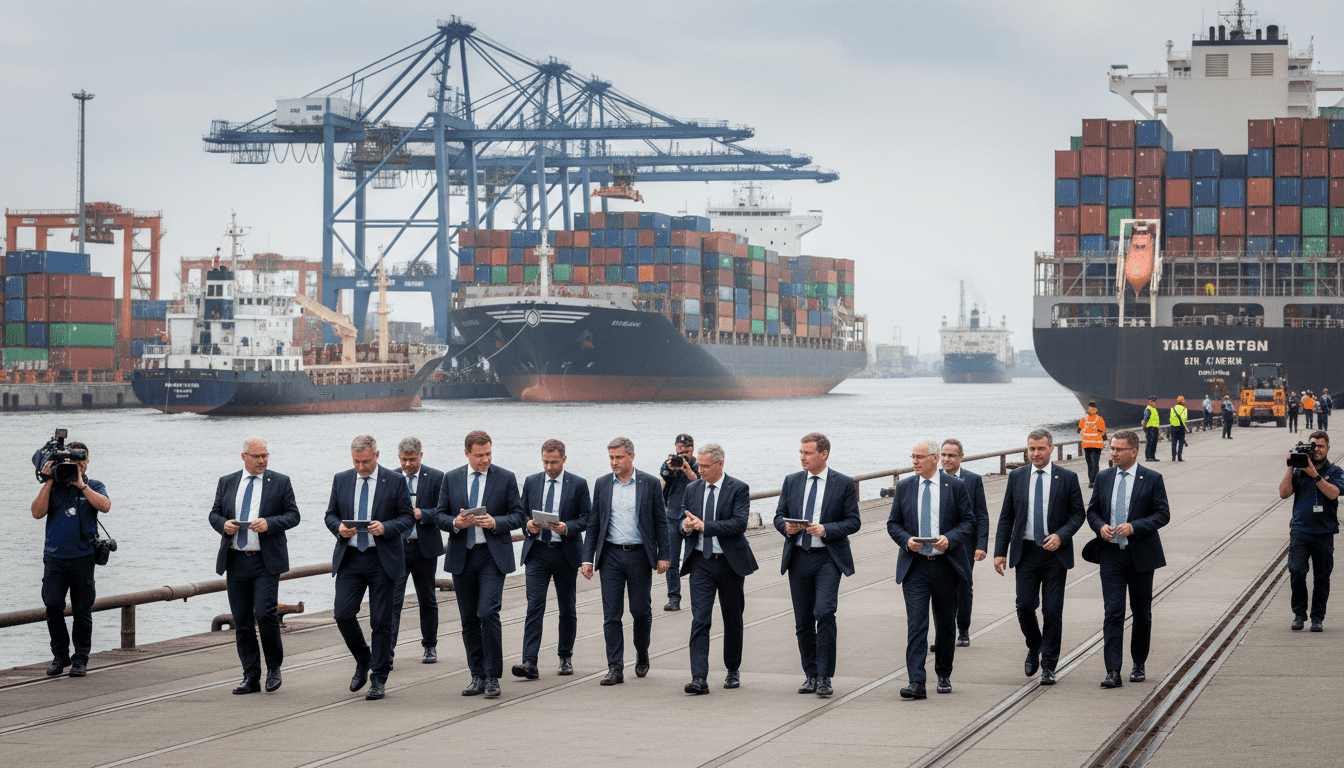
German exports rise in March 2026 despite Iran war, data show
Germany’s exports edged up in March 2026, increasing 0.5% month-on-month and 1.9% year-on-year, as exporters weathered higher oil prices and geopolitical uncertainty, the Federal Statistical Office reported.
March 2026 exports register modest growth
The Federal Statistical Office (Destatis) said German exports totaled €135.8 billion in March 2026, marking a 0.5% increase from February and a 1.9% rise compared with March 2025. The headline uptick came despite supply-chain pressures and higher energy costs linked to the conflict in the Middle East.
Exports to some traditional long-distance markets weakened in the month, but overall shipments were supported by stronger demand from regional partners. Analysts noted the gain was modest and that momentum remained fragile across several industrial segments.
Imports surge and surplus narrows
Imports grew more strongly than exports, rising 5.1% from February and 7.2% compared with the same month a year earlier, Destatis reported. Imports amounted to €121.5 billion in March, producing a trade surplus of €14.3 billion — down from €19.6 billion in February.
The widening gap between import and export growth narrowed Germany’s external surplus, reflecting both higher commodity and energy purchases and resurgent domestic demand for intermediate goods. Policymakers watching the external balance said the trend warrants close monitoring if energy prices remain elevated.
United States shipments fall sharply while EU and UK demand rises
The United States remained Germany’s largest foreign market by value, but shipments to the U.S. fell to €11.2 billion in March, a decline of 7.9% from February and down 21.4% versus March 2025. Exports to China also declined, slipping 1.8% in the month.
By contrast, sales within the European Union rose 3.4% compared with February, and exports to the United Kingdom increased by 3.2%. Firms reported that closer regional markets were easier to serve amid rising freight costs and logistical uncertainty, cushioning the overall export performance.
Rising oil prices lift transport costs and pressure margins
Market observers linked part of the export sector’s weakness to higher oil and fuel prices following intensified fighting in the Persian Gulf region. The conflict pushed up shipping and transport costs, weighing on margins for manufacturers that rely on long-distance logistics.
Jens-Oliver Niklasch, an economist at Landesbank Baden-Württemberg, said higher energy prices have acted as a brake on the industrial recovery. He argued that recent order inflows had created a foundation for recovery, but that escalating transport and input costs had dampened firms’ willingness to expand production.
Industrial production contracts in March
Output in Germany’s industry, construction and energy sectors fell 0.7% in March compared with February, down from expectations of modest growth. The decline reversed a short period of improvement and signaled that the manufacturing cycle remains vulnerable to external shocks.
Analysts pointed to a mix of factors behind the contraction, including weaker demand from certain export markets and rising production costs. The decline in output raised questions about the strength of the recovery that had appeared in late 2025 after a strong December performance by exporters.
Government and business groups revise growth forecasts
The federal government has already trimmed its economic outlook, reducing its growth forecast for 2026 by 0.5 percentage points, reflecting the fallout from higher energy prices and geopolitical tensions. Business associations such as the German Chamber of Commerce and Industry (DIHK) now expect German exports to stagnate in 2026 rather than rise by the previously forecast 1%.
Additional downside risks include renewed trade tensions with the United States after recent tariff threats, which could reopen a dispute that had been set aside in mid-2025. Companies said the prospect of new trade barriers would add uncertainty to investment and export plans for the coming quarters.
Germany’s export sector delivered a modest rise in March 2026, but the combination of higher import growth, energy-driven cost pressures and uneven demand across key markets left the trade picture fragile. Policymakers and exporters will be watching whether regional demand can sustain momentum while global risks remain elevated.
