
JNIM Claims Responsibility for Deadly Central Mali Attacks on Kori Kori and Gomossogou
At least 30 people were killed in near-simultaneous attacks on Kori Kori and Gomossogou in central Mali, with the jihadist group JNIM claiming responsibility. The central Mali attacks targeted members of a pro-government militia and prompted a military response as authorities assessed the toll and searched for missing villagers. Local and national officials reported varying casualty figures as investigations continued.
Deadly assaults on Kori Kori and Gomossogou
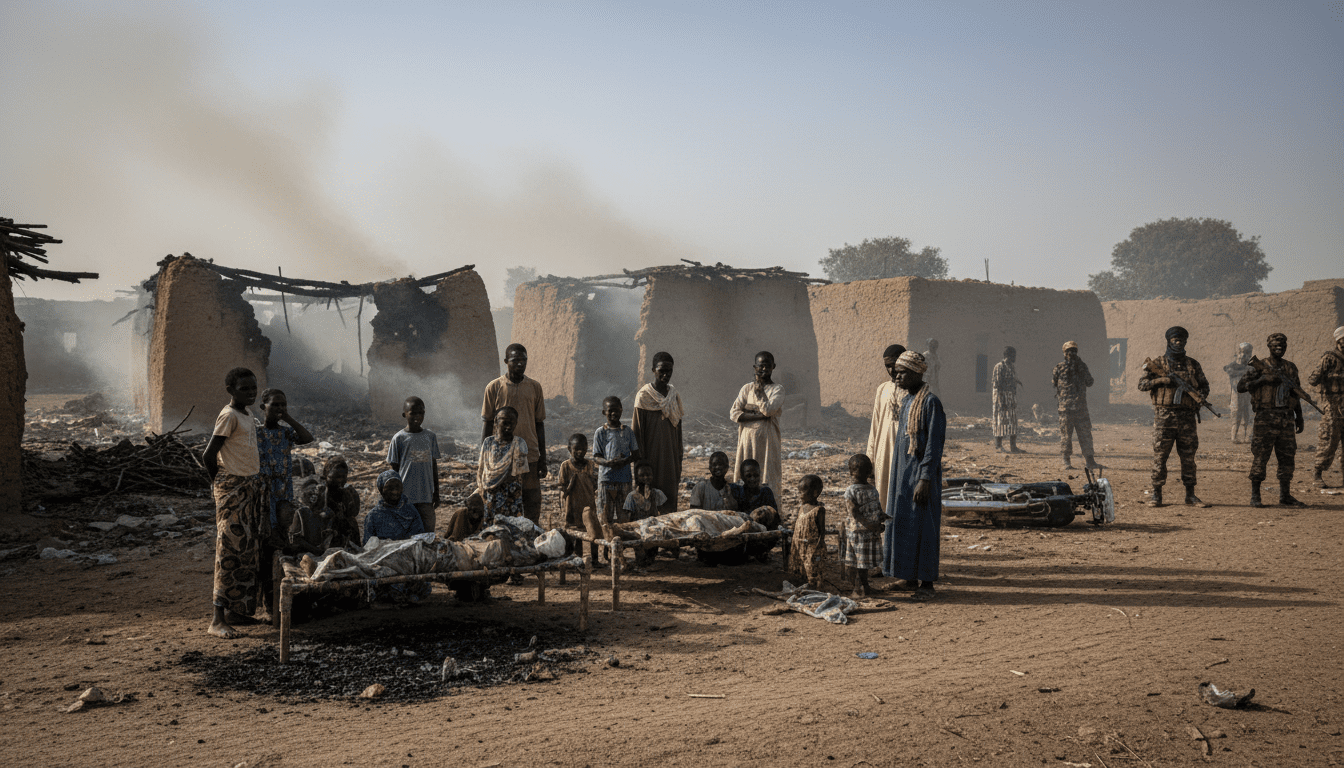
A wave of gunmen struck the two settlements on Wednesday, authorities said, carrying out attacks within hours of one another. Local sources told reporters that dozens were killed, and the jihadist group Jama’a Nusrat ul-Islam wa al-Muslimin (JNIM) later said it carried out the operations. Villagers described scenes of bodies, burning homes and people fleeing into surrounding scrub after the raids.
Eyewitnesses said the violence unfolded quickly, with assailants moving from compound to compound and setting fire to structures. Survivors reported that some victims were combatants while others were civilians, including teenagers and children, who were caught up in the assault. Emergency medical evacuations were hampered by insecurity and damaged infrastructure.
Casualty figures and conflicting reports
Initial counts from security and administrative sources put the death toll at more than 30 people, while a local youth official cited to AFP reported at least 35 fatalities—25 in Kori Kori and ten in Gomossogou. A West African media organization published a higher figure, saying more than 50 villagers had been killed and additional residents were missing. The disparity underscores the difficulty of independent verification in hard-to-reach areas.
Local authorities said many of the dead were members of Dan Na Ambassagou, a militia aligned with the government, but they also noted that youths and children were among the victims. Families in nearby towns gathered to identify the deceased and prepare burials, while humanitarian actors warned of possible undercounting as search efforts continued.
Targets and methods used by attackers
Security sources told investigators the assailants specifically targeted pro-government militiamen, suggesting the attacks were aimed at weakening local armed groups that oppose jihadist networks. Witnesses and media reports said villages were looted and homes set ablaze during the raids, tactics consistent with previous JNIM operations designed to terrorize civilian populations and undermine local authority.
Analysts say the use of near-simultaneous strikes in separate villages is intended to overwhelm local defenses and complicate rapid military or police responses. The attackers reportedly moved rapidly and withdrew before organized reinforcements could arrive, a pattern seen in prior central Mali incidents that has contributed to repeated cycles of violence.
Military response and reported ‘neutralizations’
The Malian army announced on Thursday that it had conducted a targeted operation in the area and “neutralized” approximately a dozen fighters. Officials framed the operation as a direct response to the attacks and said patrols would be increased to secure affected communities. Military statements did not provide detailed independently verifiable evidence of the casualties claimed among the attackers.
Residents and local leaders expressed skepticism about immediate military claims while also calling for greater protection and sustained presence. Humanitarian agencies emphasized the urgent need for safe access to deliver aid, treat the wounded and support displaced families, tasks complicated by ongoing insecurity and limited resources.
Ties to recent JNIM-FLA offensive and political fallout
The attacks occurred about a week and a half after a broader offensive in the north in which JNIM, allied with the Tuareg rebel group FLA, seized multiple towns including the strategic center of Kidal. That offensive also included a deadly car bomb that killed Defense Minister Sadio Camara, a development that has intensified scrutiny of Mali’s security posture. Observers say the new strikes are part of a wider campaign to expand control and pressure the junta that has led Mali since two coups.
Since the withdrawal of most Western forces in recent years and with increased Russian support to the Malian government, security dynamics have shifted across the country. The persistence of jihadist violence, separatist movements and communal militias has continued to challenge governance and humanitarian stability, particularly in central and northern regions.
Humanitarian impact and community needs
Local officials reported that villages were not only attacked but also looted and set on fire, leaving many families without shelter, food or livestock. Displaced residents have sought refuge in nearby towns and with relatives, creating immediate needs for shelter, medical care and psychosocial support. Humanitarian actors cautioned that restricted access and active combat operations could delay relief and worsen the humanitarian toll.
Community leaders urged international and regional partners to press for measures that protect civilians and restore basic services, while calling on the Malian authorities to increase security patrols and invest in reconciliation initiatives. The combination of militia presence and jihadist activity complicates efforts to stabilize affected areas and rebuild trust among rival local groups.
As investigations into the two attacks proceed, security officials said they would intensify patrols and gather evidence to identify the perpetrators and their networks. Families of the dead and missing continue to seek information, and the full human cost may only become clear after aid workers gain secure access to the most affected settlements.
