
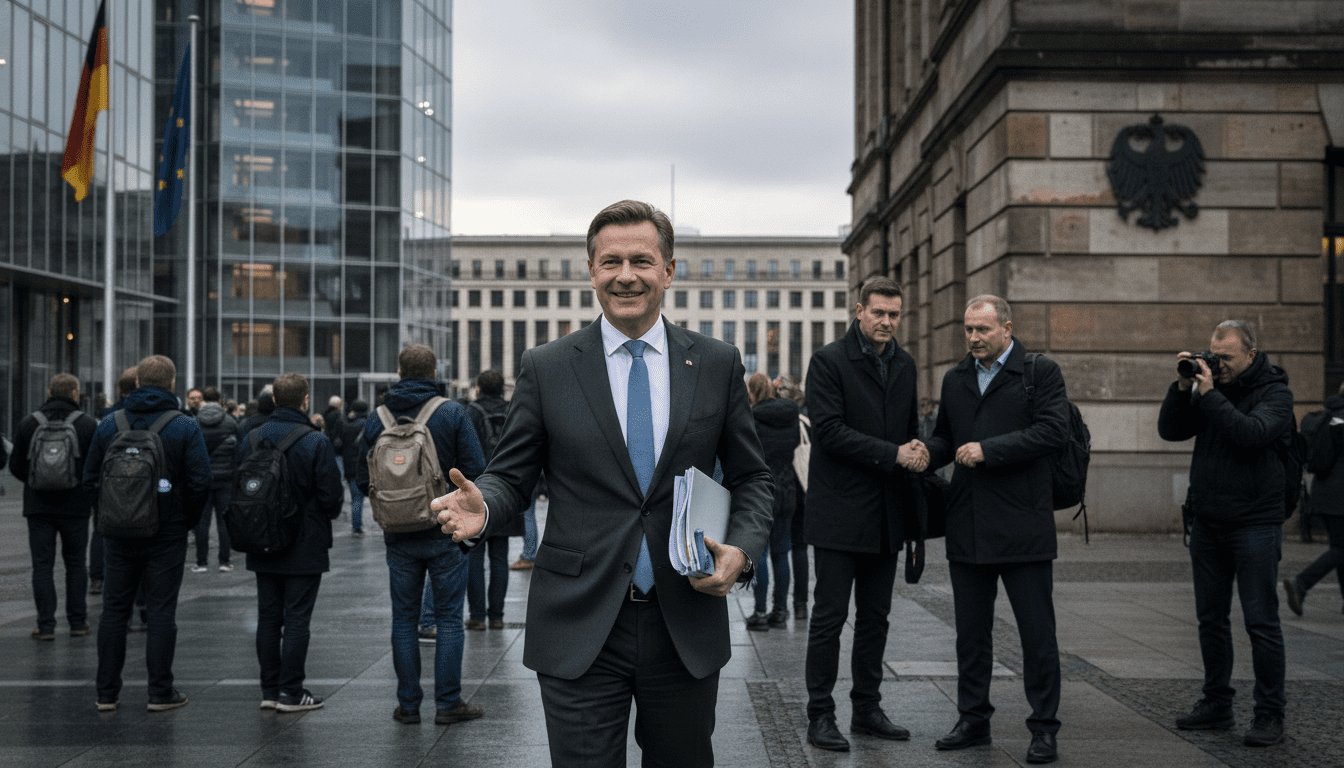
Russian agents in Germany grow bolder as Foreign Minister Wadephul affirms U.S. ties; North Sea whale sighting draws attention
Russian agents in Germany are reportedly acting with greater boldness, prompting increased scrutiny from security services, while Foreign Minister Wadephul projects steady confidence in relations with the United States and a separate whale sighting in the North Sea has captured public interest.
German authorities say the trend of more assertive operations by Russian agents in Germany has raised alarm among counterintelligence officials and political leaders. The development comes amid wider diplomatic tensions in Europe and renewed focus on safeguarding sensitive infrastructure and institutions. Meanwhile, Foreign Minister Wadephul has publicly emphasized continuity in transatlantic cooperation, arguing that strategic alignment with the United States remains a priority. In an unrelated but closely watched development, marine observers reported a whale sighting in the North Sea that has drawn attention from conservation groups and local communities.
Surge in alleged Russian intelligence activity
Security officials in Germany have flagged a rise in what they describe as increasingly overt activities by Russian operatives, citing a mixture of traditional espionage and influence efforts. Government sources say these activities range from intelligence collection to attempts at cultivating contacts within political and business circles. Officials emphasize that while many incidents fall short of criminal thresholds, the cumulative pattern is altering threat perceptions inside federal agencies.
Intelligence analysts note that the tactics mirror broader, state-driven approaches that blend clandestine spying with public-facing influence campaigns. German security services are monitoring networks and communications more closely and have increased information-sharing with European and transatlantic partners. Authorities stress that transparency and preparedness are essential to prevent escalation and protect democratic processes.
Federal response and investigative measures
Interior and counterintelligence offices report stepped-up investigations and targeted operations aimed at disrupting suspected networks and gathering prosecutable evidence. Officials insist they are following legal procedures and balancing civil liberties against national security imperatives. Parliamentarians have been briefed in closed sessions, according to sources familiar with the matter, and lawmakers are pressing for clarity on capabilities and resources.
New measures under consideration include tighter oversight of foreign agents, enhanced screening at critical sites, and accelerated processes for investigating suspected illegal activity. Security officials are also calling for stronger cooperation between municipal authorities and federal agencies to respond quickly to suspicious conduct. The government says legal remedies and diplomatic tools will be employed in parallel to law enforcement action.
Wadephul’s public stance on U.S. relations
Foreign Minister Wadephul has repeatedly signaled an unshakable optimism about the bilateral relationship with the United States, framing it as foundational for Germany’s foreign policy. In recent public remarks he underscored shared strategic interests, from NATO commitments to trade and technology collaboration. His tone contrasts with concerns at home over foreign interference, portraying steady diplomacy as the best defense against destabilizing pressures.
Wadephul’s office says maintaining open lines of communication with Washington strengthens Germany’s hand in addressing espionage and hybrid threats. Diplomats in Berlin describe coordinated dialogues on security matters as increasingly routine, with both sides exchanging intelligence and policy responses. The minister’s message aims to reassure domestic and international audiences that partnership with the U.S. remains resilient despite episodic tensions.
Parliamentary debate and political reactions
The spike in reported Russian activity has prompted spirited debate within the Bundestag, where opposition parties and coalition partners alike are demanding concrete answers. Some lawmakers argue for tougher sanctions and clearer legal pathways to expel or restrict suspected operatives. Others caution against reactionary policies that could damage legitimate diplomatic channels or stigmatize communities.
Civil society groups and legal advocates have urged the government to pair security measures with strict oversight to avoid civil-rights infringements. Human-rights organizations stress that transparency and judicial review must accompany any expansion of surveillance or foreign-agent controls. The political conversation reflects a balancing act between firm counterintelligence action and maintaining Germany’s democratic principles.
North Sea whale sighting draws local attention
Separately, a whale sighting in the North Sea has emerged as a surprising human-interest story, captivating coastal communities and wildlife observers. Marine biologists responding to reports say the animal’s presence is being monitored to assess its health and migratory behavior. Local authorities have advised boaters and the public to give the animal space while specialists evaluate next steps.
Conservation groups are using the sighting to underscore the need for maritime protections and to raise awareness of changing marine ecosystems. Researchers note that increased public engagement with such incidents can bolster support for monitoring programs and funding for marine science. The whale sighting, while unrelated to security developments, highlights how different strands of public life can converge on a single day’s news.
Security implications and diplomatic balance
The combination of reported intelligence activity and a public show of diplomatic steadiness reflects the dual pressures facing Germany: defending national security while preserving international partnerships. Analysts say a calibrated response that blends law enforcement, diplomatic pressure, and international cooperation is necessary to deter future incidents. Government officials emphasize that measured, legally grounded actions are more effective than rhetorical escalation.
Policymakers acknowledge the need to update legal frameworks and invest in capabilities to detect and counter hybrid threats without eroding civil liberties. At the same time, maintaining robust ties with allies—including the United States—remains central to a coordinated response. Observers say the coming weeks will test how Berlin translates public concern into policy and whether enhanced cooperation can reduce the space for foreign interference.
The unfolding mix of security alerts, diplomatic positioning and an unusual marine sighting has punctuated public attention and prompted calls for clear information from authorities. As investigations continue and diplomatic exchanges progress, officials say they will provide updates to lawmakers and the public while monitoring maritime developments in the North Sea.
