
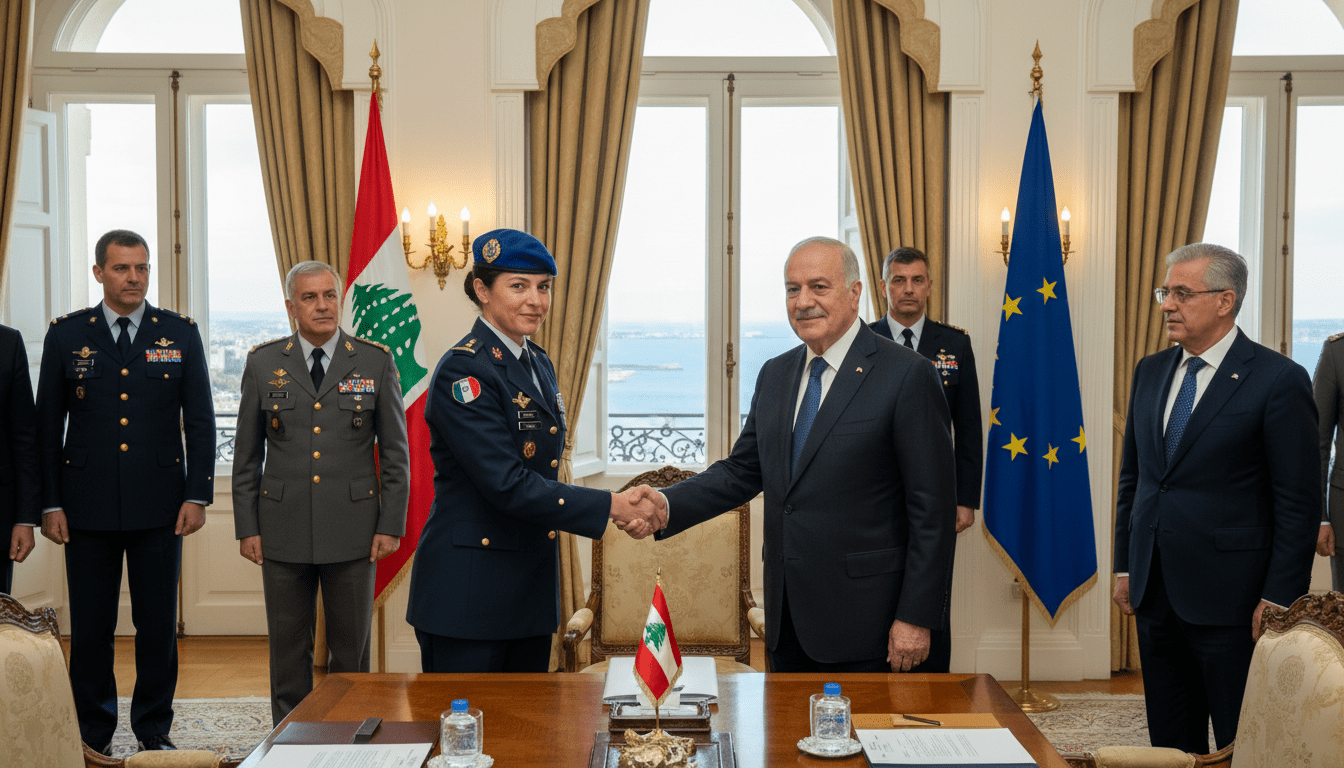
Lebanon signals openness to European forces in southern Lebanon after UNIFIL withdrawal
Lebanon’s president says France and other European countries could maintain a military presence in southern Lebanon to support the Lebanese army after UNIFIL leaves, with conditions to be defined in consultation with the United Nations and partner states.
President Aoun’s statement on European forces and UNIFIL
Lebanon’s President Joseph Aoun said he welcomes the willingness of France and other European countries to keep forces in southern Lebanon following the planned withdrawal of the United Nations Interim Force in Lebanon (UNIFIL) later this year.
The presidency shared Aoun’s remarks on X, stating that any continued foreign presence should help the Lebanese army maintain security and stability in the south.
Aoun emphasized that the framework for such deployments must be defined in consultation with the concerned countries and the United Nations.
The comment signals Beirut’s openness to a post-UNIFIL arrangement while underscoring the need for agreed rules and coordination.
Planned UNIFIL withdrawal and timeline
UNIFIL’s withdrawal, described by Lebanon’s presidency as beginning later this year, has reshaped security planning in the border region.
Beirut’s reference to a transition reflects concerns about a capability gap once the UN peacekeeping force reduces or ends operations.
Officials in Lebanon and abroad will now face a compressed timeframe to negotiate any replacement or complementary forces.
The exact calendar and sequencing of the UN drawdown remain subject to discussions among the UN, troop-contributing countries and Lebanese authorities.
France’s role and European interest
Aoun singled out France among the European partners expressing readiness to remain in the south, highlighting Paris’s longstanding military ties with Lebanon.
French forces have operated in Lebanon historically and Paris has periodically deployed troops for training, logistics and stabilization missions.
Any sustained French or European deployment would require bilateral or multilateral agreements that clarify mission scope, duration and legal authority.
Such commitments could also carry political weight in the region and affect Lebanon’s diplomatic relations with neighboring states.
Conditions and legal framework sought by Beirut
The presidency made clear that Lebanon expects a defined operational framework before foreign forces are retained on its soil.
Key questions include the mandate’s legal basis, rules of engagement, command relationships and coordination with the Lebanese Armed Forces.
Beirut’s insistence on consultation with the United Nations and concerned countries reflects a desire to preserve sovereignty and ensure legitimacy.
Negotiators will need to reconcile Lebanon’s security needs with international obligations and troop-contributors’ constraints.
Security implications for southern Lebanon
Maintaining foreign forces in the south could help the Lebanese army plug security gaps and deter escalations along the border.
The region has seen repeated tensions and military incidents, prompting concern among civilians and officials alike.
A complementary European presence could focus on monitoring, logistics and training while the Lebanese army retains lead responsibility for law enforcement.
However, the success of such a model will depend on clear mandates and the capacity of the Lebanese military to sustain operations over time.
Diplomatic hurdles and regional sensitivities
Any arrangement that extends European military presence will need to navigate regional politics and domestic opinion in Lebanon.
Neighboring countries and regional actors will scrutinize the composition, mission and duration of external forces on Lebanese territory.
Within Lebanon, political factions may condition their support on assurances about sovereignty, neutrality and oversight.
These diplomatic and domestic dynamics are likely to shape both the pace and scope of any post-UNIFIL deployment.
Next steps and expectations for consultations
Lebanon’s government and presidency have signaled that formal consultations with the United Nations and potential troop contributors should define the next phase.
Discussions are expected to address operational detail, logistical support, and mechanisms for oversight and accountability.
Ultimately, any sustained foreign presence will hinge on negotiated agreements that balance security needs with legal and political acceptability.
Observers say clarity on mandate and timing will be crucial to avoid gaps in protection and to preserve Lebanon’s control over its territory.
Lebanon’s announcement marks a key moment as stakeholders prepare for UNIFIL’s planned drawdown, with the presidency stressing that any continued foreign military presence in southern Lebanon must be carefully structured and agreed with the United Nations and the countries involved.
