
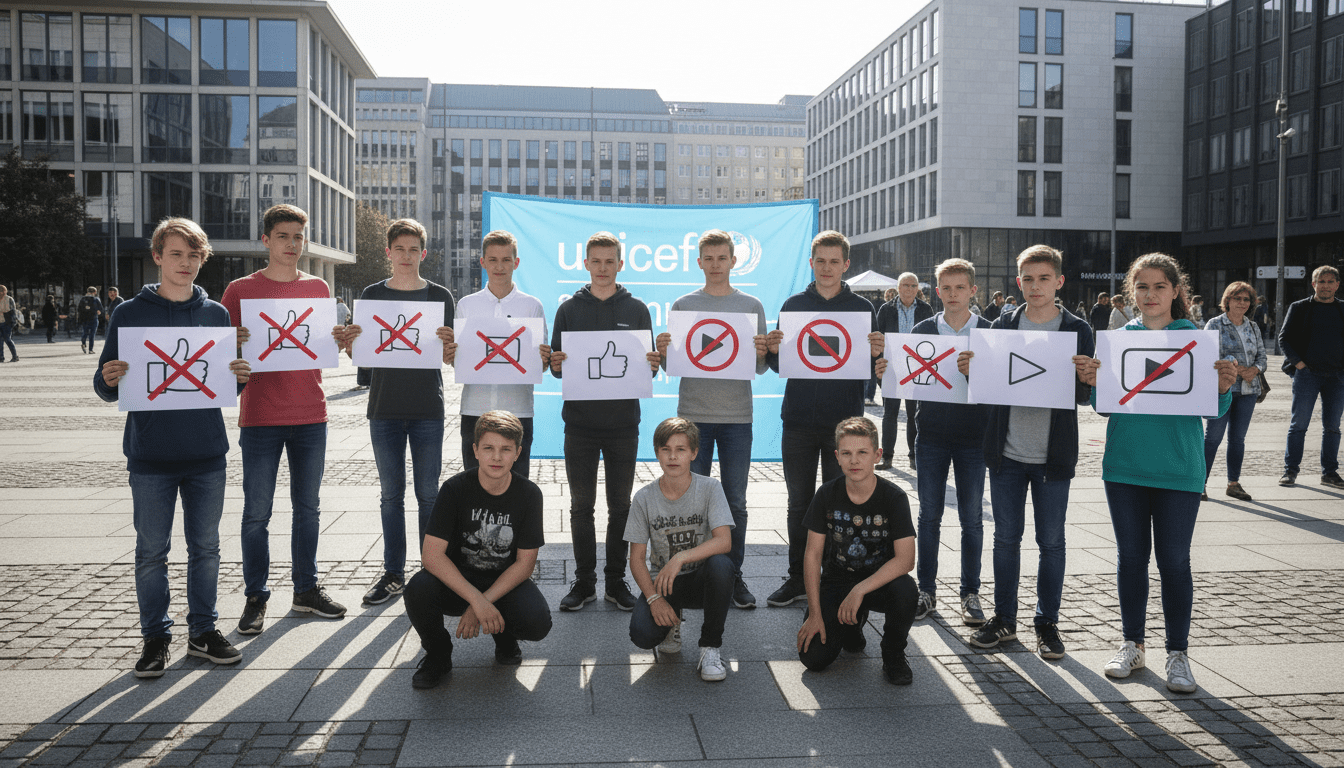
Majority of German Teenagers Support Social-Media Ban for Under-14s, UNICEF Germany Survey Shows
A new UNICEF Germany survey finds 55% of 14- to 16-year-olds back a social-media ban for under-14s, while rejecting a blanket ban for their own age group.
Survey findings
The representative poll, carried out by UNICEF Germany, interviewed just over 1,000 adolescents aged 14 to 16 about age limits on social media use. Fifty-five percent of respondents said they consider an age threshold for younger children to be appropriate, signaling majority support for restrictions aimed at under-14s.
Respondents drew a clear line when asked about their own cohort: a broad prohibition on social media for 14- to 16-year-olds was met with substantial opposition. The survey therefore captures a nuanced view among teenagers who favor protective measures for younger children but resist blanket restrictions on older minors.
What the numbers reveal about youth attitudes
The results suggest adolescents distinguish between different developmental stages when it comes to online access. By supporting a ban for under-14s, a majority of the surveyed teens signaled concern for younger users while maintaining that older teenagers require more autonomy online.
At the same time, the willingness of many respondents to oppose restrictions for their own age group indicates awareness of the social and educational roles that social platforms play for teenagers. The split underscores that youth perspectives are not monolithic and that policy measures will face differing levels of acceptance across age brackets.
Context within ongoing policy debates
The UNICEF Germany survey arrives amid broader discussions about how to protect children online without unduly limiting digital participation. Policymakers, child welfare advocates and platform operators have for years grappled with balancing safety, privacy and freedom of expression for minors.
While the survey does not provide prescriptive policy solutions, it adds empirical weight to calls for age-sensitive regulations. The findings are likely to be referenced in debates on age verification, parental controls, platform responsibility and digital education aimed at younger users.
Potential implications for schools and families
Educators and parents may view the survey as validation of efforts to shield younger children from potentially harmful content and interactions online. If legislators respond by tightening age thresholds, schools could see increased emphasis on digital literacy programs for preteens and younger teenagers.
Conversely, the clear rejection of a blanket ban for older teens suggests any new measures will need to be carefully calibrated to preserve access to educational resources and peer networks that are increasingly embedded in social platforms. Practical policies will therefore have to pair restrictions with support for safer, age-appropriate online participation.
How the survey could influence platforms and regulators
For social-media companies, the survey is a reminder that public opinion among young users favors differentiated approaches rather than blanket prohibitions. Platforms may face renewed pressure to implement more robust age-gating and to develop features tailored to younger age groups.
Regulators may also use the data to justify targeted interventions—such as stricter verification for accounts belonging to under-14s or mandatory safety defaults for younger users—while avoiding measures that would cut off access for older teenagers without alternatives.
Next steps and areas for further research
Experts and advocacy groups are likely to call for more detailed data on why teens support an under-14 threshold and which online risks they prioritize. Complementary studies could examine parental attitudes, the experiences of younger children, and the effectiveness of specific platform safeguards.
Policymakers will need evidence about enforcement feasibility, the impact of age limits on child well-being, and the trade-offs between protection and participation. The UNICEF Germany poll provides a starting point, but designing effective responses will require broader consultation and follow-up research.
The survey highlights a clear preference among German adolescents for protecting younger children online while preserving access and autonomy for older teens, framing a central tension that policymakers and platforms must now address.
