
Germany heating law U‑turn saves households €5bn a year as 65% renewables mandate is scrapped
Germany’s heating law U‑turn lifts the 65% renewables requirement and aims to save households about €5 billion annually while introducing phased biomethane and bio‑oil blending through 2040.
Germany’s government has proposed a major reversal of its heating law that would remove a planned requirement for new systems to run on at least 65% renewable energy, a move officials say will relieve households of roughly €5 billion in annual costs. The draft building modernization law, obtained by Reuters, would replace the current Gebäudeenergiegesetz (GEG) and introduce a phased blending mandate for biomethane and bio‑oil for new gas and oil heaters beginning in 2029. The change is being led by the Economy Ministry under Katherina Reiche (CDU) and the Construction Ministry under Verena Hubertz (SPD) as interministerial coordination begins.
Draft would abolish 65 percent renewables obligation
A central element of the draft is the removal of the blanket 65% renewables obligation for newly installed heating systems, which had been set to take effect in 2026. Government sources say the repeal accounts for the bulk of the projected €5 billion annual consumer relief, and that the measure is intended to give property owners greater choice when replacing heating systems. Officials describe the new law as more technology‑neutral and practicable than the GEG it would supplant.
Phased blending requirements start in 2029 and rise to 60% by 2040
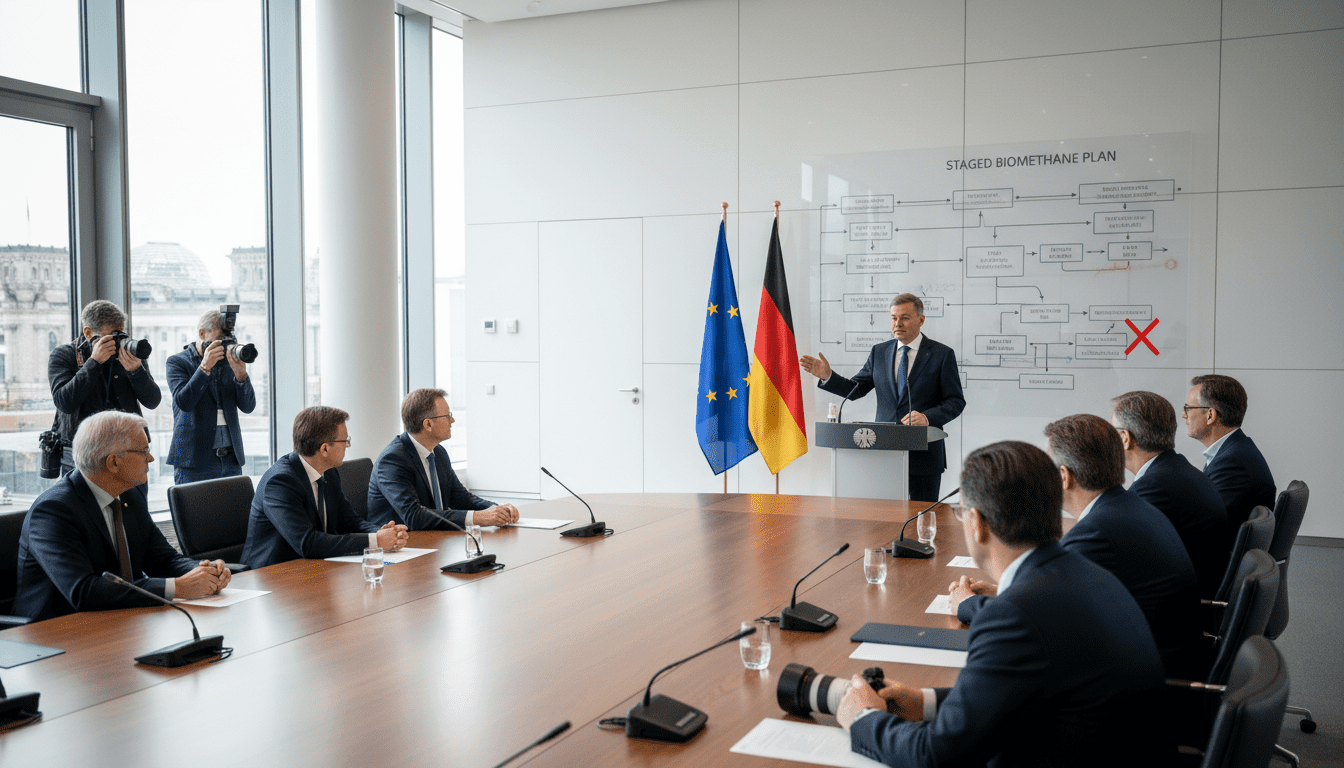
Rather than an immediate renewables quota, the draft introduces a staged blending requirement for climate‑neutral fuels in new gas and oil boilers. The mandate would start at 10% in 2029, rise to 15% in 2030, move to 30% by 2035, and reach 60% in 2040. Lawmakers and ministries say the approach aims to combine continued use of existing fuel infrastructure with a gradual shift toward lower‑carbon fuels as supply and market conditions evolve.
Businesses to gain €2.3 billion annually from the change
Economic analysis attached to the draft estimates that scrapping the 65% rule would reduce costs for industry by about €2.3 billion each year. Supporters argue the adjustment will ease short‑term burdens on manufacturers, installers and building owners and reduce disruption in supply chains for heating equipment. Critics counter that the long lead time for higher blending shares could slow investment in heat‑pump and fully renewable technologies.
New cost‑sharing rules for tenants and landlords from 2028
To address concerns about distribution of costs, the coalition has agreed to new cost‑sharing provisions for buildings with rented accommodation. From 2028, CO2 pricing and gas network charges would be split equally between tenants and landlords, and the same 50/50 sharing would apply to premium costs for the climate‑friendlier fuels required from 2029. The government says the measure is intended to prevent disproportionate cost shifts onto tenants while enabling private owners to decide on heating replacements.
Legal transition moved to prevent overlapping rules
The federal cabinet recently adopted a transitional measure that delays the original July 1, 2026 start date for the 65% requirement to November 1, 2026. Officials said the short postponement was necessary to avoid a scenario in which the earlier rule briefly took effect and then was immediately superseded by the new legislation, creating legal uncertainty for installers and buyers. The draft law itself must still pass through further interministerial reviews and the parliamentary process before any final change takes effect.
Green Party and climate advocates issue sharp criticism
Opponents, most prominently the Green Party, criticized the draft as a step away from rapid decarbonisation of buildings and warned it could lock in continued reliance on fossil fuels. Green lawmakers argued the approach risks higher long‑term costs for tenants, potential job losses in green sectors and weakened prospects for meeting national climate targets. Government defenders counter that the blending pathway preserves a practicable route to lower carbon heating without imposing immediate, heavy costs on households and businesses.
The draft signals a significant policy shift in Germany’s approach to building heating, balancing near‑term cost relief against a slower timetable for moving away from fossil fuels. The proposal still faces political debate and parliamentary scrutiny before it can become law, with its ultimate impact to be shaped by later amendments, market responses and the availability of climate‑neutral fuels.
