
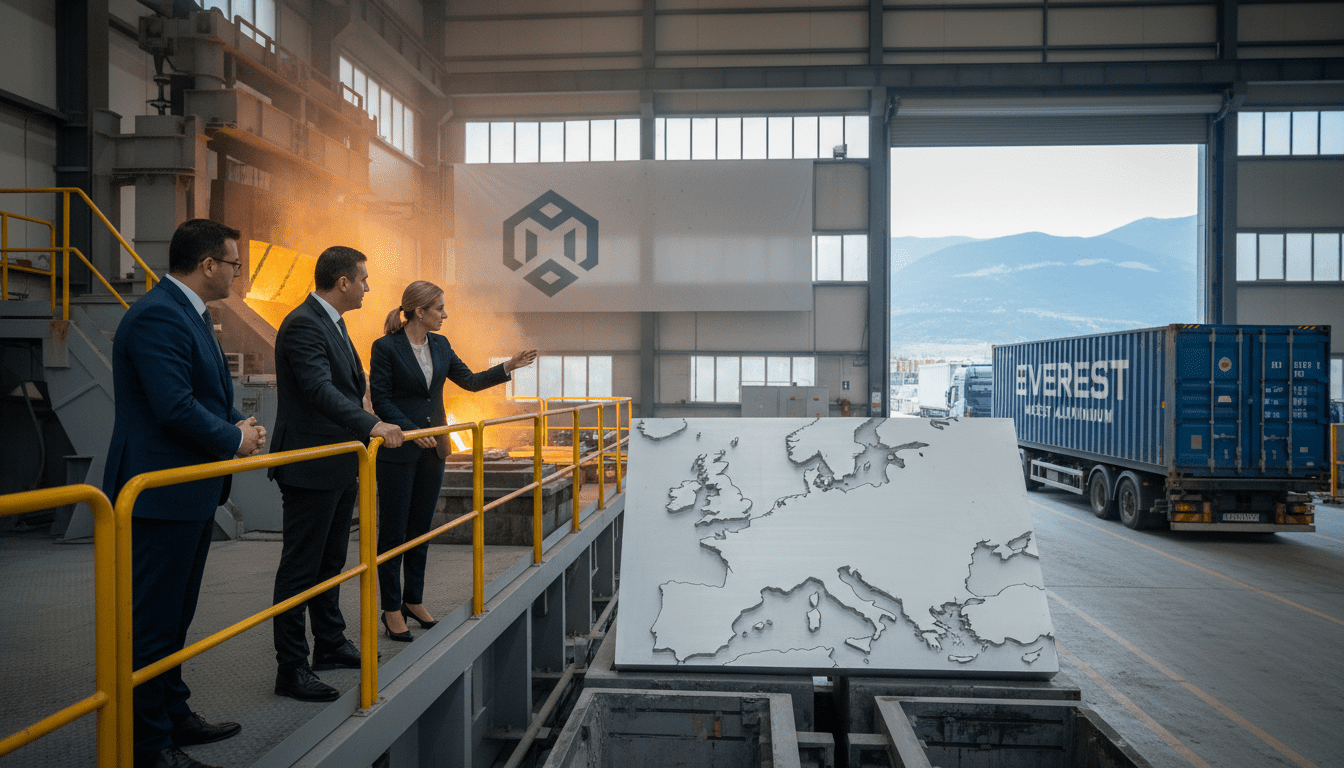
CBAM Advantage: Albanian Aluminium Maker Everest Beats EU Carbon Border Tax with Hydropower and Recycling
Albanian aluminium maker Everest avoids EU CBAM charges by using recycled metal and hydropower, gaining a pricing edge as the EU carbon border levy rises.
Albanian aluminium processor Everest says it will escape the European Union’s Carbon Border Adjustment Mechanism (CBAM) costs thanks to a production chain powered by recycled metal and renewable electricity. The company, based in Tirana and led by manager Albert Valteri, manufactures profiles used in the auto and window industries and exports most of its output to EU markets. As Brussels applies a CO₂-based import levy, Everest’s low-emission profile is positioning the firm as a cost-competitive supplier to European automakers and construction clients.
How Everest qualifies under CBAM
Everest’s advantage stems from two production choices: the exclusive use of recycled aluminium and electricity sourced entirely from renewables. Company representatives say half of that electricity comes from on-site photovoltaic panels and the other half from Albania’s predominantly hydropower-driven grid. Those factors, the firm argues, reduce its embedded CO₂ to levels that remove or sharply lower the CBAM charge on imports into the EU.
Production model described as ‘double green’
Manager Albert Valteri describes the output as effectively “double green,” reflecting both recycled feedstock and carbon-light power inputs. Everest operates continuous production lines and reports steady demand growth from EU customers, who are now factoring CBAM into procurement decisions. The company’s roughly 600 employees work on presses that supply component makers for brands including Volkswagen and Mercedes, and Valteri says about four fifths of output is destined for EU assembly lines and construction projects.
Hydropower legacy reduces energy-related emissions
Albania’s energy mix is a key reason many domestic manufacturers can claim low carbon intensity. Much of the country’s electricity is produced by hydropower, an outcome of dams built during the Communist era that still supply the grid today. That historic investment in hydro infrastructure gives firms like Everest a structural energy advantage, lowering the carbon footprint of electricity-intensive industries compared with producers reliant on fossil-fueled grids.
CBAM’s price signal and competitive consequences
Brussels set an initial CO₂ import charge in April at a level that industry observers warned would raise costs for high-emission producers outside the EU. Market participants expect the levy to track emissions-pricing mechanisms and to rise over time, increasing the price pressure on carbon-intensive steel and aluminium exporters. Everest’s capacity for auto-supply — cited at roughly 26,000 tonnes — means avoiding the levy could translate into savings worth millions of euros annually compared with less green competitors.
Wider economic impacts on Albania
The CBAM effect arrives as Albania experiences broader growth momentum driven by tourism, remittances and construction. The country’s tourism sector has expanded rapidly in recent years, boosting services revenues and investment in infrastructure, while international transfers from migrant workers support domestic consumption. Policymakers are also pushing digitalization, requiring hospitality businesses to offer digital payment options and promoting online public services to modernize the economy.
Policy challenges and investor interest
Government efforts to diversify beyond tourism include promoting the digital economy and attracting investment in higher-value manufacturing and services. Officials have experimented with high-visibility digital governance tools to curb corruption in public procurement, though business representatives say judicial capacity remains a constraint for sustained reform. At the same time, investors and trade partners are taking notice of Albania’s low-cost, low-carbon provision of electricity and its potential to host further export-oriented industry.
Albanian exporters such as Everest illustrate how national energy endowments and company-level sustainability practices can interact with EU climate policy to reshape competitiveness patterns. As the CBAM regime evolves and import charges become more closely linked to emissions pricing, producers that combine recycled inputs with renewable power are likely to find a growing market niche in Europe. The coming quarters will test whether this edge leads to lasting industrial reallocation or merely a temporary price advantage for those already positioned to meet the EU’s low-carbon criteria.
