
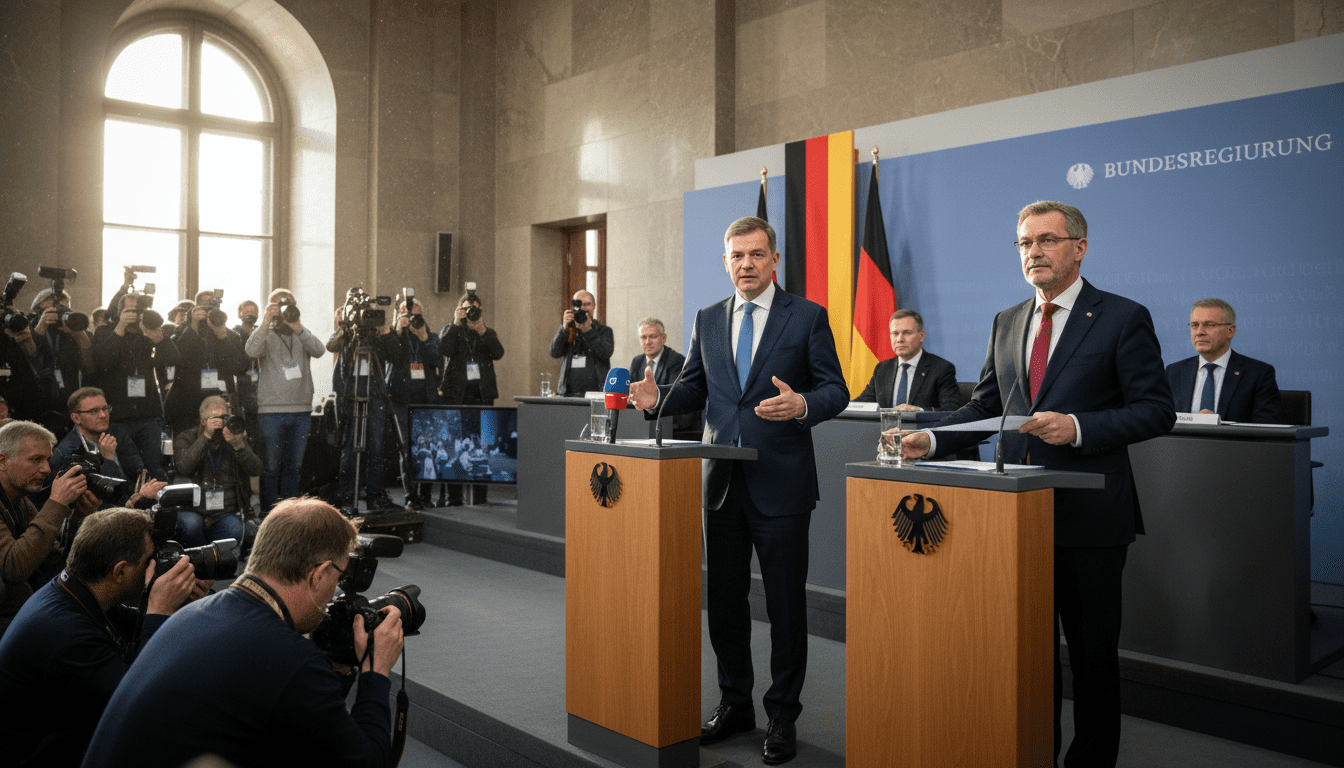
Black-Red Coalition Marks One-Year Milestone as Parties Push for Faster Reform
One year after entering government, the black-red coalition faces internal pressure to accelerate delivery as CDU and SPD leaders publicly back a full four-year term.
Coalition’s first-year assessment
Senior figures in both the CDU and SPD offered upbeat public assessments of the black-red coalition’s first year, insisting the partnership can last the full legislative term. Parliamentary managers from the two parties argued this week that, despite differences, they chose to shoulder joint responsibility for government for four years and must now concentrate on implementation. Their comments reflect an effort to counter narratives of dysfunction and to present unity ahead of the coalition’s second year in office.
At the same time, officials acknowledged that progress has not matched expectations in all areas and signalled a willingness to intensify efforts. Party spokespeople highlighted a shift from initial planning to a renewed emphasis on execution, indicating that the coming months will be judged on delivery rather than rhetoric.
CDU and SPD parliamentary chiefs call for unity
Steffen Bilger, the CDU’s parliamentary floor manager, said the partnership has the capacity to persist for the full term and urged colleagues to focus on shared responsibilities. SPD parliamentary chief Dirk Wiese echoed the sentiment while warning that recent internal frictions have slowed progress and must be resolved. Wiese told broadcasters that both parties need to “roll up their sleeves” and reduce sidelined commentary if the coalition is to meet its aims.
Both officials framed the remarks as a rallying call for discipline and mutual respect within the coalition, stressing that different party cultures require deliberate cooperation to convert agreements into enacted policy. Their messaging is aimed at dampening speculative media narratives and at signalling to ministers and ministries that priorities must be advanced more swiftly.
Calls from within CDU for implementation push
Prominent CDU voices moved beyond reassurance to press for a tangible increase in implementation pace. Philipp Amthor, a member of the CDU national board, said the coalition now needs a “continuation and, above all, an execution will” and urged that policy content be prioritised over internal sentiment. His intervention reflects concern inside the ruling union that procedural delays and political posturing threaten to undermine public confidence.
Kanzleramtsminister Thorsten Frei defended the coalition’s reform record while acknowledging unfinished business, saying the government has laid groundwork under Chancellor Friedrich Merz but must now “add another shovel” to the effort. CDU officials presented this as a roadmap: consolidate the past year’s initiatives and move rapidly to full implementation in the next legislative phase.
Green and AfD reactions expose political fault lines
The coalition’s supporters and critics offered contrasting readings of the past year, underscoring the fragile public narrative surrounding the government. Franziska Brantner, co-leader of the Greens, warned that the current dynamics recalled the collapse of the previous SPD–Green–FDP administration and criticised what she described as short-term partisan manoeuvring. Her comments signalled scepticism that the black-red partnership is fully aligned around long-term governance priorities.
On the opposite flank, AfD parliamentary chief Bernd Baumann declared the government effectively failed and beyond rescue, calling the coalition a “madhouse” rather than a functioning administration. Such stark opposition reactions are likely to intensify media scrutiny and make cross-party consensus on contested reforms harder to reach.
Policy priorities and the test of delivery
Ministers and party managers identified a cluster of policy areas where rapid advances are now expected, including economic reforms and administrative streamlining. CDU officials emphasised the need to turn legislative packages into measurable outcomes and to present a clearer timetable for implementation. SPD leaders said social and labour measures must not be delayed, framing delivery as essential to maintaining public trust.
Analysts say the coalition’s credibility will hinge on visible wins that affect citizens’ daily lives within the next 12 months. Without demonstrable progress, the government risks allowing opposition narratives to dominate public perception and to weaken support within each partner’s base.
Political discipline and intra-coalition messaging
A recurring theme among coalition figures was the need to curb public finger-pointing and to improve coordinated communication. SPD and CDU parliamentary managers explicitly complained about “sideline comments” that distract from joint work and create confusion about shared priorities. Party strategists now face the challenge of balancing internal debate with a disciplined external message that emphasises unity of purpose.
Efforts to centralise coordination at the chancellery and through inter-ministerial working groups are expected to intensify, with an eye toward reducing leaks and ensuring policy milestones are met. The coalition’s ability to institutionalise cooperation beyond rhetorical commitment will be a practical indicator of its durability.
One year on, the black-red coalition is seeking to convert early optimism into a sustained record of delivery, with party leaders publicly urging a sharper focus on implementation while opponents brand it unsalvageable. The coming months will test whether renewed discipline and clearer prioritisation can produce the tangible results that both parties now say are essential.
