
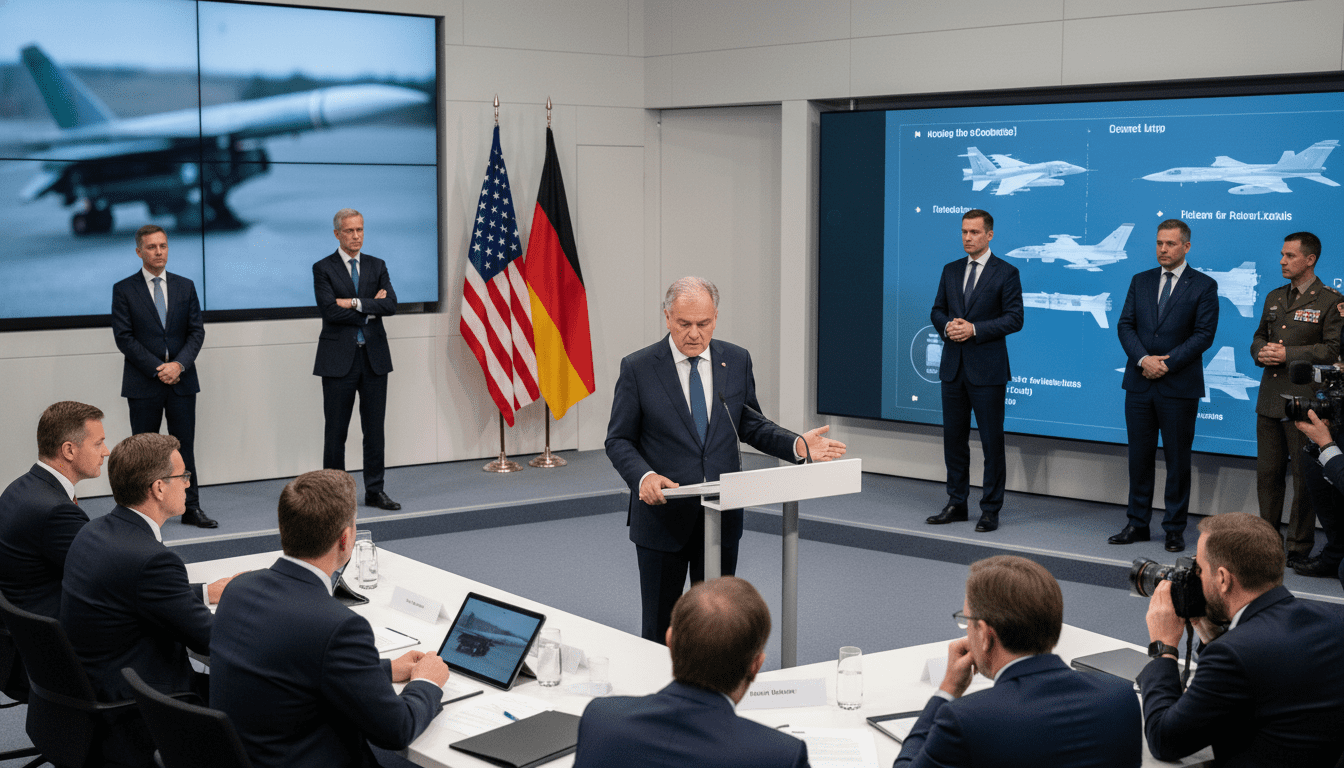
Merz faces setback as US declines stationing of US medium-range missiles in Germany
Merz faces a diplomatic setback after Washington declines to station US medium-range missiles in Germany; Berlin explores direct purchases, deliveries and European deterrence.
Friedrich Merz on Monday acknowledged growing strain in transatlantic ties after Washington signalled it will not proceed with the planned stationing of US medium-range missiles in Germany. The decision marks a setback for the chancellor’s effort to anchor deeper conventional deterrence on allied soil and has prompted urgent talks in Berlin about alternative options. German officials say work is under way to limit the political and military fallout while exploring direct procurement and European capability-building.
Government seeks to contain diplomatic fallout
Berlin officials began immediate damage control after the U.S. announcement, according to government sources. Ministers and senior officials have convened interdepartmental meetings to separate the cancelled stationing from ongoing procurement talks and to assess legal, budgetary and operational implications.
The aim in those sessions is pragmatic: identify which elements of the July 2024 German‑U.S. commitment can still proceed at the working level and whether available U.S. systems could be purchased rather than stationed. Officials stress that preserving cooperation on deterrence and Ukraine support remains a priority even as the political dynamic with Washington shifts.
Plans to buy weapons and build European capabilities continue
Work-level discussions on acquiring U.S. systems have not stopped, Berlin says, and a preliminary inquiry has been registered with U.S. authorities. Defence planners are examining whether the Bundeswehr can fill the gap through direct acquisition of compatible launchers and munitions, including systems able to fire long-range cruise missiles.
Parallel measures are also advancing in Europe: Germany intends to accelerate modernization of existing Taurus cruise missiles and to develop its Deep Precision Strike architecture through the ELSA programme. Officials argue a mix of purchases and European cooperation would both shorten timelines and reduce single-source dependence.
Technical options under consideration
One concrete avenue under review is buying launcher systems such as the Typhon, which can deploy Tomahawk cruise missiles and SM‑6 interceptors, offering a quick route to plug part of the deterrence shortfall. Defence ministry spokespeople described the inquiry as a “running process” but declined to confirm specific platforms or timelines.
At the same time, procurement specialists caution that transferring sophisticated weaponry entails export controls, industrial offsets and training burdens that could delay operational deployment. That reality shapes Berlin’s preference for layered solutions—buy where feasible, modernize what exists, and deepen cooperation with European partners.
Domestic political costs and questions of credibility
For Merz the episode carries political risks at home, with critics framing the U.S. decision as exposing a vulnerability at the core of his foreign and security strategy. The chancellor’s push for a more autonomous European deterrent has been linked by allies and opponents alike to prior decisions taken early in his government.
Some within his own party privately cite that early fiscal and defence choices created expectations that have become difficult to meet without full U.S. follow‑through. Merz has acknowledged taking a reputational “credit” with voters for prioritising defence, and opponents say the missed stationing accentuates doubts over whether he has recouped that political capital.
July 2024 agreement now fragile but still relevant
The arrangement announced in July 2024, which committed the United States to station a range of multi-domain capabilities in Germany from 2026, was hailed as a transatlantic success at the time. It explicitly referenced systems with reach beyond current land‑based options and was intended to close a known conventional deterrence gap in Europe.
Yet since the change in Washington’s posture, German officials say they have not received renewed high‑level reassurances, and some components of that pledge are now in doubt. Berlin’s approach has been to keep much of the work at the technical level in hopes the commitments can still be implemented incrementally.
Diplomatic calendar and the path ahead
A face‑to‑face meeting between President Trump and Chancellor Merz is expected to occur at the G7 leaders’ meeting in Évian in mid‑June, where both leaders may seek to clarify their positions on force posture and munitions transfers. German diplomats see that summit as a key opportunity to test whether the stationing question can be resurrected or whether Germany must pivot decisively to purchases and European programmes.
Until then, the government will attempt to thread a narrow needle: maintain public insistence on the value of the transatlantic tie while quietly preparing alternative military and procurement routes. The ultimate outcome will shape Berlin’s defence posture and the credibility of Merz’s wider strategy on European security.
The coming weeks will therefore be decisive for both diplomatic relations with Washington and for Berlin’s capacity to translate political commitments into operational deterrence.
