
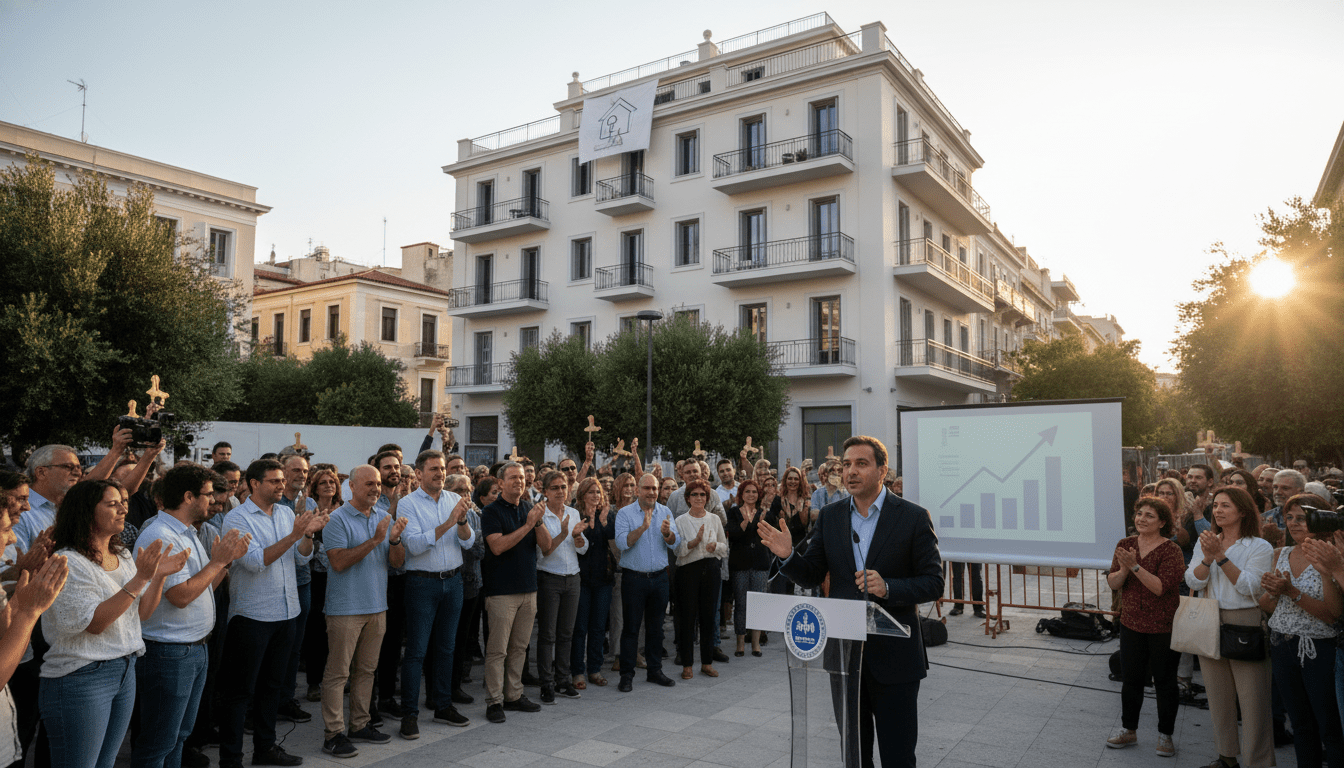
Athens housing market soars as prices double and affordable supply dwindles
Athens housing market is overheating: prices have doubled since 2017, tourism and foreign buyers shrink supply while the city rolls out limited social housing.
Athens’s housing market has entered a rapid growth phase that is pushing prices beyond the reach of many residents and reshaping investment patterns across the capital. Property values in Attica have risen sharply since 2017, driven by foreign buyers, short-term rentals and large-scale developments that cater to high-end demand. City authorities say they are introducing targeted measures, but activists and analysts warn that the supply of affordable long-term homes remains critically short.
Prices climb across Attica
Average property prices in Athens and the surrounding Attica region have surged, with official figures showing a roughly 104 percent rise since 2017. Central and coastal neighborhoods such as Kolonaki and Glyfada now command rates above 5,000 euros per square meter, and some listings from luxury brokers reach 8,000 euros per square meter. Even mid-range districts are experiencing sharp gains, shrinking the pool of areas where entry-level apartments remain available.
Short-term rentals squeeze long-term supply
A proliferation of short-term tourist lets has removed stock from the long-term rental market in the city centre, city officials and real estate agents report. Municipal authorities have stopped issuing new short-stay licenses in neighborhoods including Syntagma, Kolonaki and Plaka to curb the conversion of residential units into tourist accommodations. Nonetheless, long stairwells and building entrances often bear dozens of padlocks for temporary-rental tenants, a visual sign of homes taken out of the permanent-housing pool.
Legacy debts and legal bottlenecks keep homes empty
A legacy of the debt crisis continues to distort supply as banks and special-purpose funds hold large portfolios of repossessed homes that rarely return to the rental market. Lawyers and industry representatives point to complex property and insolvency laws and a slow judicial system as major obstacles to clearing the clogged pipeline. Until ownership and financing issues are resolved more quickly, many apartments will remain vacant or underutilized despite strong demand.
Mayor’s interventions and the first social flats
Athens’s mayor, Haris Doukas, has framed the shortage as both a social and political priority and announced a set of relief measures for vulnerable households. The municipality and central government are providing targeted subsidies and renovation grants, tightening hotel licensing, and preparing to inaugurate seven social housing units near Omonia as an initial step. City officials describe these moves as necessary but limited in scale given the extent of demand across the capital.
Ellinikon megaproject drives high-end sales
Large redevelopment schemes are reshaping investment flows, most notably on the former Ellinikon airport site, which is being built into a mixed-use complex with residences, offices and leisure facilities. The Riviera Tower, planned as Greece’s tallest residential block, has become a symbol of upscale development, and developers report that a substantial share of units are sold or reserved to overseas buyers. Critics argue that such projects add high-quality stock but do little to increase affordable housing for local residents.
Planning choices and the debate over density
Urban planners and property professionals disagree on how best to expand supply while preserving the city’s character and views of historic landmarks. Some industry voices advocate taller, mixed-use buildings and redevelopment that allows higher structures in exchange for public space, while municipal leaders resist high-rise solutions that might obscure cultural vistas such as the Acropolis. Proposals for new green districts, including the Votanikos redevelopment with parks and community facilities, aim to combine added housing with public amenities but face skepticism about their capacity to deliver broad-based affordability.
Athens residents and analysts say the market’s trajectory is reshaping everyday life: younger households delay forming independent households, many workers share apartments with relatives, and neighbourhoods once dominated by long-term residents now host a heavy turnover of tourists and short-stay guests. Policy changes to the golden-visa rules and restrictions on short-term lets have begun to alter investor incentives, but experts caution that legal reforms, faster processing of bank-held assets and meaningful social housing programmes are required to rebalance supply. The immediate outlook is one of continued price pressure even as the city pilots small-scale responses to the affordability crisis.
