
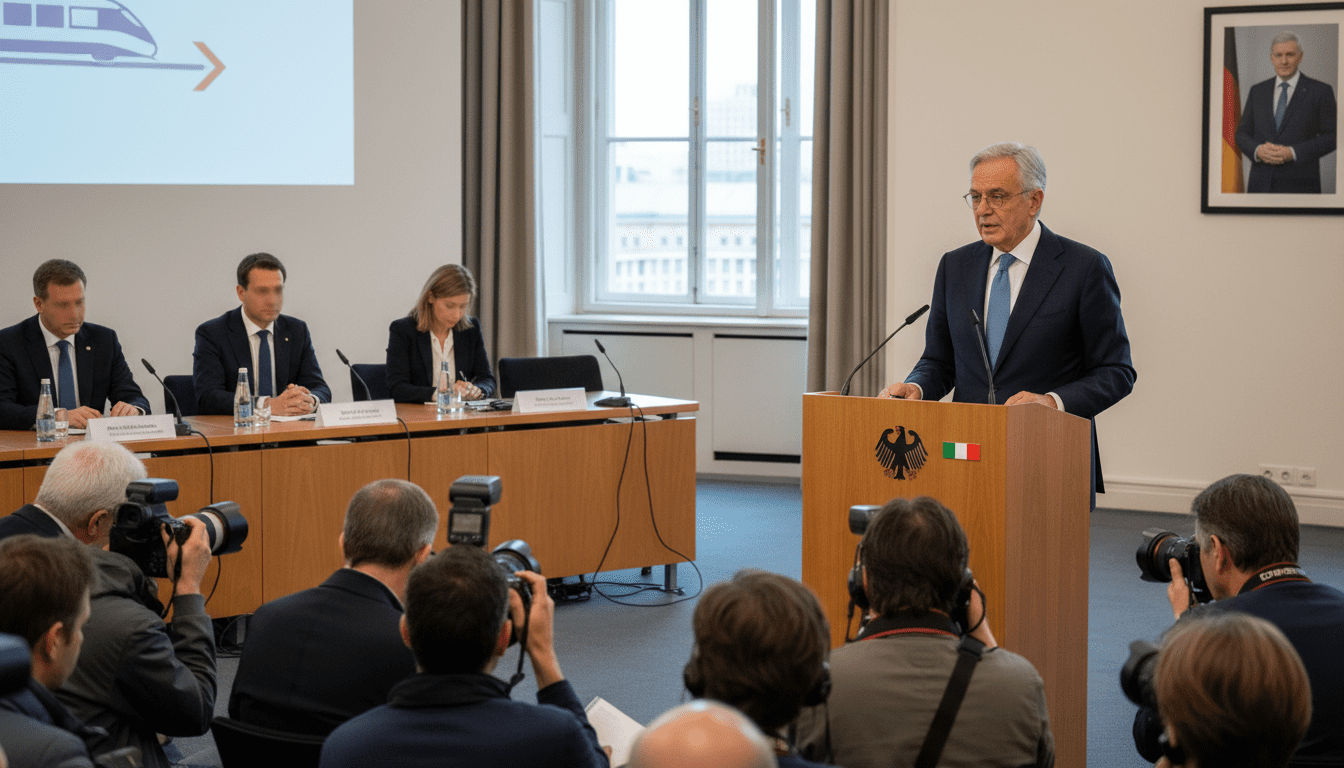
Montezemolo Eyes Italo High-Speed Trains in Germany with 30 Siemens Sets from 2028
Luca Cordero di Montezemolo is planning to introduce Italo high-speed trains in Germany from 2028, proposing 30 Siemens trainsets and an initial schedule of major intercity links. The move would mark a direct challenge to Deutsche Bahn on key long-distance corridors while invoking the private-operator model that succeeded in Italy. Montezemolo, now in his late seventies, positions the plan as both a business venture and a statement about competition on European rails.
Project Outline and Service Targets
The proposal foresees an initial fleet of 30 Siemens high-speed trains operating on long-distance routes between southern and northern Germany. Planned services would include multiple daily connections linking Munich with Cologne and Dortmund, and separate corridors connecting Munich to Berlin and Hamburg, with an early objective of roughly 56 daily departures across the network. Executives behind the plan describe the rollout as a staged entry, contingent on regulatory approvals and infrastructure access agreements.
Operational Role and Leadership
Montezemolo is presented as the public face and principal backer rather than the day-to-day operator of the venture. He has said he dedicates a substantial portion of his time to the project while delegating operational responsibilities to an executive team. The campaign combines his experience founding a private Italian high-speed operator with a network of long-standing business partners and investors to underpin the bid.
Regulatory and Approval Hurdles
Any attempt to run Italo high-speed trains in Germany will require clearance from federal rail regulators and coordination with infrastructure managers for track access and time slots. Authorities will assess safety certification for the Siemens trainsets, capacity on busy mixed-traffic lines, and fair-competition provisions aimed at balancing incumbent and new entrants. Industry analysts caution that securing the full set of permissions can take months or years, and that infrastructure bottlenecks on north–south axes are likely to shape final schedules and frequencies.
Market Impact and Competition with Deutsche Bahn
Proponents argue that private competition would lower fares and raise service quality, pointing to market shifts in Italy where a private operator won roughly a third of high-speed passengers on core routes. Montezemolo frames the German project as complementary to existing services, predicting job creation and broader consumer choice rather than destructive rivalry. Deutsche Bahn and other stakeholders have in past debates warned that open competition must be managed to preserve network stability and public-service obligations.
Rolling Stock, Service Design and Passenger Experience
The proposed fleet would consist of Siemens high-speed trainsets adapted for cross-border operations and German signaling systems. Early service plans prioritize frequent, fast connections between large economic centers, with a station footprint concentrated in major hubs rather than extensive local stops. Observers note that past private entrants in Europe have differentiated through pricing classes, loyalty options, and onboard amenities, and that the new proposal will need to clarify catering, seating configuration and ticketing integration with existing regional and long-distance networks.
Montezemolo’s Broader Portfolio and Motivations
The German bid sits alongside a portfolio of business and cultural projects that have defined Montezemolo’s post-industrial career, from luxury goods investments to agricultural ventures. His past success launching a private high-speed operator in Italy is central to the pitch, and backers stress the symbolic value of applying that model once more on continental rails. Critics point to earlier setbacks in other sectors and say political and labour dynamics in state-influenced transport systems can complicate private ambitions.
Historical Context and Strategic Location
Montezemolo’s engagement with mobility dates back decades, spanning motorsport, aviation, and rail, and he casts the German plan as the next chapter in that trajectory. The proposed services would run on corridors with long-standing strategic importance for freight and passenger flows, which in turn poses operational challenges but also commercial upside. Planners note that Germany’s dense urban network and substantial intercity travel demand offer a sizable market if access rights and scheduling can be resolved.
Private operators entering national markets have reshaped pricing and capacity in several European countries, but success depends on timing, regulatory clarity, and sufficient rolling stock. The Montezemolo proposal reflects a calculated bid to replicate an Italian model under German conditions, betting that consumers and regulators will respond favorably to increased choice.
If regulators grant access and the partnership secures financing, passengers on major north–south and east–west links could see a new direct competitor to incumbent services from 2028 onwards. The coming months will focus on formal applications, technical certifications and negotiations over track capacity, with the outcome set to influence long-distance rail competition across Europe.
