
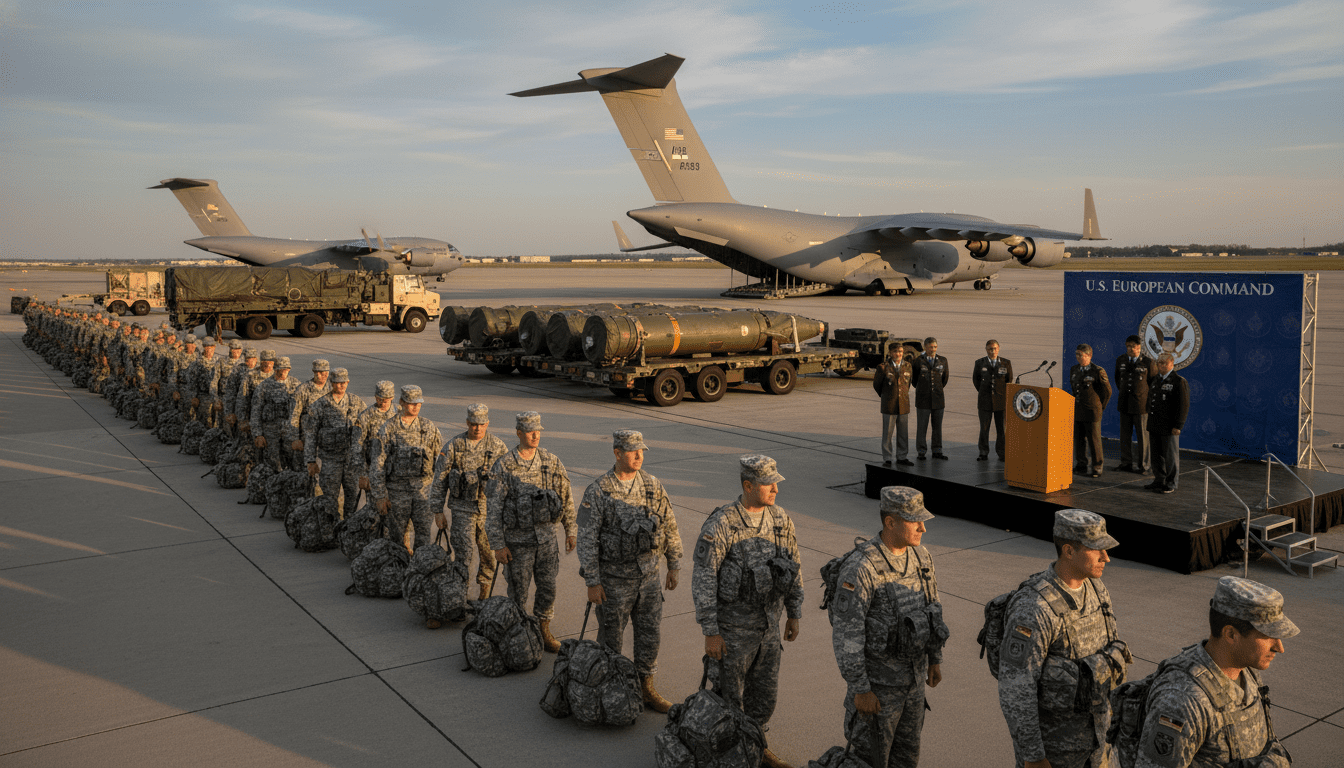
US troop withdrawal from Germany accelerates after Trump orders removal of 5,000 troops
US troop withdrawal from Germany: Trump orders removal of 5,000+ soldiers and halts mid‑range missiles, sparking political tensions and local concern.
Germany faces a sudden diplomatic and defence shift after President Donald Trump ordered the removal of at least 5,000 American troops and announced that the United States will not station mid‑range conventional missiles in the country. The US troop withdrawal from Germany was announced amid a tense week of exchanges between German Chancellor Friedrich Merz and President Trump, and has prompted urgent consultations in Berlin and with NATO partners. Officials and local leaders are now assessing the military, political and economic consequences of the move.
Merz underscores transatlantic ties during Munster visit
Chancellor Friedrich Merz used a visit to the Bundeswehr base in Munster to stress the strength of the transatlantic partnership and to reassure allies about Germany’s commitment to collective defence. He reiterated that Germany stands ready to act, including militarily, if conditions require safeguarding freedom of the seas. His remarks followed public tensions earlier in the week after he criticized aspects of the US response to the Iran conflict, prompting a sharp rebuttal from President Trump.
Trump orders withdrawal and halts mid‑range missiles
The White House announcement called for the drawdown of roughly 5,000 troops from bases across Germany and stated that plans to host mid‑range missile systems will not proceed. The missile decision reverses earlier agreements that envisioned deploying systems capable of firing cruise and ballistic missiles to strengthen deterrence in Europe. The combination of troop reductions and the missile decision has raised immediate questions about the future posture of American forces on the continent.
Defence minister Pistorius seeks to de‑escalate
Germany’s Defence Minister Boris Pistorius framed the developments as part of a broader U.S. review of force posture, urging calm while underlining the value of American forces in Europe. Pistorius emphasized that the announced numbers represent a fraction of the roughly 40,000 U.S. personnel in Europe and stressed the mutual interest in maintaining a U.S. presence. He also called for closer European responsibility for defence, repeating that NATO must become more European to remain transatlantic.
Rotating brigades and 2nd Cavalry Regiment under scrutiny
U.S. officials referenced the possible removal of a “Brigade Combat Team,” a term that could apply to rotating units conducting exercises in Germany as part of Atlantic Resolve. Attention has focused on the permanently stationed 2nd Cavalry Regiment, a brigade‑sized Stryker unit based in Vilseck that has long been central to U.S. force posture in Bavaria. If the 2nd Cavalry were targeted for removal, the impact would extend beyond rotations, affecting families, local communities and long‑term training arrangements.
Grafenwöhr, Hohenfels and Vilseck face economic risks
Towns that host major training areas such as Grafenwöhr and Hohenfels depend substantially on the business and employment generated by U.S. forces and visiting units. Local officials and entrepreneurs warn that fewer exercises and a possible unit relocation could reduce revenue for hotels, retailers and service providers that cater to soldiers and their families. While some training sites host multinational exercises that could partly offset losses, regions built around a permanent brigade presence would feel the most severe economic consequences.
Republican lawmakers warn of strategic and NATO consequences
The decision immediately drew criticism from senior Republican members of Congress who argued the move could send the wrong signal to Russia and undo gains in European deterrence. Lawmakers have reminded the administration that Congress included budgetary safeguards requiring reporting and consultation before major force relocations in Europe. Some U.S. officials and legislators have instead suggested repositioning troops eastward to bolster allies closer to the Black Sea and Baltic region, rather than a wholesale reduction of American capability on the continent.
The announcement opens a period of diplomatic negotiations and practical planning between Washington, Berlin and NATO allies as they seek clarity on timelines, which units will be affected and how to preserve deterrence in Europe. German leaders face the dual challenge of managing domestic political fallout and protecting regional economies while recalibrating defence commitments with partners. As officials press for detailed briefings from the Pentagon, local communities and military families are bracing for decisions that may reshape the U.S. presence in Germany for years to come.
