
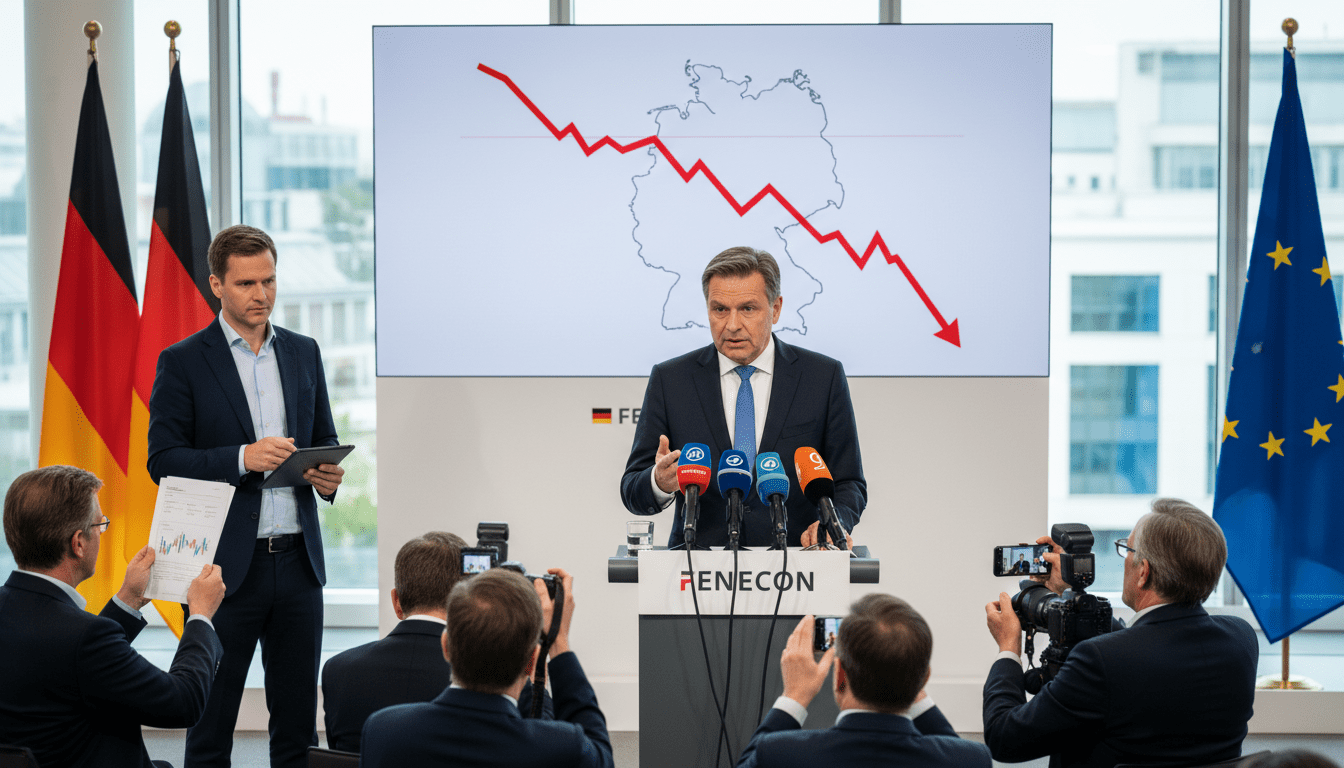
Bavarian Firm Fenecon Scales Battery Storage from Used Car Batteries, Owners Criticize Minister Reiche
Fenecon builds battery storage systems from second‑life car batteries in Lower Bavaria, driving local growth while owners say policy uncertainty from Minister Reiche unsettles the market.
Fenecon, a family‑owned company based in Niederbayern, has moved into large‑scale battery storage using repurposed automotive cells and reports brisk sales as Germany expands renewable generation. The company’s founders argue that reusing electric‑vehicle batteries offers a cost‑effective route to expand grid capacity and support the energy transition. Brothers Franz‑Josef and Stefan Feilmeier, pictured at a Fenecon assembly hall, say recent remarks from Economics Minister Reiche have sown uncertainty among investors and customers.
Fenecon expands with second‑life car batteries
Fenecon converts used automotive batteries into containerised battery storage systems that can be deployed for utilities, industry and commercial sites. The approach extends the useful life of expensive lithium cells and reduces upfront costs compared with new battery packs. Company leaders say this model supports both circular economy goals and the rapid rollout of storage needed to balance intermittent wind and solar output.
Assembly line and technology choices
The firm assembles modules and integrates power electronics and software in a regional production hall, combining local manufacturing with imported components. Engineers at Fenecon recondition, test and reconfigure battery modules to meet safety and performance standards before integration. The resulting systems are modular and scalable, designed to be installed behind the meter or as grid‑connected storage.
Market demand and commercial performance
Demand for battery storage in Germany has risen with higher shares of renewables and increased grid volatility, and Fenecon reports growing orders from municipal utilities and private companies. The company’s executives say their order books are strong and that commercial margins benefit from lower input costs for second‑life cells. Customers seeking flexible, on‑site energy resilience have been a steady source of business, the owners add.
Owners blame political statements for market unease
Owners at Fenecon publicly criticised statements by Economics Minister Reiche, saying her comments have “unsettled the energy market” and complicated investment decisions. They argue that ambiguous messaging and shifting policy signals make it harder for smaller manufacturers to plan capacity expansions and secure financing. The brothers maintain that predictable regulatory frameworks are essential for scaling battery storage deployment.
Regulatory uncertainty and investor reaction
Industry representatives say that policy clarity on safety standards, recycling rules and grid‑connection procedures is a precondition for broader deployment of second‑life batteries. Market participants have reported delays in project approvals and caution among lenders when national or regional rules appear in flux. For manufacturers like Fenecon, this can slow hiring, stall new production lines, and raise the cost of capital for growth.
Environmental and economic trade‑offs
Repurposing EV batteries reduces raw material demand and can lower the lifecycle carbon footprint of storage systems, experts note. However, ensuring consistent performance and meeting regulatory safety thresholds requires robust testing and certification regimes. Companies that can demonstrate compliance while keeping costs competitive are likely to capture market share as utilities and industry move toward decarbonisation.
Outlook for Fenecon and grid storage in Germany
Fenecon’s leadership says the company plans to scale production as demand stabilises and regulatory signals become clearer, though they caution that policy turbulence could slow expansion. The firm’s experience illustrates a wider tension in the energy transition: technological readiness and commercial appetite exist, but predictable policy is needed to unlock investment at scale. Market observers expect a continued role for second‑life batteries if standards and incentives align.
Fenecon’s claims about market disruption and its push to turn automotive cells into grid capacity highlight the intersection of industrial innovation and public policy in Germany’s energy transition, where clearer regulation could accelerate deployment and reassure investors.
