
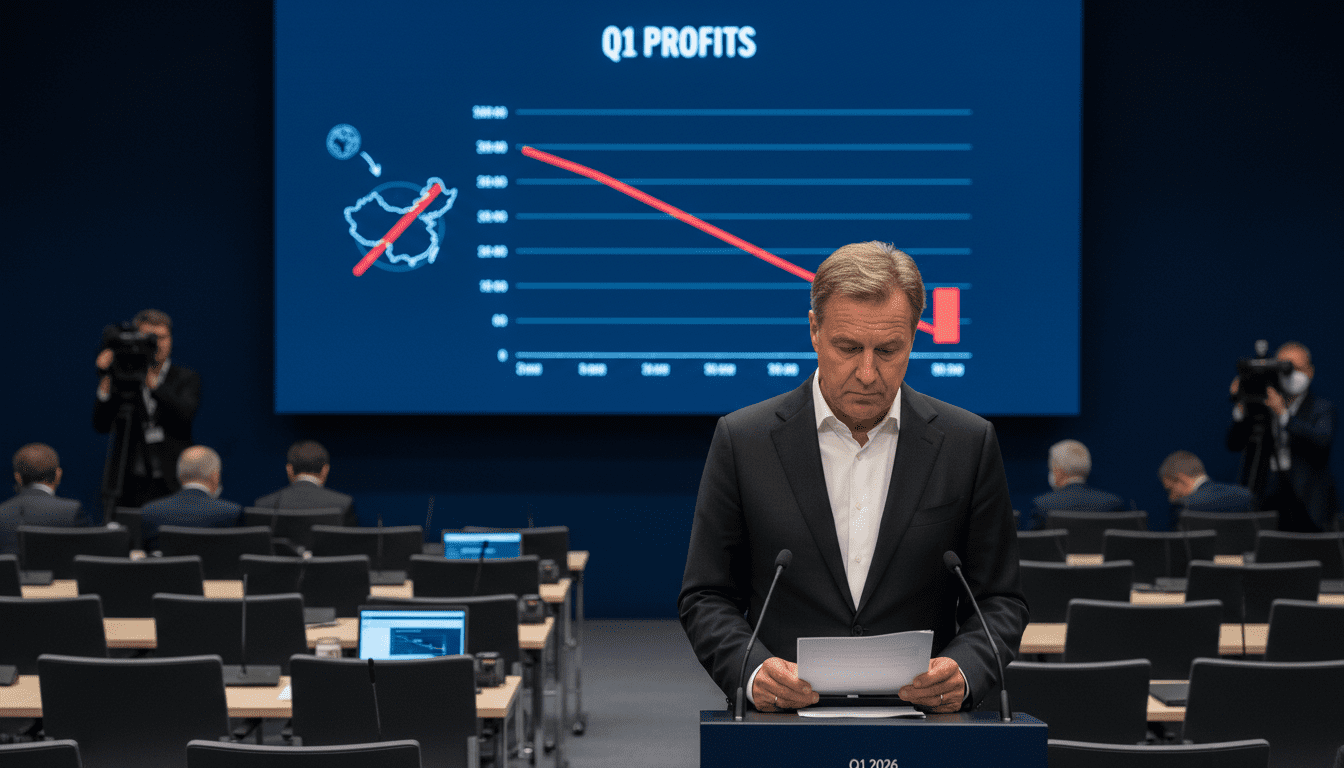
Mercedes Q1 2026 results: Automotive EBIT plunges 47% to €933m as deliveries and China sales slide
Mercedes Q1 2026 results: automotive EBIT fell 47% to €933m as sales dipped and China deliveries plunged; firm expects recovery when new models arrive in H2.
Mercedes reported a sharp decline in the performance of its automotive division in the first quarter of 2026, with adjusted operating profit (EBIT) down 47.2% to €933 million. Revenue for the period fell by 5.3% to roughly €23 billion, producing an operating margin of 4.1% for the division. The company said the setback reflects a transition phase ahead of a planned model offensive that management expects will lift results later in the year.
Automotive EBIT Falls 47% in Q1 2026
The automotive arm’s adjusted EBIT drop to €933 million represents a substantial reversal from the prior-year quarter and underscores pressure on margins across the group. At an operating margin of 4.1%, the division remains inside Mercedes’ guidance range of 3–5%, but far below levels recorded in stronger periods. Company statements highlighted the effect of model timing and market mix on profitability during the quarter.
Despite the decline in profitability, Mercedes emphasized that reported results matched the internal corridor the group had forecast, framing the quarter as part of a planned strategic transition. Management noted that costs associated with new product launches and the phased rollout of revised lineups weighed on near-term earnings. The firm reiterated that a fuller margin recovery relies on the market introduction of several next-generation models.
Deliveries and China Market Decline
Vehicle shipments to dealers in the quarter totaled fewer than 420,000 units, a decrease of about 6% compared with the same period last year. The delivery shortfall contributed to the revenue decline and tightened the company’s ability to convert demand into near-term earnings. Mercedes did not flag supply-chain disruption as the primary cause; instead, it cited product timing and market conditions.
China emerged as the most conspicuous weakness, where deliveries fell by approximately 27% year-on-year, marking a steep contraction in the automaker’s largest market. Mercedes attributed the drop to intensified competition and subdued consumer demand in segments where rival brands have expanded offerings. The company said it plans to respond with tailored product launches and greater local focus to regain momentum.
China-specific EVs and Long-Wheelbase GLC Debut
At Auto China 2026 Mercedes unveiled a China-specific long-wheelbase version of its all-electric GLC, positioning the model as a strategic response to local preferences for extended rear-seat space. The vehicle is part of a broader initiative to introduce China-tailored models designed and specified for the market’s unique tastes. Executives said the GLC long-wheelbase and subsequent launches are intended to improve sales mix and competitiveness in the second half.
The firm indicated additional China-only models will follow later in 2026, with several entries scheduled for the second half of the year. These introductions are central to Mercedes’ plan to reverse the decline in Chinese deliveries and to capture share in the fast-growing electric vehicle segments. The company acknowledged, however, that new products need time to reach retailers and translate into measurable quarterly sales gains.
Management Frames 2026 as Transformation Year
CEO Ola Källenius has repeatedly described 2026 as a year of structural change for the company, a characterization reflected in the timing-driven financial outcome for Q1. Management says the current weakness is temporary and tied to the gap between the end of an older product cycle and the market arrival of a new generation. CFO Harald Wilhelm underlined that order books are strong and that customer demand for upcoming models is encouraging.
Wilhelm also emphasized disciplined execution, noting the 4.1% operating margin remains within the company’s expected corridor and supports the full-year guidance. He told investors the combination of solid order intake and new product launches forms a “foundation for stronger momentum” in the second half. The company therefore plans to maintain cost discipline while accelerating the rollout of the model offensive.
Competitive Pressure and Market Headwinds
Mercedes faces mounting competition in China and across global markets from both established rivals and newer electric-vehicle entrants, which has pressured pricing and market share. Analysts point to faster refresh cycles among competitors and aggressive promotion of value propositions as factors that have intensified market dynamics. Mercedes must balance investment in new models with margin protection as it seeks to defend premium positioning.
Other risks include the pace at which new models convert into dealer sales and the potential for demand volatility in key markets to persist beyond the model-launch timetable. Management has identified these uncertainties but remains focused on executing its product plan and leveraging local adaptations to restore growth. Investors will closely watch whether the second-half product ramp-up can deliver the revenue and margin improvements the company forecasts.
Looking ahead, Mercedes will seek to translate its model offensive into tangible sales and profit recovery in the latter half of 2026, with the China-specific GLC long-wheelbase and further local launches central to that strategy. Market observers will monitor quarterly delivery trends and margin development as test points for the company’s transition from a challenging start to the year toward a hoped-for stabilization driven by new products.
