
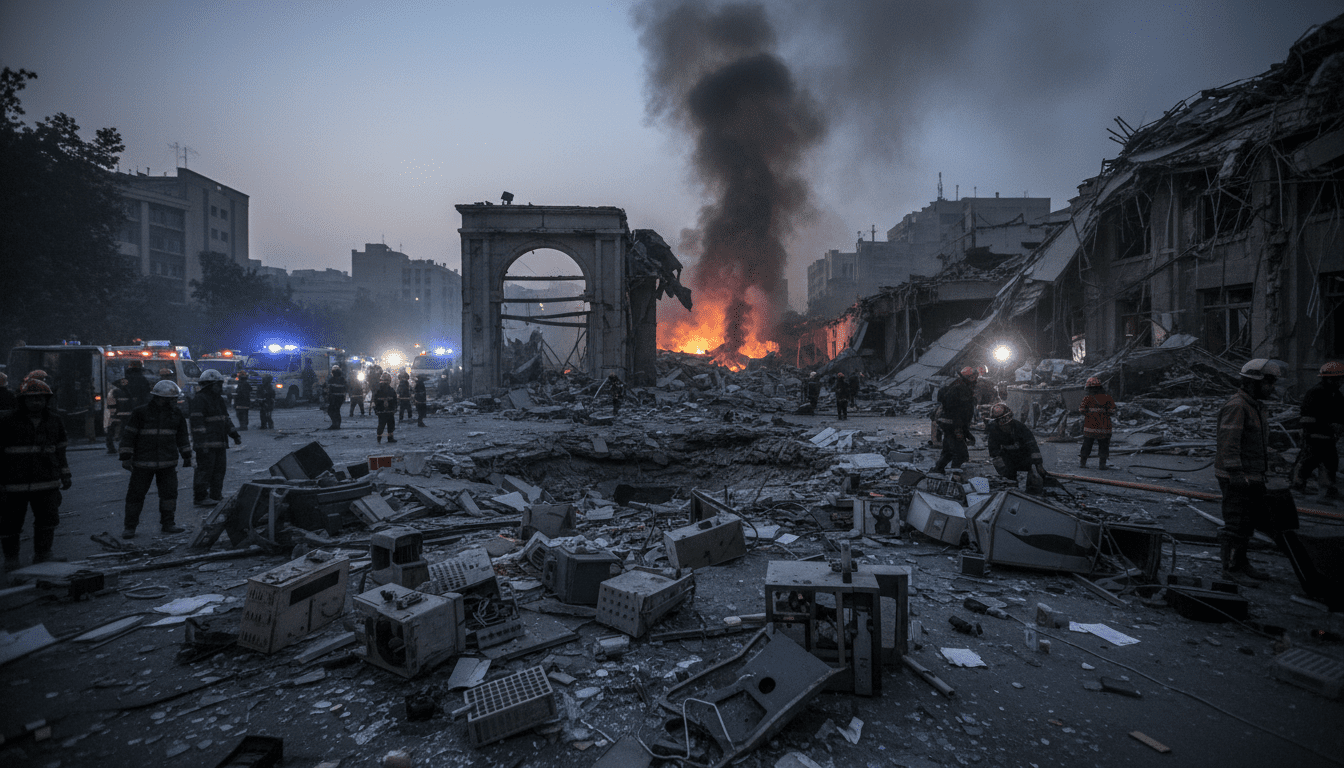
Pasteur Institute of Iran leveled in US‑Israel strikes after Khamenei killing
Pasteur Institute of Iran leveled in US‑Israel strikes after Ayatollah Khamenei’s death on Feb 28, 2026, destroying key labs and raising public health concerns.
The Pasteur Institute of Iran was largely destroyed in coordinated US‑Israel bombing on 1 and 2 April 2026, weeks after a joint strike on 28 February killed Supreme Leader Ayatollah Ali Khamenei and senior officials. The institute’s main headquarters and 13 source laboratories were reduced to rubble, officials and witnesses say, in an attack that has prompted alarm among researchers and public health experts. The loss arrives amid wider damage to Tehran’s medical facilities during the opening months of the conflict.
Attack timeline and immediate aftermath
On 28 February 2026, the first day of the war, a US‑Israel strike targeted the office of Iran’s Supreme Leader, resulting in the death of Ayatollah Ali Khamenei and multiple senior government figures. The Pasteur neighbourhood, home to the Supreme Leader’s compound and several state institutions, was heavily struck that day but the Pasteur Institute itself was initially reported unscathed. On 1 and 2 April 2026 separate US‑Israel strikes hit the institute directly, demolishing its headquarters and multiple laboratories.
Local emergency responders and staff who reached the site reported widespread structural collapse and ruined research equipment, complicating rescue and recovery operations. Authorities have not released a comprehensive casualty list for the institute’s employees, and conditions at the site have hampered independent verification of the full human toll. The attack has deepened concerns about the safety of civilian scientific infrastructure in the conflict zone.
Extent of damage at the Pasteur Institute of Iran
The institute’s main building and 13 designated source laboratories were reported destroyed in the April strikes, eliminating specialized facilities used for infectious disease research and biological materials storage. Laboratories designated as source facilities often contain reference strains, reagents and materials that underpin vaccine development and pathogen surveillance. The loss of cold‑chain storage, sequencing equipment and long‑term biological collections will be difficult to replace quickly, according to researchers familiar with such infrastructure.
Staff described pervasive loss of archived samples and research records, with many projects interrupted or halted altogether. Rebuilding laboratory capacity of this scale requires secure facilities, trained personnel and international partnerships—resources that are likely to be constrained as military operations continue and sanctions remain in place.
Historical and scientific significance of the institute
Founded in 1920 through agreement between Iranian and French authorities, the Pasteur Institute of Iran was one of the oldest scientific centres in the Middle East and part of a global network of 33 Pasteur institutes. The institution had a long record of work on infectious diseases, public health research and vaccine production, and its main building dated back to the early 20th century. One senior scientist, speaking on condition of anonymity because of security concerns, said the main building predated the State of Israel and lamented the destruction as the loss of a cultural and scientific landmark.
Beyond its architecture, the institute served as a regional hub for disease surveillance and laboratory training, contributing to control efforts for endemic and emerging infections across Iran and neighbouring states. Its eradication or prolonged closure removes an established node in regional public‑health networks at a moment when such capacity is critical.
Impact on healthcare, research and public health surveillance
The strikes have compounded disruptions to hospitals and clinics in Tehran and beyond that were reported after the initial wave of attacks in late February and March 2026. Medical staff staged protests on 7 March in front of Gandhi Hospital in Tehran, underscoring strain on health services as facilities suffered direct and indirect damage, according to AFP coverage of the demonstrations. The destruction of research laboratories raises the prospect of gaps in pathogen monitoring, delayed vaccine research and loss of locally adapted diagnostic capacity.
Public‑health specialists warn that broken laboratory chains and destroyed sample archives undermine timely detection of outbreaks, which can accelerate spread and complicate treatment. Reconstituting reference collections and validating new diagnostic assays typically takes months to years, a timeframe that may clash with urgent health needs as populations face displacement, disrupted vaccination campaigns and diminished clinical services.
Diplomatic and legal questions raised by attacks on research facilities
Targeting an internationally recognized medical and scientific institute has triggered debate over the legal and diplomatic implications of strikes on civilian research infrastructure. International law prohibits attacks directed at civilian objects, and medical and scientific facilities normally receive protection unless used for military purposes; assessing compliance will depend on evidence about the institute’s activities at the time of the strikes. The destruction also presents diplomatic challenges for countries and organizations that previously collaborated with the Pasteur Institute network.
Foreign governments, research institutions and global health agencies are likely to weigh whether and how to respond, balancing concerns about escalation with humanitarian and scientific imperatives. Rebuilding efforts, if permitted, would require licenses, materials and technical cooperation that cross military and political fault lines, complicating prospects for rapid restoration.
The destruction of the Pasteur Institute of Iran marks a stark moment in a conflict that has already damaged hospitals, laboratories and other medical infrastructure across the country. As investigators, international health bodies and humanitarian organizations assess the scale and consequences of the strikes, Iranian scientists and medical staff will face the immediate challenge of preserving remaining resources, salvaging critical data and finding ways to sustain disease surveillance and patient care under war conditions.
