
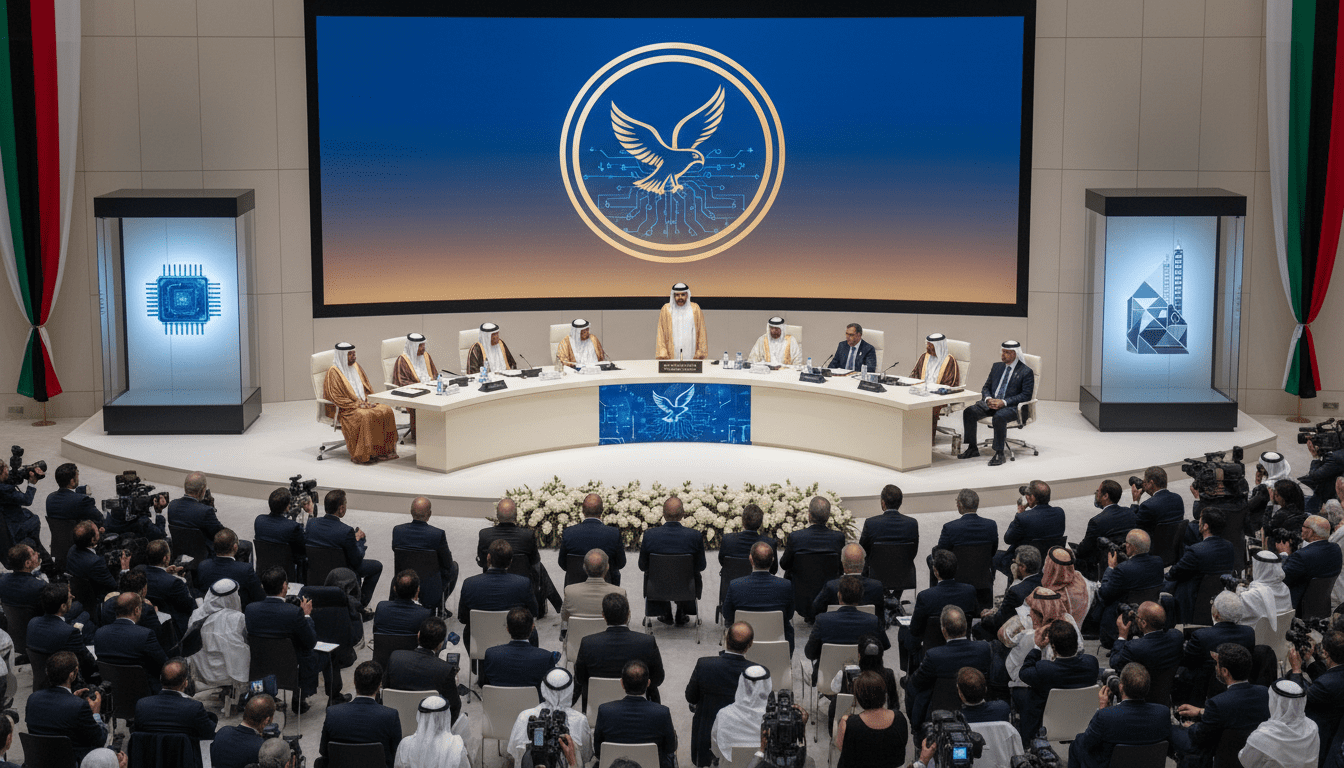
UAE industrial resilience fund: One billion dirhams pledged to localise industry and boost AI adoption
UAE launches 1bn-dirham industrial resilience fund to localize key industries, strengthen supply chains and speed AI adoption after recent air strikes.
The United Arab Emirates announced a UAE industrial resilience fund valued at one billion dirhams to bolster local production, supply chains and artificial intelligence adoption, Prime Minister Mohammed bin Rashid al-Maktoum said in a post on X on Sunday. The initiative, worth roughly $272 million, is aimed at accelerating the localisation of vital industries and embedding AI in production, operations and planning. The announcement arrives as the UAE economy grapples with disruptions following direct Iranian air strikes on Emirati territory over the past two months. Officials framed the fund as a strategic response to both immediate economic strain and longer-term industrial vulnerability.
Details of the one billion-dirham commitment
The fund was described by the prime minister as a national instrument to enhance industrial resilience and reduce dependence on external suppliers. It will target projects that localize essential goods and services, though the X post did not list a public timetable or specific beneficiary firms. The amount pledged — one billion dirhams — reflects a focused fiscal intervention rather than a broad stimulus package, signaling targeted support rather than sweeping economic measures.
Priorities: localisation of vital industries
Localisation is the stated priority for the UAE industrial resilience fund, with the government emphasizing the need to produce strategic inputs domestically. This includes sectors where supply-chain chokepoints have exposed the economy to external shocks, such as critical components, raw materials and parts for advanced manufacturing. By encouraging onshore production, policymakers aim to shorten supply chains, reduce import dependency and create higher-skilled manufacturing jobs.
AI integration in manufacturing, operations and planning
A central pillar of the fund is accelerating artificial intelligence adoption across production and operational planning, the prime minister said. The initiative seeks to promote AI tools that enhance forecasting, optimize logistics and improve factory automation, thereby raising productivity and responsiveness. Government officials view AI as a force multiplier that can make localized manufacturing more cost-competitive and resilient against disruptions.
Economic impact of recent air strikes
The announcement follows two months of economic strain after direct Iranian air strikes on Emirati soil, which officials say disrupted commerce and investor confidence. Those strikes affected logistics hubs and prompted heightened security costs for firms operating in the region, exacerbating supply-chain fragility. The fund is presented as both a recovery measure and a longer-term insurance policy against further geopolitical shocks.
Scope, governance and implementation questions
While the prime minister set out the fund’s goals, operational details remain limited in the initial statement and are expected to be clarified by government agencies. Key questions include governance arrangements, eligibility criteria for firms, expected leverage of private capital and the timeline for disbursements. Observers say clarity on these mechanics will be crucial for the fund to mobilize private-sector participation and deliver measurable industrial capacity.
Potential reception from industry and investors
Industry groups and analysts are likely to watch the fund closely for signals on procurement policy and partnership opportunities with public bodies. If structured to attract private co-investment and provide predictable contracts, the fund could accelerate new factory projects and technology adoption. Conversely, a lack of transparency or overly constrained eligibility could limit its immediate effect on supply-chain bottlenecks.
Regional security implications and trade considerations
The UAE industrial resilience fund also carries regional dimensions, as strengthening domestic production alters trade dependencies in the Gulf and beyond. By bolstering local capacity, the UAE may reduce the need for certain imports and reshape supplier relationships across the region. The move comes amid heightened security concerns that have already influenced shipping routes, insurance costs and logistical planning for firms operating in and through the Gulf.
The government has positioned the one billion-dirham UAE industrial resilience fund as a targeted response to recent disruptions and a strategic step toward a more self-reliant industrial base, with AI integration singled out as a priority for modernization. Further announcements outlining governance, timelines and project selection criteria are expected to follow as authorities move to implement the plan.
