
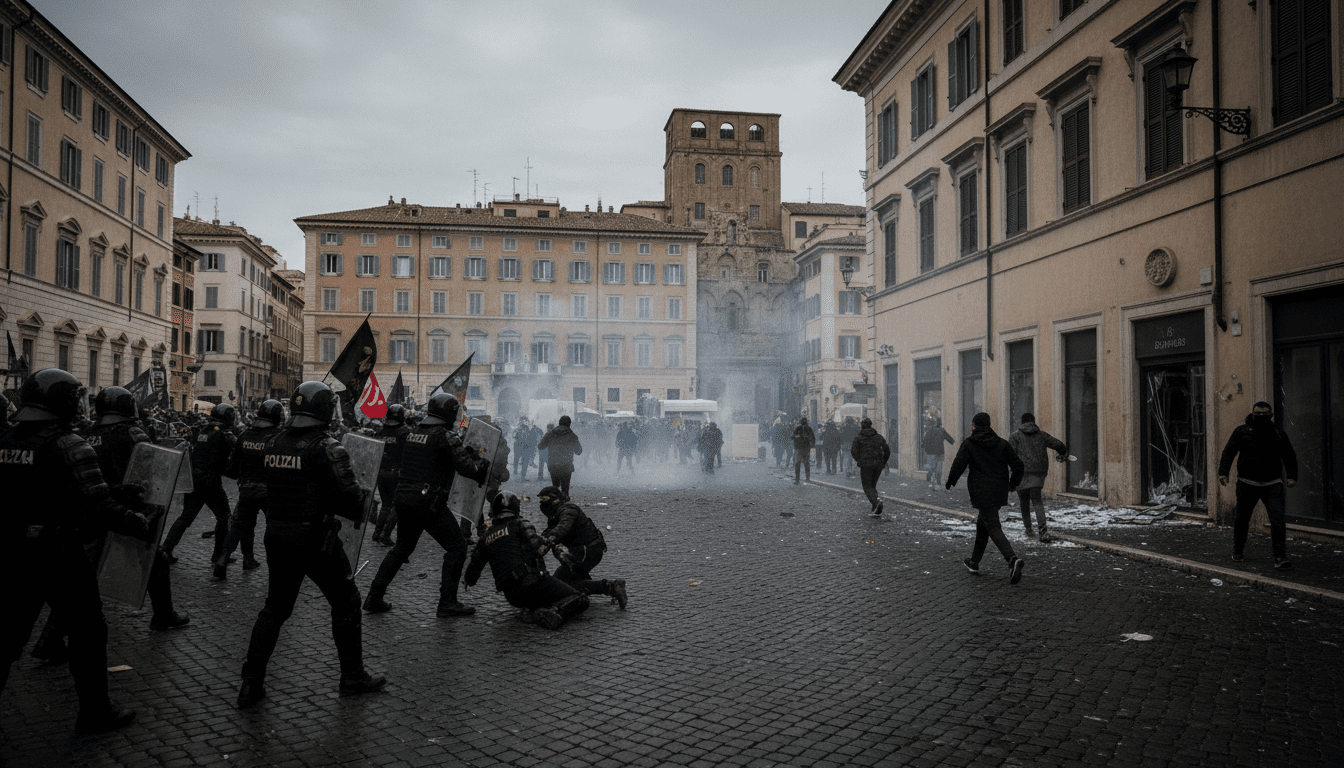
Italy Liberation Day marred by shooting, flag disputes and far-right salutes
Violence struck Italy Liberation Day: a shooting in Rome, flag-related clashes in Milan and Bologna and far-right salutes in Varese, prompting public outrage.
The traditional Italy Liberation Day commemorations on April 25 were interrupted by a series of violent and divisive incidents across the country. A pair of demonstrators wearing ANPI scarves were wounded in a shooting in Rome, while demonstrations in Milan and Bologna saw groups excluded or attacked over the display of flags. Far-right gatherings in Varese culminated in neo-fascist salutes that alarmed officials and civil society groups.
Shooting near St. Paul’s Basilica in Rome
A shooter riding a motorcycle opened fire on two people standing at the edge of a Liberation Day march near the Basilica of St. Paul in Rome. Both victims sustained non-life-threatening injuries after being struck by projectiles; witnesses said the assailant fired multiple shots before fleeing the scene.
Police described the weapon used as a compressed-air pistol and said the attacker wore a motorcycle helmet that concealed his face. Investigators have opened a criminal inquiry and are reviewing video footage and witness statements as they seek to identify the perpetrator and determine a motive.
Flag disputes ignite clashes in Milan and Bologna
Tensions flared at several commemorations when demonstrators carrying Ukrainian flags or pro-Israel symbols were confronted by other participants. In Bologna an older man carrying a Ukrainian flag was reportedly asked to leave the procession, and video of the incident circulated on social media, sparking debate over the boundaries of acceptable expression at Liberation Day events.
In Milan a group affiliated with the historic Jewish Brigade was expelled from the march after parts of the crowd protested their presence, alleging links to Israel. Organisers and security forces intervened amid accusations that the removal violated prior agreements about who could participate.
Crowd dynamics and sustained disruptions
Reports indicate that in some cities the demonstrations were halted or significantly delayed by confrontations between opposing groups. Organisers said that at times the disputes blocked sections of the march for as long as an hour, forcing police to escort certain delegations away from the main procession to prevent further escalation.
Participants described a charged atmosphere in which symbols such as national flags, the Star of David and partisan scarves became focal points for disputes. Several minor injuries from pepper spray and scuffles were reported, though authorities did not immediately confirm mass arrests.
Political leaders condemn escalation
Political figures across the spectrum denounced the violence and urged calm. Interior Minister Matteo Piantedosi described the incidents in Milan as “shameful and unacceptable” and called the shooting in Rome “deeply worrying.” Former prime minister Matteo Renzi warned of a “climate of growing violence” and urged authorities to ensure public safety at future commemorations.
Prime Minister Giorgia Meloni posted on social media a list of incidents from April 25 and questioned whether those who claim to defend freedom and democracy were upholding those values. Some critics noted that her statement did not explicitly reference the Rome shooting, a silence that prompted further debate in public discourse.
Accusations against organisers and community leaders
Leaders of the Jewish community in Milan said members of the Jewish Brigade and other Jewish participants were effectively driven out of the demonstration, accusing the partisan association ANPI of failing to protect them. ANPI rejected the charge, while some Jewish groups said they had felt welcome at parts of the march, underscoring divisions even within affected communities.
Veteran politicians and civil society organisations urged a thorough investigation into whether organisers had honored agreements about the display of flags and emblems. The row highlighted ongoing tensions about how Liberation Day should be commemorated in a polarized political environment.
Neo-fascist demonstrations in Varese
In Varese, around seventy militants associated with neo-fascist groups used the anniversary to hold their own commemorations, praising those who fought on the fascist side during World War II. Witnesses reported that participants repeatedly made the Hitler salute during the gathering, an act that provoked condemnation from local authorities and anti-fascist organisations.
Police monitored the event and are reported to be assessing whether any laws were broken, including statutes that ban the public display of fascist symbols or salutations. The episode underscored the continuing presence of extremist groups that seek to appropriate public anniversaries for their own messaging.
Historical resonance and contemporary fault lines
April 25 marks the anniversary of Italy’s liberation from Nazi occupation and fascist rule, a date traditionally observed with partisan songs and cross-party remembrance. Yet in recent years the holiday has become a battleground for contemporary disputes about national identity, foreign policy and the memory of the resistance.
Observers say the fracturing of commemorations reflects deeper societal rifts, including disagreements over the Israel–Palestine conflict and attitudes toward Ukraine, which have spilled into public rituals. The events of this year’s Italy Liberation Day have renewed calls for clearer rules at public commemorations and stronger protections for vulnerable participants.
Authorities across affected cities have pledged investigations into the shooting and the clashes, and civil society groups called for renewed commitment to the holiday’s democratic and anti-fascist principles. The incidents have prompted a broader debate on how to preserve the day’s historical meaning while ensuring safety and pluralism at public commemorations.
Public scrutiny now focuses on whether political leaders and event organisers can restore a sense of shared remembrance without allowing contemporary conflicts to overshadow the legacy of the Resistenza.
