
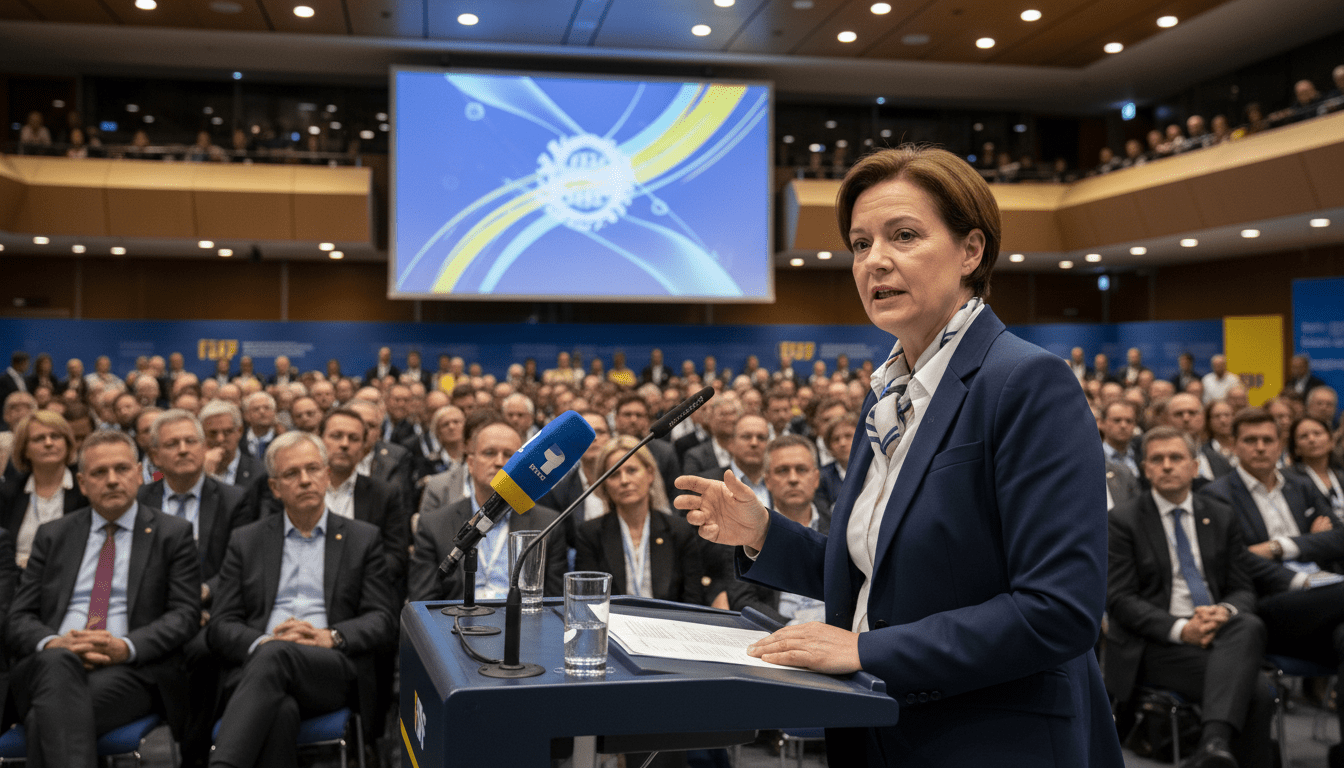
FDP shift to the right draws sharp warning from Strack‑Zimmermann amid Kubicki remarks on AfD
Strack‑Zimmermann warns against an FDP shift to the right, criticizing any move away from centrist liberalism as Wolfgang Kubicki questions a “brandmauer” to the AfD, intensifying a leadership debate.
Marie‑Agnes Strack‑Zimmermann has publicly warned against an FDP shift to the right following remarks by leadership contender Wolfgang Kubicki about the party’s informal firewall with the AfD. The warning came as Kubicki told a Funke Mediengruppe podcast that he did not regard a “brandmauer” to the AfD as a legal or constitutional requirement. Party figures responded quickly, framing the exchange as a test of the Free Democrats’ commitment to liberal, centrist politics.
Strack‑Zimmermann raises alarm over ideological drift
Marie‑Agnes Strack‑Zimmermann said the FDP must defend the political centre and preserve liberalism in its full breadth. She argued there can be no cooperation, relativization, or strategic leeway toward right‑wing extremists and insisted that the party’s identity rests on individual freedom, the rule of law, and an open society.
Her intervention framed recent comments by Kubicki as part of a broader debate inside the party about direction and tone, rather than a one‑off rhetorical flare. By invoking long‑standing liberal principles, Strack‑Zimmermann sought to reassert a boundary against any prospective rightward shift.
Kubicki questions the ‘brandmauer’ in podcast interview
In a podcast titled “Meine schwerste Entscheidung” produced by Funke Mediengruppe, Wolfgang Kubicki said the so‑called brandmauer to the AfD is not enshrined in law or the constitution and that he “knows no brandmauer.” He added he would not automatically refuse to attend an event because an AfD representative were present, a stance that surprised some party members.
Kubicki also clarified he would not make his own policy proposals dependent on AfD support and insisted he would not vote for AfD initiatives, enter into a coalition with them, or allow his faction to be tolerated by the party. His comments were presented as a pragmatic assessment of parliamentary reality rather than an invitation to cooperation.
Leadership contest sharpens internal divisions
The exchanges come as the FDP navigates a leadership contest that has brought ideological tensions into sharper relief. Candidates and factions are increasingly defining themselves by how they position the party on issues of national security, migration, and the political mainstream’s boundaries.
Observers say the debate is less about discrete policy proposals and more about tone and long‑term positioning, with some members warning that drifting right risks alienating centrist voters while others argue for broader tactical flexibility. The contest has become a focal point for members weighing electoral strategy against principled lines.
Potential consequences for coalition strategy
Political strategists warn that internal shifts in the FDP’s stance could have ripple effects on coalition calculations at both federal and state levels. The party traditionally occupies a kingmaker role in Germany’s multiparty landscape, and any perceived movement toward the political right could complicate potential partnerships with centrist and left‑leaning parties.
At the same time, Kubicki’s insistence that he would not cooperate with or support the AfD may be intended to reassure coalition partners that tactical openness does not amount to formal alliance. The tension highlights how messaging within the FDP can quickly become substantive in coalition‑oriented negotiations.
Senior figures invoke liberal heritage to counter rightward drift
Other senior FDP figures have weighed in to defend the party’s liberal core, citing the political and economic principles that have long defined the organization. Strack‑Zimmermann referenced remarks by former federal justice minister Marco Buschmann to underline that steering the party to the right would be self‑defeating.
Party veterans emphasize that preserving a distinct liberal identity is both a moral stance and an electoral necessity, especially at a time when broader European politics has seen the rise of right‑wing populist movements. For many in the FDP, reaffirming commitments to civil liberties and a market economy is central to maintaining credibility with centrist voters.
Debate inside the party has also prompted discussions about internal rules, candidate selection, and how the FDP communicates its boundaries to voters and other parties. Those conversations are likely to continue as the leadership contest progresses and as the party assesses public reaction.
The episode underscores the balancing act facing the Free Democrats as they try to remain electorally competitive while guarding against alliances or rhetoric that could dilute their core liberal message. The coming weeks are expected to bring further statements from leading figures as the party clarifies its direction and prepares for the next steps in its leadership process.
