
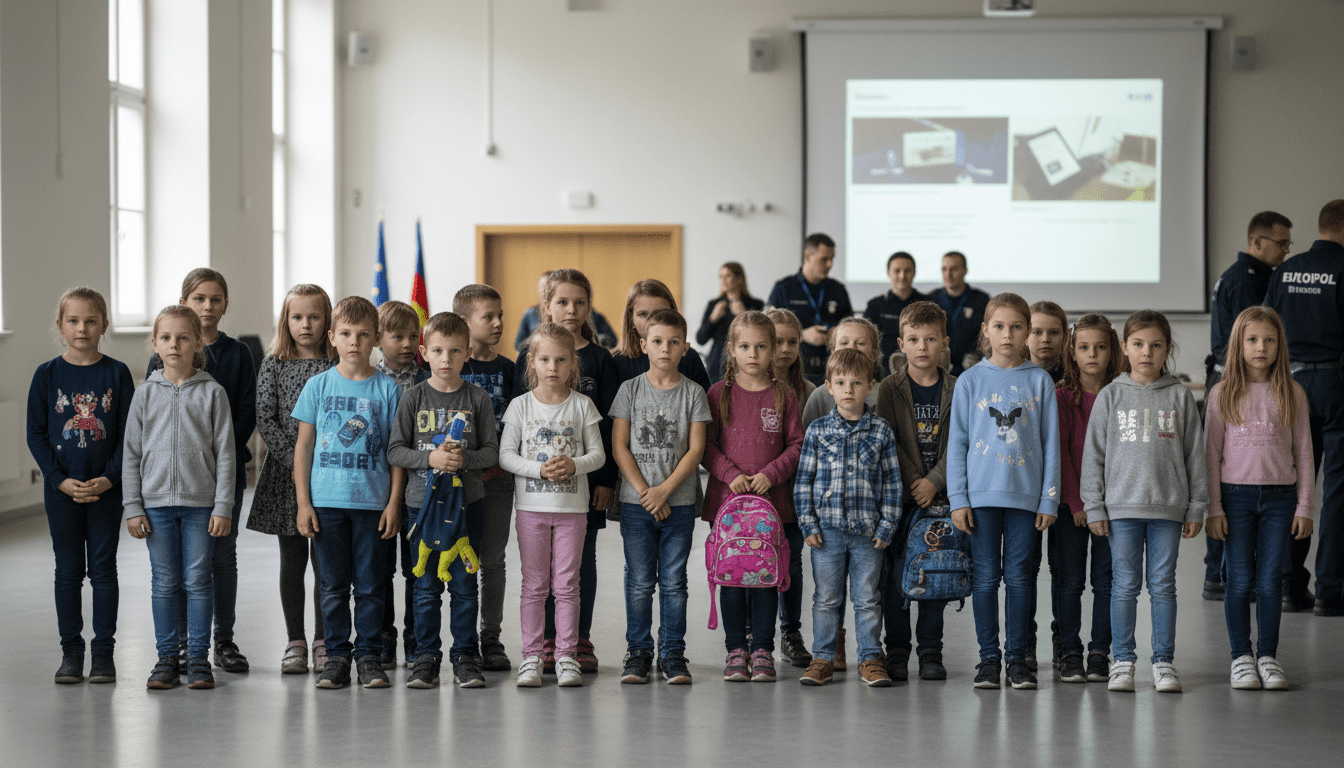
Europol operation identifies 45 deported Ukrainian children during Hague probe
Europol-led investigators located 45 Ukrainian children believed to have been forcibly deported, passing findings to Kyiv for follow-up and possible return efforts.
International investigators working from The Hague have identified 45 Ukrainian children who are believed to have been forcibly moved from occupied areas to locations in Russia, Belarus or Russian-controlled zones, Europol said. The information was handed to Ukrainian authorities after a two-day coordinated search involving specialists from 18 countries and the International Criminal Court.
Europol announces coordinated success in Hague operation
The two-day operation brought digital investigators together in The Hague to sift through online material and match images to missing children. Europol officials said the effort combined open-source inquiries, imagery analysis and biometric tools to generate leads on current whereabouts.
Investigators described the 45 children as likely victims of forced transfer rather than regular relocation, and they emphasized that the data collected is intended to support Ukrainian authorities in tracing and repatriation efforts. Europol said the results could point to specific locations and units involved in the transfers.
Digital forensic methods and facial recognition usage
The taskforce relied heavily on digital forensics, analysing social media posts, public photos and other online traces connected to families and children. Facial recognition software was used to compare parental photos and family pictures with images found in online profiles and publicly available content.
Officials noted that face-matching and metadata recovery provided investigatory leads rather than definitive proof, and that each lead will require in-country verification. The team also documented travel routes and digital footprints that may be correlated with military movements.
Routes, units and evidence shared with Ukrainian authorities
As part of the operation, investigators mapped likely transportation corridors and identified military formations that may have facilitated the removals. Europol said these logistical patterns and unit identifications were part of the intelligence package transferred to Kyiv for operational follow-up.
The investigators are expected to continue collaborating with Ukrainian law enforcement to corroborate findings, locate the children and determine whether criminal charges can be pursued against those responsible. The cross-border exchange of digital evidence aims to accelerate field inquiries in the occupied areas and in the receiving states.
Context and scale of alleged child deportations since 2022
Europol estimates that since the start of Russia’s full-scale invasion more than four years ago, upwards of 19,500 children have been taken from occupied Ukrainian territories to Russia or Belarus. The agency has described cases ranging from coerced adoption to placements in institutional settings such as re-education facilities and psychiatric institutions.
Human rights monitors and Kyiv have warned that the transfers can amount to cultural erasure and violations of international law, with impacts on identity, family bonds and the children’s wellbeing. The newly identified 45 cases represent part of a broader, ongoing effort to document the scope and patterns of the transfers.
Legal actions and International Criminal Court involvement
The International Criminal Court participated in the operation and has been investigating allegations connected to the deportations of Ukrainian children. The ICC previously issued international arrest warrants related to the transfers, including warrants naming senior Russian officials tied to child removal policies.
Prosecutors view the forced transfer of children across borders as potentially constituting war crimes and crimes against humanity when conducted as part of a widespread or systematic attack. The evidence package compiled in The Hague may support future indictments or assist Ukrainian authorities in filing cases before international and domestic tribunals.
Next steps for reunification and verification
Ukrainian authorities will receive the investigative leads for on-the-ground verification and possible reunification efforts where feasible. Officials cautioned that establishing custody, safe transfer and the children’s welfare will be complex and may require negotiation with authorities in areas where the children are located.
Humanitarian organisations are expected to be engaged to provide medical, psychological and legal assistance to any children who are located and returned. Investigators also said that further digital sweeps and future joint operations are planned to expand the pool of identified cases.
The Hague operation marks the third international digital search coordinated by Europol targeting deported Ukrainian children, reflecting a sustained focus on documenting removals and building cross-border evidence to support accountability and repatriation.
