
Christopher Linke Rejects Casual Strolling as He Prepares for German Championships
Christopher Linke previews the German championships, rejecting casual strolls and outlining disciplined training, nutrition and race‑walking tactics now.
Strong statements on walking
Christopher Linke, one of the world’s leading race walkers, has made clear he does not embrace casual strolling as part of his lifestyle or training. Ahead of the German championships he described a dislike of aimless walking, saying it runs counter to the discipline he brings to race walking. The remark underlines a preference for purpose-driven movement that he says helps preserve rhythm and efficiency.
Linke’s stance stems from the technical and mental demands of elite race walking, where cadence and posture matter as much as endurance. For him, every step is either training or recovery, and he treats ordinary movement with the same attention he gives to formal workouts. That approach, he contends, reduces wasted motion and sharpens competitive edge.
Training emphasis and preparation
Linke has structured his preparations toward measurable, race-specific sessions rather than long, unfocused walks. His training reportedly blends tempo intervals, technique drills and targeted strength work to sustain legal race-walking form under fatigue. Emphasis on technique is consistent with his view that lapses in form cost time and invite penalties in competition.
Coaches and athletes in the discipline often prioritize short, high-quality sessions close to race pace, and Linke’s program follows that model. He has adjusted volume and intensity in the weeks before the national meet to balance freshness with the need to sharpen speed. Recovery, mobility work and monitoring of technique under stress are key components of his routine.
Nutrition and everyday habits
Alongside physical preparation, Linke spoke about disciplined eating and daily routines that support performance. He described meal timing, portion control and simple adjustments on competition days as part of a system designed to avoid gastrointestinal problems and ensure steady energy. Those choices are framed as practical measures rather than rigid restrictions.
Linke also touched on the small advantages that come from his walking habits in everyday life, noting he often reaches places faster and with less queueing than others. He framed these observations with dry humor, suggesting that the discipline required for elite race walking filters into ordinary moments such as shopping or commuting. The comments paint a picture of an athlete whose sport influences practical day-to-day decisions.
Competitive record and international presence
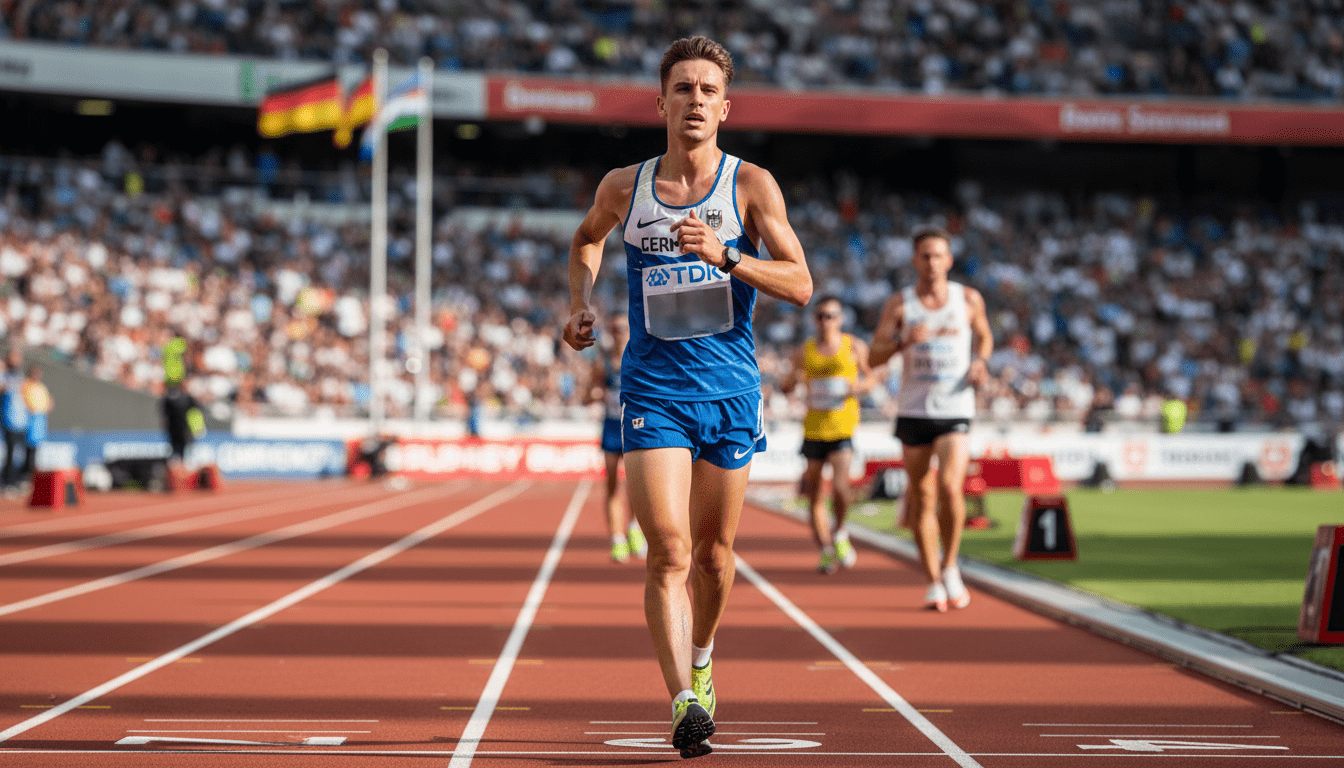
Christopher Linke’s profile has been built on consistent international performances and technical reliability in a sport where margins are slim. Photographs accompanying his interview show Linke at major international competitions, illustrating the continuity of his career on the world stage. His experience at global events has informed both his tactical approach and his understanding of race dynamics.
Veteran competitors like Linke often stress incremental gains, technical consistency and experience in adjudicated events where form violations carry consequences. Those elements have positioned him among the athletes national selectors watch for major championships and Olympic cycles. The national championships are therefore both a performance goal and a platform to test race plans under pressure.
Tactics and race-day considerations
Linke’s remarks indicate a focus on pacing, legal technique and situational awareness as central race-day priorities. He prioritizes maintaining efficient hip rotation and knee straightening at the right moments to avoid warnings from judges. Tactical acuity—knowing when to push, when to hold, and how to respond to surges—remains a defining skill in high-level race walking.
Preparing for the German championships includes rehearsing race scenarios in training, practicing surges and simulating judge scrutiny to reduce the risk of disqualification. Linke’s approach is to combine physical readiness with mental rehearsal so that technical form endures at pace. That balance is crucial in contests where competitors often finish within seconds of each other.
Looking ahead to the national meet and season
The German championships will serve as a barometer of Linke’s readiness and provide competitive stimulus ahead of the season’s international slate. He has framed the event as an opportunity to test adaptations made in recent months and to fine-tune race strategy. For athletes at his level, national competition offers both ranking implications and a chance to simulate championship conditions at home.
Beyond the national meet, Linke’s immediate goals include consolidating form and avoiding setbacks that can derail an otherwise steady season. His public comments suggest a methodical mindset geared toward long-term competitiveness rather than one-off results. That perspective may shape how he schedules races and prioritizes recovery in the weeks that follow.
Christopher Linke’s interview paints a portrait of a consummate professional who rejects aimless movement in favor of purposeful training, careful nutrition and tactical precision as he approaches the German championships.
