
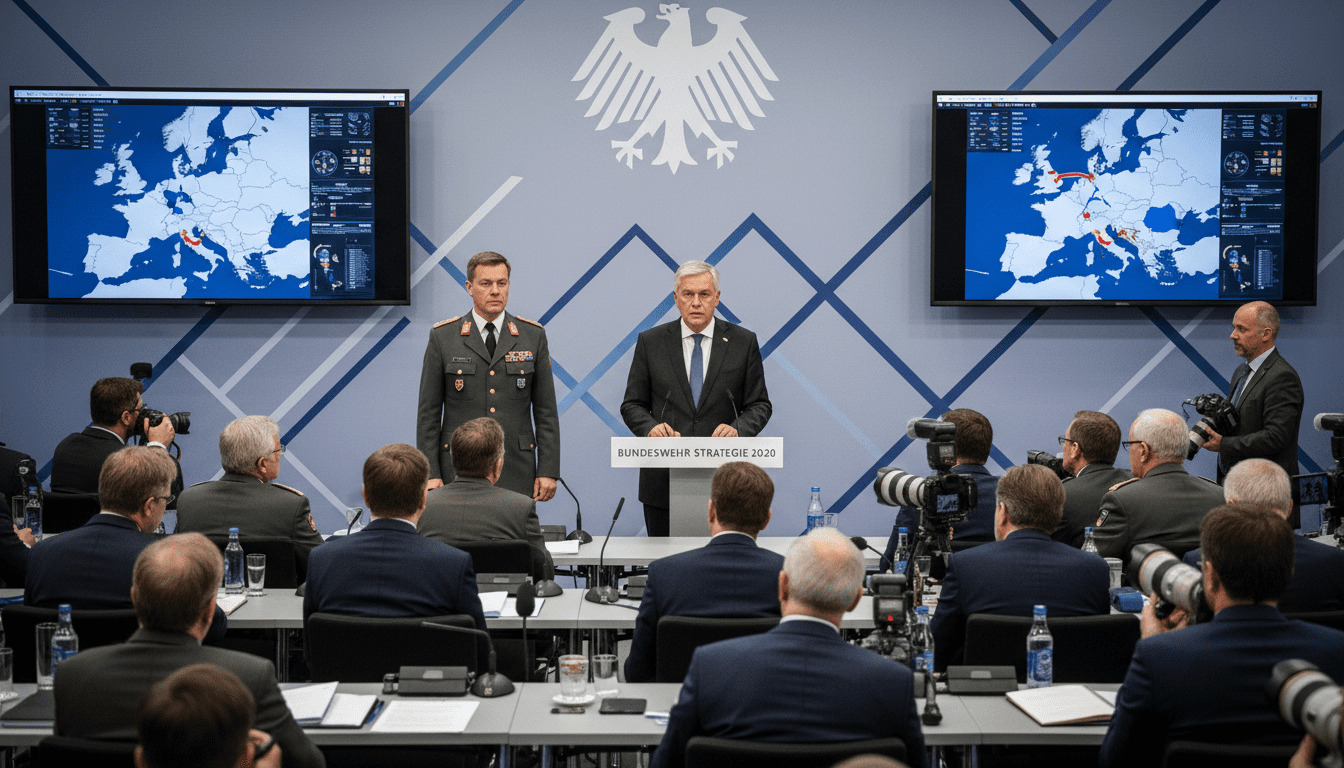
Bundeswehr military strategy: Pistorius unveils plan to become Europe’s conventionally strongest army
Germany unveils its first Bundeswehr military strategy, with Defence Minister Boris Pistorius naming Russia the chief threat and outlining a force buildup focused on conventional deterrence.
The German Defence Ministry on Tuesday presented the Bundeswehr military strategy for the first time in the armed forces’ history, setting a clear objective to become the conventionally strongest army in Europe. Defence Minister Boris Pistorius framed the document as a response to evolving threats on the continent and singled out Russia as the main challenge to European security. The strategy lays out priorities for force posture, procurement, training and allied cooperation without prescribing all operational details.
Pistorius unveils first Bundeswehr military strategy
The plan is billed as a landmark for Germany’s defence policy, formalizing priorities that until now were dispersed across policy papers and budget proposals. Officials describe the strategy as an effort to align the Bundeswehr’s structure with a sustained period of strategic competition in Europe. Pistorius emphasized that the document is intended to guide multi-year investments and organizational changes rather than serve as an operational campaign plan.
Russia named as the primary security challenge
The strategy explicitly identifies Russia as the principal threat shaping Germany’s security calculations, a characterization that frames the Bundeswehr’s future posture. That designation drives recommendations for increased deterrence and the ability to operate at scale on NATO’s eastern flank. Analysts say the move reflects a broader shift in European defence thinking since the outbreak of large-scale conflict on the continent earlier in the decade.
Ambition to become Europe’s conventionally strongest army
Central to the plan is an ambition to build conventional superiority in selected capabilities, including ground forces, air defence and sustainment systems. The strategy stops short of detailing exact force numbers but signals a preference for heavier equipment, improved mobility and robust logistics to sustain prolonged operations. Officials argue that conventional strength will enhance deterrence by complicating any potential adversary’s planning.
Planned shifts in force posture and procurement
The document calls for changes in how the Bundeswehr is organized and equipped to meet high-intensity scenarios in Europe. Procurement priorities are expected to favor systems that provide immediate battlefield effect and resilience, from artillery and armored formations to integrated air and missile defence. The strategy also places importance on readiness cycles and stockpiles, indicating a shift toward faster delivery timelines and increased prepositioning of materiel.
Recruitment, retention and training hurdles
Achieving the strategy’s ambitions will hinge on people as much as on hardware, the plan acknowledges, highlighting recruitment and retention as enduring challenges. The Bundeswehr will need to expand skilled technical and maintenance personnel to operate and sustain advanced systems. Training regimes will be intensified to prepare forces for interoperability with NATO partners and to rehearse large-scale conventional operations.
Budget, industry and supply-chain pressures
The strategy’s goals will require sustained financial commitments and a partnership with Germany’s defence industry to close capability gaps. Officials point to the necessity of predictable multi-year funding to avoid procurement delays and to stabilize production lines. Experts warn that global supply-chain constraints and competition for critical components could slow deliveries unless the government coordinates industrial policy and investment incentives.
European and NATO coordination emphasized
Pistorius’ strategy underscores that German efforts must be integrated with NATO and European allies to be effective, urging closer coalition planning and shared burden‑sharing. It highlights joint exercises, information sharing and synchronized procurement as mechanisms to amplify capability across the alliance. Defence planners say that greater interoperability will allow Germany to leverage allies’ strengths while contributing critical conventional capabilities of its own.
The announcement represents a significant policy moment for Germany, signaling a long-term commitment to reshape the Bundeswehr around a defined set of conventional priorities. How quickly and effectively those changes are implemented will depend on political consensus, budget allocations and the ability to mobilize industrial and human resources across a complex defence ecosystem.
