
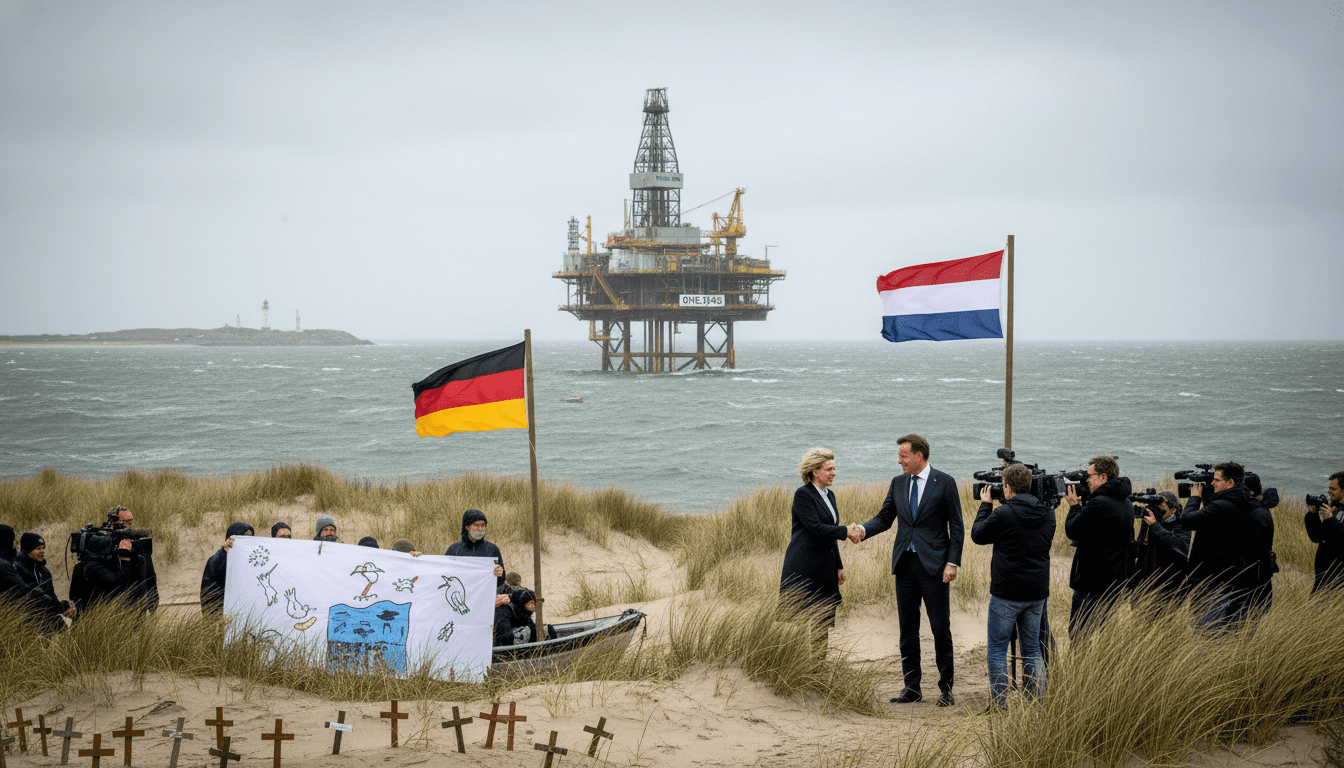
Court Upholds Borkum Gas Drilling Permit as Environmental Group Vows Further Legal Action
German administrative court upholds Borkum gas drilling permit for One‑Dyas; environmental group vows further legal action in Dutch courts and local appeals.
The Higher Administrative Court of Lower Saxony has dismissed a lawsuit by the Deutsche Umwelthilfe and confirmed the permit for Borkum gas drilling granted to One‑Dyas, leaving the company’s German authorization intact. The ruling sustains an approval originally issued by the State Office for Mining, Energy and Geology in August 2024 and maintains that potential minor seismic activity and seabed subsidence would not cause lasting harm to North Sea wildlife. The Deutsche Umwelthilfe said it will pursue parallel litigation in the Netherlands and other legal avenues.
Court affirms permit and limits further federal revision
The court found that the German permit for gas extraction under the seabed can stand despite environmental objections. It determined that predicted small earthquakes and localized seabed lowering would not sustainably impair marine species in the North Sea.
The court did not admit a revision to the Federal Administrative Court, but it left open a procedural remedy: an appeal against the decision may be lodged within one month of the ruling. That procedural window establishes a short deadline for additional challenges in the German legal system.
Environmental concerns flagged over noise and produced water
Environmental advocates argued that drilling noise could disturb harbour porpoises and other marine life, and that produced water from the platform — which can contain heavy metals such as mercury — may pose contamination risks. The Deutsche Umwelthilfe said the German permit failed to adequately account for impacts originating from drilling and production on the Dutch side of the field.
The court’s assessment weighed those concerns against scientific evidence presented in the proceedings and concluded the projected impacts would not be of a degree that requires revocation of the authorization. Nonetheless, environmental groups maintain that uncertainties about noise propagation and contaminant dispersal justify stricter controls or bans.
Deutsche Umwelthilfe to intensify Dutch legal campaign
Following the decision, the Deutsche Umwelthilfe signaled it will continue litigation in the Netherlands, where it has already won an initial challenge to a Dutch drilling permit in the first instance. The organization’s federal director, Sascha Müller‑Kraenner, said the group expects a higher‑court decision in the Netherlands later in 2026 and called for comprehensive legislation to ban oil and gas drilling in and beneath marine protected areas.
The group also said it would monitor opportunities to press further objections in German courts where procedurally possible. Activists framed the strategy as a cross‑border legal effort to address environmental risks linked to offshore hydrocarbon projects.
One‑Dyas schedule, capacity and remaining operations on German side
One‑Dyas began drilling on the Dutch side of the field in March 2025 and holds an 18‑year authorization to extract gas beneath the German seabed under the permit issued in August 2024. According to information provided by authorities and the company’s public statements, the planned platform is expected in regular operation to produce about two billion cubic meters of gas per year.
One‑Dyas projects that the facility could reach that production level in the fourth quarter of 2026, a timeline the company frames as “before the onset of winter.” The projected annual output equals roughly 2.5 percent of Germany’s gas consumption, and the operator has indicated interest in developing additional nearby fields.
Local government actions and upcoming regional hearings
Local governments have not remained on the sidelines. The city of Borkum has filed its own legal challenge over the drilling and is scheduled to have that case heard at the Higher Administrative Court in Lüneburg in early May 2026. Municipal authorities have cited concerns about tourism, fisheries and coastal ecosystems in arguing for closer scrutiny.
A spokesperson for the State Office for Mining, Energy and Geology told reporters that drilling under the German seabed has not yet begun on the German side, and that further decisions will follow regulatory procedures if and when One‑Dyas seeks to commence operations there. Regulators will also oversee monitoring and mitigation measures tied to the permit.
The permit’s 18‑year term, the expected production profile, and the company’s broader exploration plans make the Borkum project a focal point for local stakeholders and national debates over energy, security of supply and environmental protection.
The case highlights the cross‑border complexity of offshore energy governance in the southern North Sea, where Dutch and German waters and regulatory frameworks overlap. Whether litigation in Dutch courts or subsequent appeals in Germany will alter the project’s trajectory remains uncertain, and interested parties are preparing for decisions in the coming months.
