
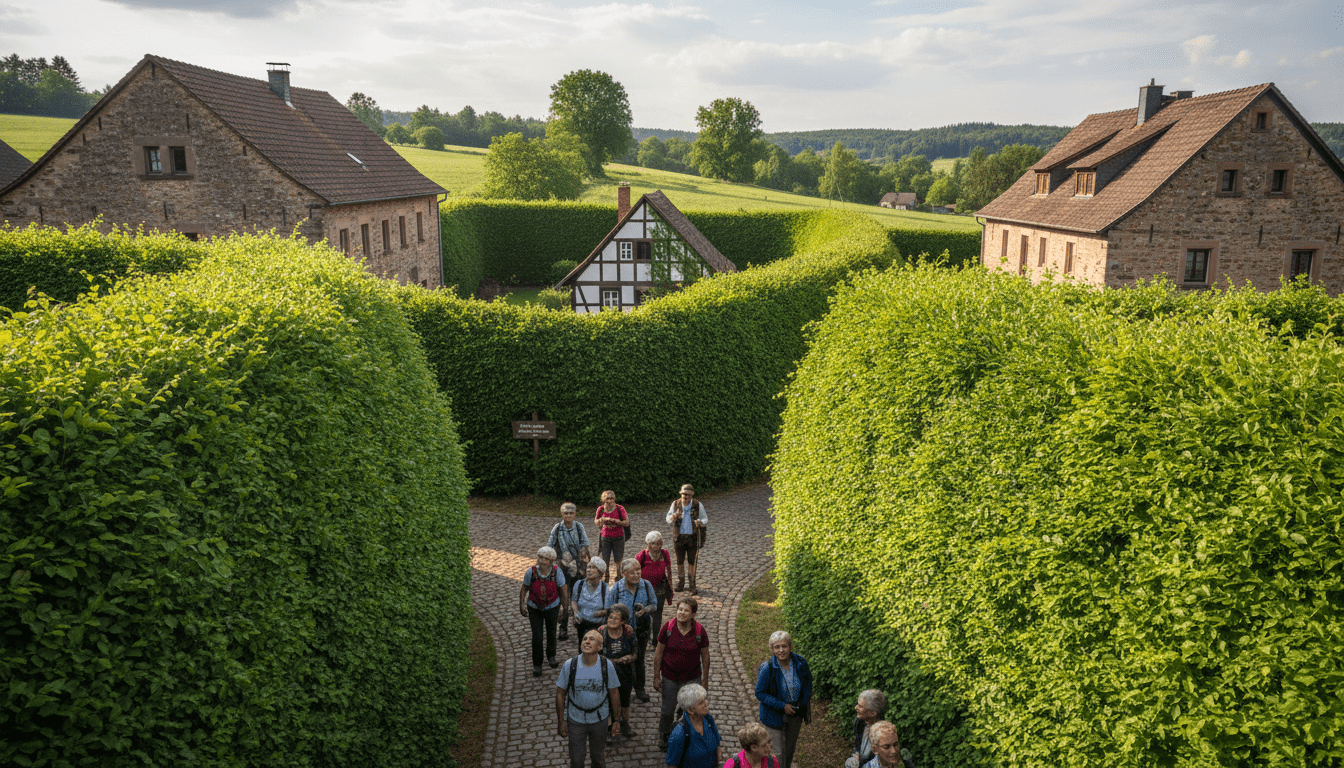
Eifel beech hedges: living walls turn from winter brown to spring green
Eifel beech hedges—centuries-old living walls in Germany shift from winter brown to spring green, drawing photographers, tourists and conservation interest.
Spring transformation visible across the Eifel
The beech hedges of the Eifel are shedding their winter rust and flushing into a pale spring green, a seasonal change now visible along lanes and farmsteads. These Eifel beech hedges, some reaching ten metres high and one metre deep, have long served as living windbreaks and now form a striking rural spectacle. Local residents and visitors alike are noticing the shift as the landscape moves from the muted tones of late winter into the clearer light of April.
The transformation is both aesthetic and functional, restoring the hedges’ role as microclimate regulators for the houses and fields they shelter. Where once the hedges were chiefly practical, many are now appreciated also as cultural landmarks and photographic subjects.
A photographer’s long record in Steckenborn
In the village of Steckenborn, perched above the Rursee and a short drive from Aachen, photographer Peter Stollenwerk has spent decades documenting the hedgerows and the life around them. Raised in the village and now the author of a book on the traditional cattle hedges, he has captured the region’s moods in thousands of images and essays. His work underlines how these living walls reflect both natural cycles and human stewardship.
Stollenwerk’s portraits of knotted trunks, torbogen entrances and fog-draped cattle foreground the intimate connection between people and place. His documentation predates the Eifel’s recent tourism profile, offering a visual archive of techniques and forms that persist today.
Traditional craft and practical origins
The protective hedges in the Eifel date back to at least the 17th century, created to shield farms from cold winds and driving rain. Farmers planted and, after six years of growth, wove branches and inserted stakes to create robust, living fences that were trimmed twice a year to thicken them. The design also left openings and arches that let light into otherwise dark, low-ceilinged farmhouses.
These hedges were not ornamental at first but part of a working agricultural system: stacked hay in the barn, then stables, then living quarters, all aligned to minimize exposure to prevailing weather. Over time, the hedges provided material for tools and harnesses, making them both shelter and resource.
Ecological value and species sheltering
Today the hedges are recognized for their biodiversity benefits, offering nesting sites for birds such as yellowhammers and red-backed shrikes and refuge for reptiles and small mammals. The dense beech foliage supports a variety of insects and creates microhabitats that contrast sharply with monotone, ornamental hedges found elsewhere. Ecologists and local advocates point out that mixed native species—hawthorn, hazel, dog rose and willow—support more wildlife than ubiquitous evergreen screens.
Critics of modern garden fencing argue that fast-growing, non-native privet or cherry laurel provide little ecological value despite their tidiness. In the Eifel, long-established beech hedges and traditional mixed plantings continue to sustain a richer web of life.
From working landscape to tourist draw
Regional tourism organizations have begun to showcase the hedge landscape as an attraction, offering routes through Roetgen, Simmerath and the Monschau area that highlight dramatic living walls. The Monschauer Land alone is estimated to contain around a thousand protection hedges taller than three metres, and curated trails such as the Höfener Heckenweg bring walkers into direct contact with the form and function of the hedges. Guides and local blogs encourage visitors to treat the hedges as both cultural heritage and natural spectacle.
Artists and land-art projects have also taken inspiration from the form of hedgerows, while photographers and painters include them in wider representations of rural Europe. International interest has followed, with Eifel imagery appearing in publications and photo books abroad.
Craft preservation and modern maintenance
Although the old hand-pleaching techniques remain in local memory, modern maintenance often uses electric saws and lifts rather than ladders and shears. Some traditional practices persist: craftsmen once bent saplings into collars and cut mature ovals to create durable collars for draft animals, a craft remembered in portraiture and oral history. Community groups and heritage associations now supply saplings and technical advice to newcomers and long-term residents who want to restore or maintain living hedges.
Conservationists balance preservation of traditional forms with practical modern needs, advocating for native species and seasonal pruning patterns that sustain both hedge health and biodiversity.
As the Eifel’s beech hedges move from rust-toned winter screens to delicate spring green, they remind residents and visitors that cultural landscapes are living things. These walls continue to shelter houses, feed local crafts and attract those who want to see how centuries-old agrarian practices shape both ecology and identity.
