
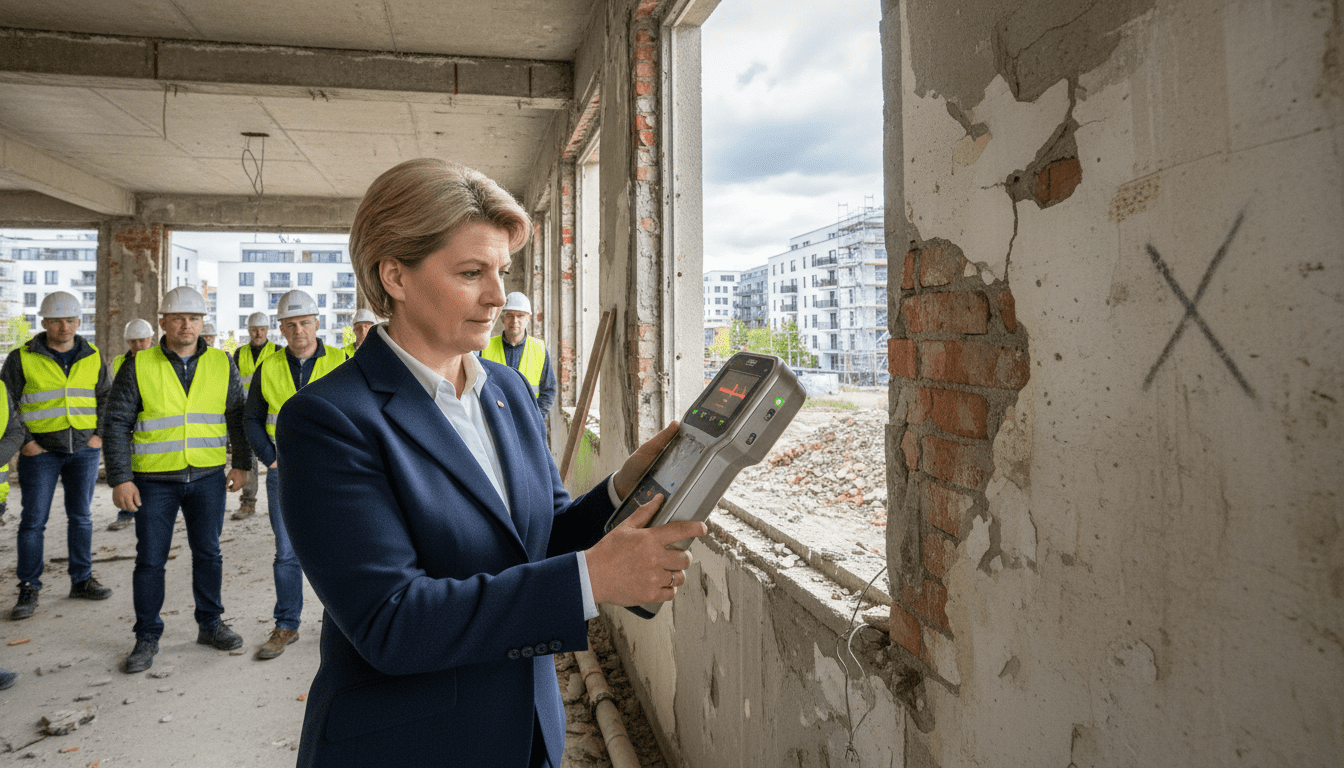
Asbestos Discovery Stalls Stuttgart Housing Modernisation, Raising Costs and Safety Concerns
Asbestos finds in Stuttgart’s 1960s–70s housing are slowing modernisation, inflating costs and forcing tougher detection, removal and funding measures and urgent aid.
The Stuttgart housing and urban development company (SWSG) has begun phased refurbishments of tired 1960s and 1970s apartment blocks, only to confront widespread asbestos contamination that complicates and delays work. Asbestos — the keyword for these challenges — has been detected in floor tiles, adhesives and ventilation systems, turning routine upgrades into hazardous remediation projects. The problem mirrors a national legacy: many postwar buildings still contain asbestos, and its presence is reshaping renovation timetables and budgets.
SWSG modernisation projects hit by hidden asbestos
SWSG crews have encountered asbestos in multiple structural elements while preparing comprehensive retrofits, forcing the company to bring in certified removal teams and rethink construction sequencing. Officials emphasize that intact, bound asbestos is not an immediate inhalation risk but becomes dangerous once disturbed during demolition or refurbishment. As a result, tasks that would normally take days now require airtight enclosures, specialist packaging and extended testing windows to ensure safety before work resumes.
Asbestos prevalence in mid-20th century construction
Researchers and industry consultants note that the widespread use of asbestos from the 1930s through the early 1990s left an extensive legacy in German building stock. Millions of tonnes were incorporated into thousands of different products — from roofing and insulation to tile adhesives and pipe coverings — making contamination a likely encounter in many renovations. Because asbestos fibers are often invisible, owners and builders face persistent uncertainty that can only be removed through systematic material sampling and laboratory analysis or emerging on-site detection methods.
New handheld detector promises faster on-site identification
Two Fraunhofer institutes have developed a handheld detection system intended to speed up identification of asbestos-containing materials directly on construction sites and in recycling facilities. The device exploits optical properties of asbestos fibers and automated image analysis to distinguish them from other mineral-based materials without contact. If deployed widely, the technology could reduce reliance on time-consuming lab tests for initial screening and help project planners anticipate remediation needs earlier in the planning process.
Strict removal protocols and staged safety checks
When asbestos is confirmed, protocols require certified firms to remove affected components as gently and non-destructively as possible, package them in sealed transport bags and evacuate them under controlled conditions. Work areas are commonly isolated under negative pressure and monitored by continuous air testing; intrusive cutting or grinding mandates additional airlocks and extraction systems. Final clearance is only granted after overnight sampling and laboratory verification, meaning that a single discovery can halt follow-up trades and extend project schedules by days or weeks.
Costs escalate and market valuations adjust downward
Sanitation expenses are difficult to predict and often rise as projects progress and further contamination is uncovered. For residential buildings, remediation can amount to several hundred euros per square metre of affected surface, while industrial or large-scale sites may face six-figure shutdown and disposal bills. The financial uncertainty depresses buyer interest and investor appetite, leading to price discounts and lower rental returns where remediation liabilities remain unresolved. Municipal and non-profit housing providers, which manage large portfolios of aging units, now face significant investment pressure that current subsidy schemes only partly alleviate.
Asbestos remediation slows energy retrofits and the Wärmewende
The need to address hazardous materials is forcing many energy-efficiency upgrades to be postponed, redesigned or executed with far greater technical complexity. Where asbestos removal is required, insulation upgrades and façade works must be coordinated with containment strategies, adding time and cost to projects aimed at reducing heating demand and emissions. This interaction between hazardous-material remediation and climate-driven refurbishment objectives risks slowing the pace of the energy transition in the built environment unless funding and technical guidance are scaled up.
As Germany confronts the twin imperatives of modernising ageing housing stock and meeting climate targets, asbestos remains a stubborn and costly obstacle that affects owners, tenants and public bodies alike. Faster detection tools, clearer funding pathways and coordinated planning between architects, remediation experts and policymakers will be essential to keep large-scale refurbishment programmes on track and protect both workers and residents.
