
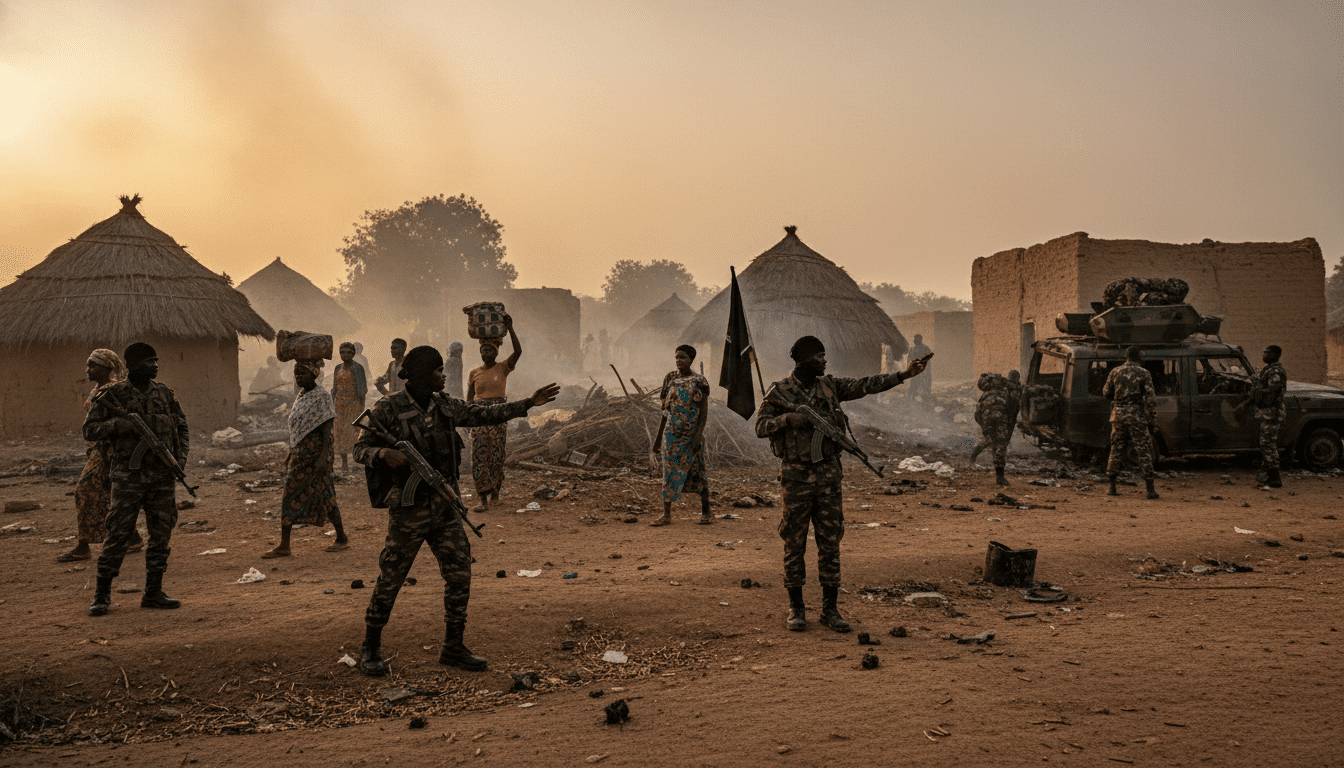
Northern Nigeria insurgency resurges as ISWAP adopts drones and rapid raids
Northern Nigeria insurgency escalates as ISWAP adopts drones and fast raids; experts urge regional cooperation and stronger local governance to curb violence.
The northern Nigeria insurgency has intensified in recent months, with a marked increase in coordinated assaults, night raids and attacks on civilians across the Lake Chad basin. Analysts say the pattern reflects an adaptive insurgent ecosystem, notably the ISIL-linked ISWAP, which has expanded its reach and incorporated new technologies into its operations. Claims that foreign powers are colluding with militant groups have circulated widely, but security specialists caution that local conditions and regional dynamics better explain the surge.
Spike in attacks across Borno, Yobe and Adamawa
Recent incidents have concentrated in the three northeastern states long at the center of Nigeria’s conflict, producing higher casualty and displacement figures than seen in the lull years. Observers note a seasonal pattern, with the dry-season months bringing intensified movements and an uptick in ambushes that exploit thinly defended rural outposts. The size of these states and porous borders compound the challenge of protecting remote communities and critical infrastructure.
ISWAP’s changing tactics and technological edge
ISWAP has shifted from sporadic raids to more coordinated assaults that aim to isolate military positions and impede reinforcements, using motorcycle-mounted units and surprise night operations. The appearance of commercially sourced drones, sometimes repurposed for reconnaissance or attack, marks a notable escalation in capability and complicates defensive planning. These tactical changes give insurgents the advantage of tempo and surprise rather than conventional territorial control.
Foreign fighters and transnational militant links
Security sources report increasing numbers of foreign combatants operating alongside local fighters, bringing battlefield experience and technical skills that enhance operational complexity. This cross-fertilization links the local insurgency to wider militant currents in the Sahel and beyond, making the conflict less contained and more resilient. The presence of outside fighters also raises concern about the transfer of tactics and the longevity of insurgent networks.
Regional cooperation and the weakening perimeter defence
Efforts to confront the threat have been hampered by fraying regional cooperation, notably after Niger’s withdrawal from joint operations following political tensions in the region. The Multinational Joint Task Force, which previously pooled troops from Nigeria, Niger, Cameroon and Chad, was central to earlier containment gains and remains a key instrument for denying insurgent safe havens. Analysts warn that gaps in cross-border coordination now enable freer movement of fighters and materiel.
Domestic vulnerabilities feeding recruitment and resilience
Beyond battlefield dynamics, the violence is rooted in long-term domestic weaknesses: entrenched poverty, low school enrollment in affected areas, and a frayed social contract between communities and the state. Experts emphasize that educational exclusion and limited economic pathways create conditions where ideological manipulation can take hold. Strengthening basic education and local services is therefore framed not only as development policy but as a strategic counterterrorism measure.
Political rhetoric, social media and contested narratives
Claims that external actors are sponsoring militant groups have spread rapidly on social platforms and in political discourse, including an allegation in February 2025 that a U.S. aid agency funded Boko Haram, a claim publicly rejected by the U.S. embassy. Other high-profile statements alleging targeted religious persecution have complicated public understanding and inflamed communal tensions, even as evidence shows attacks have affected both Muslim and Christian populations. Security officials and analysts urge clear, evidence-based communication to counter misinformation that can deepen mistrust.
State responses: military pressure and institutional reforms
Government action has combined stepped-up military operations with policy initiatives aimed at education and local governance reform, including measures passed in 2024 to expand access to higher education finance. Military planners are pushing for improved intelligence, force protection and surveillance assets to blunt insurgent mobility and deny logistics routes. However, officials and analysts agree that these security measures must be paired with real fiscal and administrative autonomy for local governments to restore services and community trust.
Recent Supreme Court rulings and executive endorsements of local-government rights are intended to bolster decentralised capacity, but implementation faces resistance from entrenched political actors at the state level. Where local administrations remain under-resourced or politicised, the gap between state promises and everyday governance widens, leaving vulnerable populations exposed to recruitment and exploitation by armed groups.
The present escalation underscores a simple but decisive conclusion: military pressure alone will not resolve the northern Nigeria insurgency. A sustainable response requires simultaneous reinforcement of regional security architectures, tighter border coordination, and a long-term investment in education, economic opportunity and accountable local governance that reduces the vulnerabilities insurgents exploit. Only a unified strategy that links kinetic operations with social and institutional repair can hope to reverse the recent gains of violent actors and restore stability to the region.
