
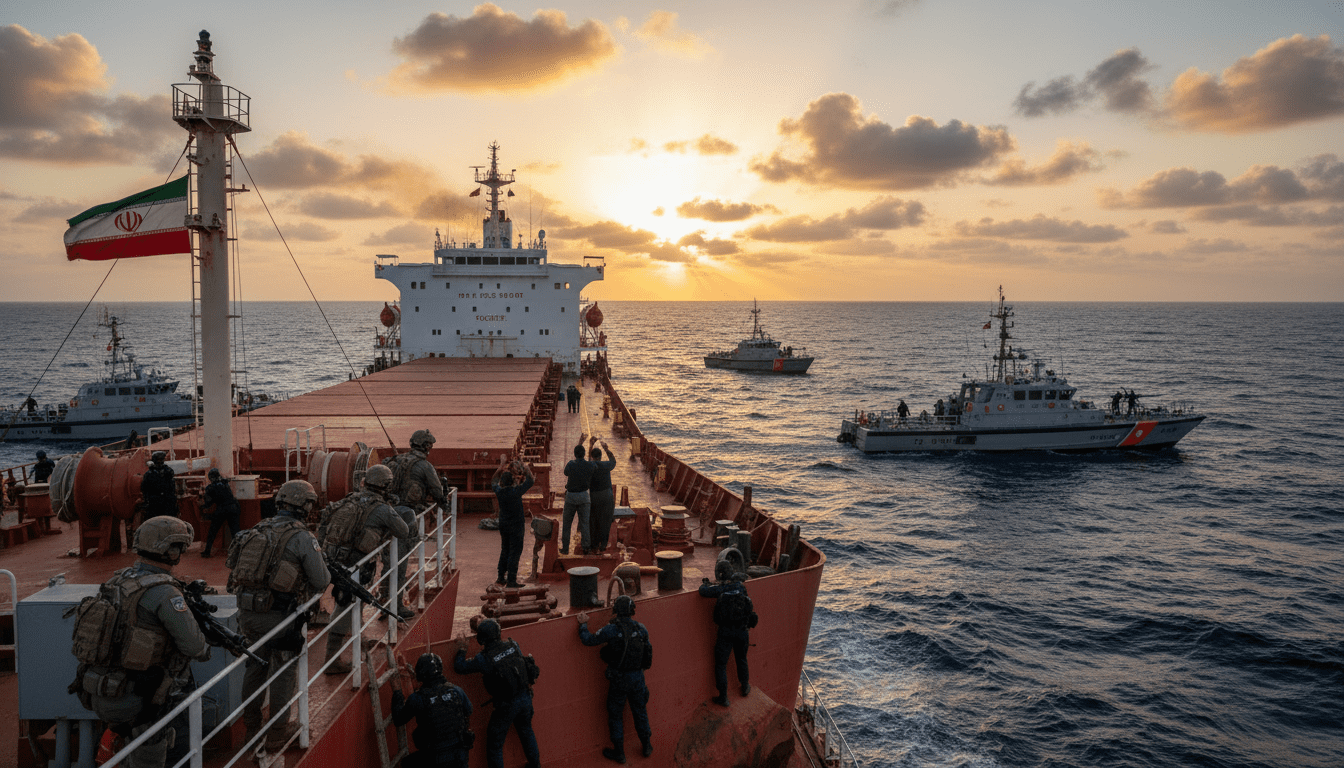
US Seizes Iranian-Flagged Cargo Vessel Touska in Arabian Sea
U.S. forces seized the Iranian-flagged cargo vessel Touska in the Arabian Sea after repeated warnings and gunfire, a U.S. Central Command statement said. The incident, described by U.S. officials as enforcement of a blockade Tehran calls illegal, led to a boarding by U.S. Marines and left the ship in American custody. Iranian state-aligned outlets reported a different version of events, saying Iranian forces returned fire and compelled U.S. ships to withdraw.
U.S. Central Command account
U.S. Central Command said the operation began after the vessel allegedly breached a maritime blockade and failed to comply with orders. The military said it issued repeated warnings over roughly six hours and used escalating measures when Touska did not change course or heed instructions. According to the statement, the destroyer Spruance fired into the ship’s engine room to disable propulsion before U.S. Marines from the 31st Marine Expeditionary Unit boarded the vessel. CENTCOM said the boarding team found the ship non-compliant and that the Touska remains in U.S. custody.
Sequence of warnings and use of force
CENTCOM’s timeline describes a protracted standoff in which crews repeatedly informed the merchant vessel it was violating the blockade and ordered compliance. When the ship’s crew allegedly failed to follow orders, a U.S. warship fired several rounds into the engine room to render the vessel immobile, a deliberate strike designed to avoid endangering crew on deck. The military characterized the action as measured and intended to minimize risk to personnel while enforcing the blockade. Officials emphasized that warnings were given and that force was used only after the vessel allegedly refused to comply.
Boarding operation and current status
U.S. Marines from an expeditionary unit carried out the boarding once the Touska was disabled, CENTCOM said, and the vessel was taken under control without further escalation reported in the U.S. statement. The military did not provide extensive detail on cargo, crew nationality or any injuries in its initial release, saying only that the ship remains in U.S. custody. The operation took place in the Arabian Sea, an area of recurring maritime tension, and the boarding team’s actions appear to have been planned to limit collateral damage. U.S. officials indicated the matter will be handled through established military and diplomatic channels.
Iranian media dispute the U.S. account
State-aligned Iranian outlets offered a contrasting portrayal of the encounter, asserting that Iranian forces engaged and that U.S. vessels withdrew after coming under fire. Iranian accounts framed the U.S. action as unlawful and reiterated Tehran’s prior contention that any blockade in the area is illegal. The discrepancy between the two narratives underscores the difficulty of independently verifying events in contested waters and highlights how quickly reporting can diverge in high-tension encounters. No independent maritime monitors were cited in either side’s immediate descriptions.
Legal disputes and claims of an illegal blockade
The clash taps into a broader legal and diplomatic dispute about the status and legitimacy of maritime blockades in the region, with Iran long contesting restrictions it says are imposed unlawfully. The U.S. has in recent months acted to intercept and seize vessels it alleges are violating sanctions or breaching designated controls, citing security and enforcement objectives. International law on blockades and interdictions is complex, and states often disagree over whether specific measures meet the legal tests for necessity and proportionality. The Touska seizure is likely to prompt legal arguments and diplomatic protests from Tehran and possibly from other maritime stakeholders.
Potential regional and diplomatic fallout
The incident raises the risk of further escalation in a maritime environment already marked by intermittent confrontations between Iranian forces and Western navies. Shipping companies and regional states closely monitor such episodes because they can affect commercial routes, insurance rates and naval postures across the Arabian Sea and adjacent straits. Diplomatically, the seizure is expected to trigger formal communications, including possible protests or demands for explanation from Iran to U.S. and allied governments. International organizations and third-party states may call for independent investigation or transparency to reduce the chance of miscalculation.
The Touska episode will likely prompt additional statements and scrutiny in the coming days as both sides firm up accounts and as allies and independent observers seek to establish a clearer record. For now, U.S. officials portray the action as enforcement of a blockade after extended warning and noncompliance, while Iranian media offer a sharply different narrative asserting successful defensive action. Independent verification of the sequence and consequences of events has not been released publicly, and the situation remains a potential flashpoint for broader regional tension.
