
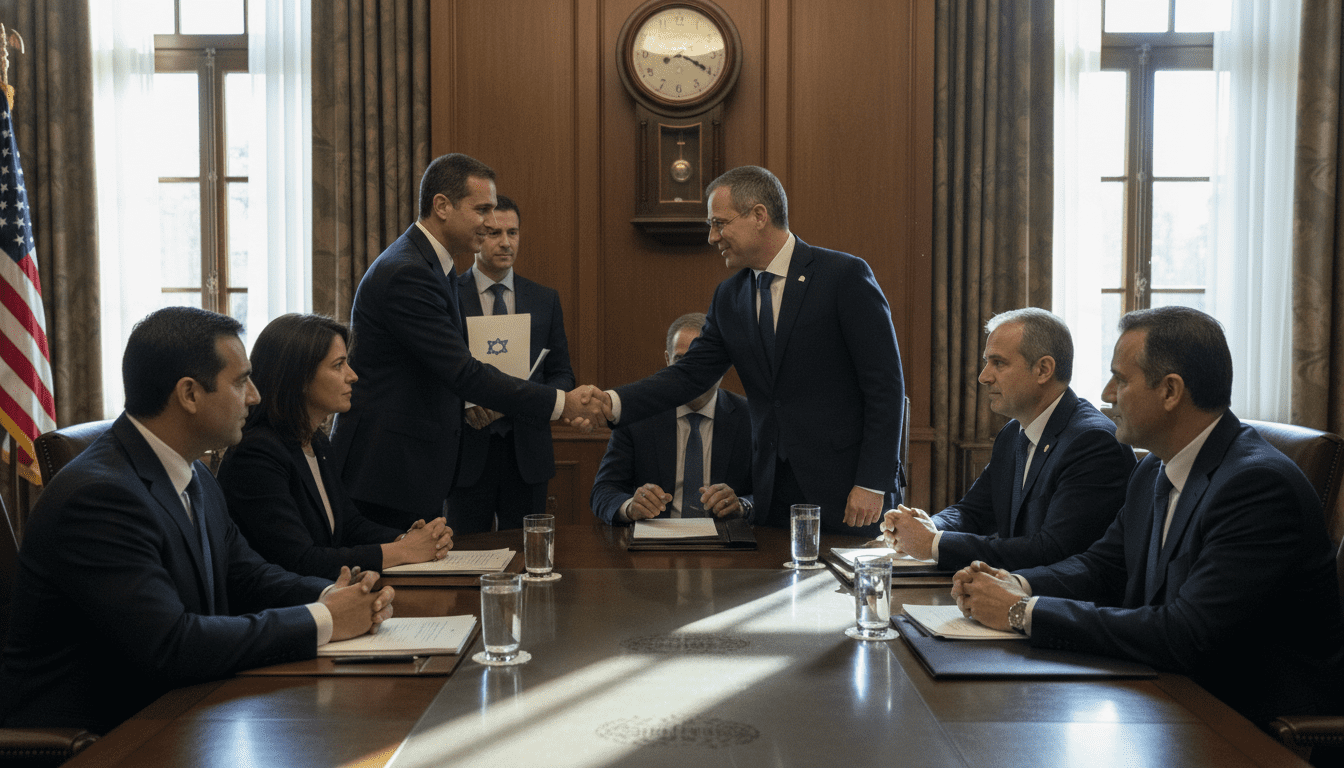
Israel-Lebanon talks begin in Washington as ambassadors meet following Gideon Saar call for peace
Israel-Lebanon talks start in Washington on April 14, 2026 as ambassadors from both countries meet after Israeli foreign minister Gideon Saar said Israel seeks peace and normalisation.
Ambassadors from Israel and Lebanon meet in Washington on April 14, 2026
The ambassadors from Israel and Lebanon convened in Washington on April 14, 2026 for a first round of formal talks in years. The meeting follows a public statement by Israeli foreign minister Gideon Saar expressing a desire for what he called peace and normalisation with Lebanon.
US officials arranged the session as a diplomatic platform to explore limited confidence building measures that could reduce the risk of escalation. Neither side announced any binding agreements at the outset and both described the talks as exploratory.
Gideon Saar frames the diplomatic opening
Israeli foreign minister Gideon Saar said his country wants to reach peace and normalisation with Lebanon, language that signals a shift in tone at the top level of Israeli diplomacy. Saar reiterated that engagement would be conditioned on Israel’s security concerns and on concrete steps from Lebanese authorities.
Saar’s remarks were framed as an invitation to practical negotiations rather than an immediate breakthrough to formal relations. Analysts say the phrasing seeks to balance domestic political pressure with the operational need to stabilise the northern border.
US role as host and mediator
Washington hosted the meeting with the stated aim of facilitating direct communication between the two diplomatic missions. US officials reportedly emphasized deconfliction and the avoidance of unintended incidents near the Israel Lebanon border.
The decision to host ambassadors rather than higher level officials reflects a cautious approach designed to test mutual willingness to engage. The venue in the United States also allows mediators to propose technical solutions without creating the appearance of premature recognition or political concession.
Key agenda items include border security and maritime issues
Briefing materials circulated before the meeting identified border security and maritime claims as likely priorities on the agenda. Both countries have overlapping concerns about military activity near the Blue Line and about resource claims off the eastern Mediterranean coast.
Delegates are expected to discuss mechanisms to reduce incidents at sea and on land and to establish clearer channels for field level communication. Observers note that any progress on maritime resource cooperation would require separate technical and legal work that could take months.
Domestic politics and potential obstacles
Domestic political constraints in both countries present significant hurdles to sustained progress. In Israel, coalition dynamics and public sentiment about security operations shape what negotiators can accept at the negotiating table.
In Lebanon, the complex influence of armed groups and a fragmented political landscape limits the central government’s ability to implement or guarantee agreements. Political leaders in both capitals will need to manage nationalist opposition while preserving diplomatic momentum.
Regional implications and diplomatic ripple effects
A successful opening of Israel Lebanon talks could influence broader regional alignment and ongoing normalisation dynamics in the eastern Mediterranean. Neighbouring states and external powers are watching closely for signals that a negotiated approach can reduce tension without triggering wider confrontation.
Conversely, a breakdown in talks could harden positions and prompt recalibration by regional actors, especially if incidents on the border spike. Diplomats say the tactical outcomes from Washington will be measured carefully for their potential to either stabilise the area or exacerbate existing divisions.
The meetings in Washington mark a cautious but noteworthy step in a long standing and often volatile relationship. Observers caution that exploratory diplomatic contacts are only the beginning and that sustained progress will require technical work, political will, and parallel steps to address security and economic concerns.
