
Apple smart glasses set for 2027 sales as Apple tests four frame designs
Apple smart glasses could arrive in stores in 2027, with a possible unveiling late this year, as the company tests four designs and finalizes features.
Apple plans to sell its first smart glasses in 2027, with a potential public reveal before the end of this year, according to reporting from Bloomberg’s Mark Gurman. The product, referred to in industry coverage as Apple smart glasses, is said to be undergoing tests of multiple frame styles and color options. Apple appears to be positioning the device for everyday wear, prioritizing familiar eyewear forms over full mixed-reality headsets.
Unveiling window and production timeline
Apple’s timeline now centers on a retail launch in 2027 after internal testing and engineering milestones, with a possible showcase event at the back half of this year. The company reportedly expects to begin limited production ahead of a wider rollout, aiming to reach consumers through existing Apple channels and partner retailers.
The schedule reflects a phased approach that gives Apple time to refine hardware and software integration, particularly for cameras and audio features. Executives are said to be balancing product readiness with supply-chain planning to avoid the issues that have affected earlier mixed-reality efforts.
Four frame styles reported in testing
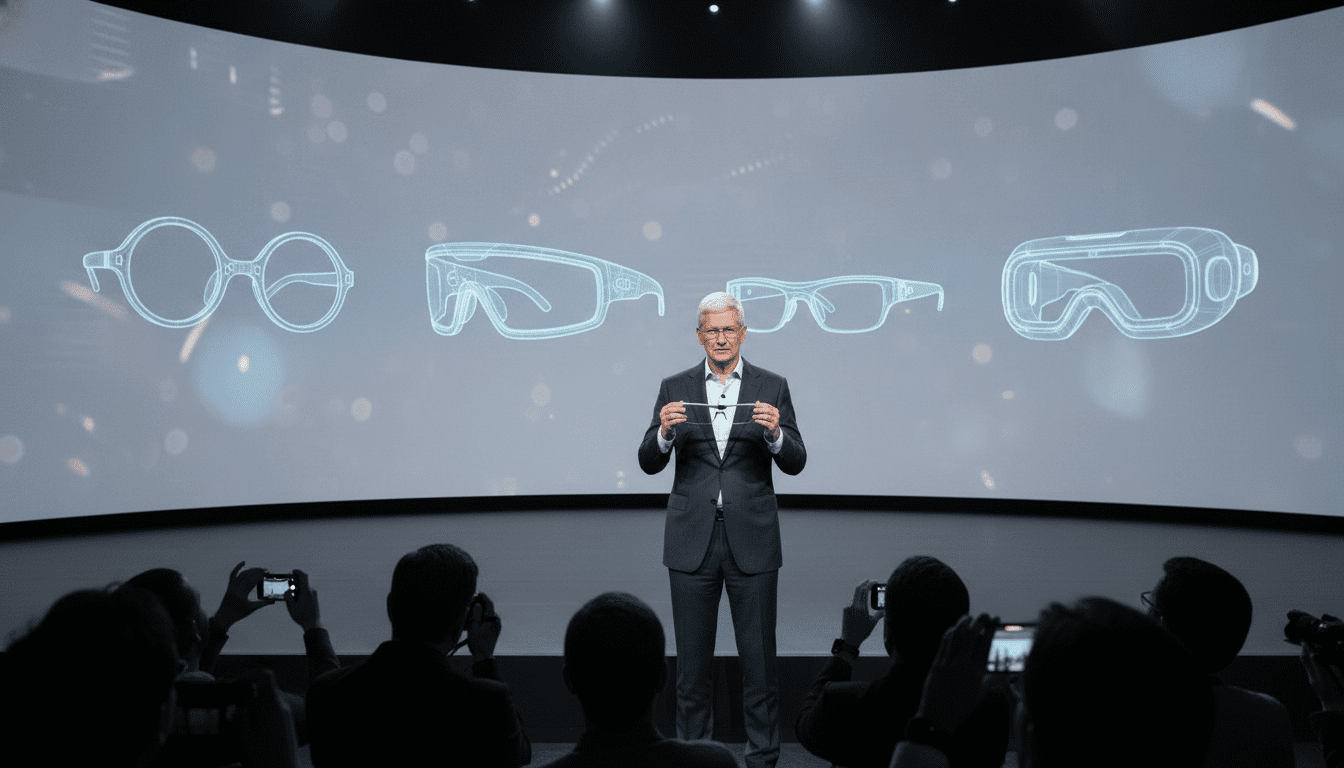
Sources indicate Apple is evaluating four distinct frame designs: a large rectangular frame, a slimmer rectangular shape similar to the style worn by CEO Tim Cook, a larger oval or circular frame, and a smaller oval or circular option. The range suggests Apple wants to cover both contemporary and classic eyeglass preferences to broaden appeal.
Color options under consideration reportedly include black, ocean blue and light brown, signaling an effort to make the glasses feel like fashionable eyewear rather than a single tech accessory. Testing multiple sizes and finishes also points to Apple’s intent to accommodate different face shapes and personal styles.
Feature set emphasizes cameras, calls and audio
Unlike earlier mixed-reality prototypes that featured integrated displays, the forthcoming Apple smart glasses are described as lacking onboard visual displays. Instead, the device’s core functions are said to include photo and video capture, phone call handling and music playback, using oval camera lenses and built-in microphones and speakers.
Apple appears to be leaning on smartphone and cloud integration to deliver smart features, allowing the glasses to offload heavy processing and visual presentation to paired iPhones. The approach reduces hardware complexity and may lower cost and power demands compared with full AR headsets.
Siri upgrade and ecosystem integration
The glasses’ hands-free features are expected to rely heavily on Apple’s voice assistant, pending the long-promised Siri rework that would offer improved conversational AI and natural-language handling. That software upgrade is widely seen as a prerequisite for delivering a seamless, voice-first experience through eyewear.
Tight integration with iOS and existing Apple services will also be central, with the glasses likely designed to sync with iPhones for calls, messaging, media streaming and possibly location-aware features. This ecosystem strategy would give Apple a clear advantage in delivering synchronized experiences across devices.
Strategic pivot from mixed-reality ambitions
The shift to a display-less, camera-focused eyewear product marks a tactical retreat from Apple’s earlier, more ambitious roadmap for multiple mixed and augmented reality devices. Those earlier plans were slowed by development delays and the muted market response to the Vision Pro, prompting a reassessment of how best to introduce wearable computing to mainstream consumers.
By prioritizing conventional eyewear aesthetics and practical features, Apple is moving toward a lower-friction entry point that mirrors successful, less complex products introduced by competitors. The company appears to be applying lessons learned from the first wave of spatial-computing hardware to refine what mainstream customers will actually adopt.
Competitive landscape and consumer positioning
The Apple smart glasses concept places the company in direct competition with existing smart eyewear, including products that pair with smartphones to handle calls and media. Apple’s advantage rests on its large installed base, brand recognition and the potential to bundle services through iCloud, Apple Music and the App Store.
Market acceptance will depend on pricing, comfort, battery life and the perceived utility of the camera and voice features. Prescription options and partnerships with optical retailers could broaden appeal, but Apple will need to address privacy and regulatory concerns related to camera-equipped eyewear in several markets.
Apple’s proposed eyewear also suggests a different go-to-market path: rather than introducing a high-priced headset to a niche audience, the company could scale incrementally with an accessory that complements the iPhone. That strategy may make it easier to iterate on the product and expand feature sets over time.
Consumer expectations and next steps
As Apple refines the final hardware and software package, observers will watch for confirmation of the reveal date, pricing details and whether Apple will ship multiple frame styles at launch. The company’s ability to deliver the promised Siri upgrade and a compelling set of ecosystem features will be critical to driving early adoption.
If Apple follows this path, the smart glasses would represent a measured entry into wearable computing that favors everyday functionality and fashion-forward design over immersive displays. The product’s success will hinge on execution across hardware, software and retail strategy, and on whether consumers embrace another Apple device as part of their daily routine.
