
Hungary election sees record turnout as voting closes and a bitter Orbán-Magyar contest heads for late-count suspense
Hungary election: High voter turnout as Viktor Orbán and Péter Magyar face off in parliamentary vote; authorities expect partial results late Sunday evening.
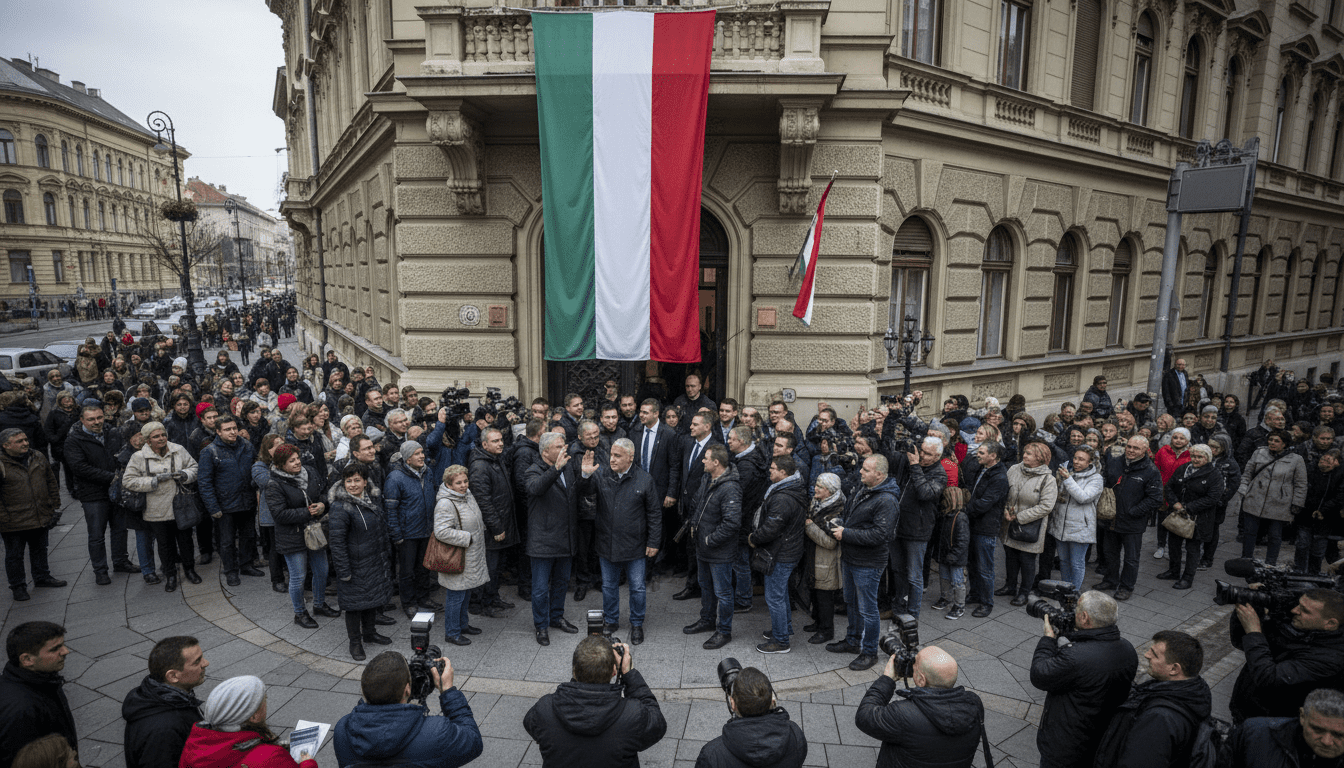
Voters in Hungary cast ballots on Sunday in a tightly contested Hungary election that closed formally at 19:00 CEST, with authorities reporting unusually high turnout and no immediate projections. The central election authority said turnout had already reached 74.23 percent two hours before polls closed, a sharp rise from the same point in 2022, and voting will remain open at polling stations where voters were still in line at closing time. The contest pits incumbent Viktor Orbán, 16 years in office, against challenger Péter Magyar of the Tisza party in a race analysts describe as the country’s most consequential since the democratic transition.
Polling Stations Closed at 19:00 CEST
Under Hungarian electoral law, polling stations are required to shut at 19:00 CEST but may stay open to serve any voters already waiting in line at that moment. Election officials confirmed that the formal closing occurred on schedule and emphasized procedures to ensure ballots already cast are secured for counting. Approximately eight million citizens were eligible to vote, according to official figures, making the logistics of a high-turnout day a central operational focus.
Election authorities did not release exit polls or immediate projections, and broadcasters warned viewers that meaningful partial results would only appear late Sunday evening. That absence of early forecasting increases suspense, leaving analysts and parties to base early assessments on turnout figures and anecdotal reports from the field.
Turnout Surpasses 2022 Midday Figures
Two hours before polls closed, the central election body reported turnout of 74.23 percent, notably higher than the 62.92 percent recorded at the same time in the 2022 parliamentary vote. Several Hungarian media outlets called the participation rate a record, though experts cautioned that a high turnout does not automatically favor either camp. Polling specialists noted that differential mobilization in urban and rural areas, as well as in regions with strong support for small parties, will shape the final outcome.
Analysts also highlighted the limited field of parties likely to enter parliament, which could amplify the effect of turnout swings in decisive constituencies. That dynamic leaves the ultimate beneficiary of the increased participation unclear until constituency counts begin.
Orbán and Magyar Make Final Appeals
Both Viktor Orbán and Péter Magyar campaigned aggressively in the final hours, urging voters to turn out. Orbán presented himself as the guarantor of national security and continuity, saying at a closing rally that he was “here to win” and stressing that the constitutional order must be respected after the vote. He framed his pitch around keeping Hungary out of the war in neighboring Ukraine, portraying his government as the protector of stability.
Magyar, the relatively new political figure leading the Tisza party, cast the vote as a choice about Hungary’s direction between East and West and promised a reset from what he described as years of corrupt governance. Speaking to supporters, he characterized the day as a “festival of democracy” and said his movement aimed to restore Hungary’s constructive ties with the European Union.
Campaign Rallies Highlight Contrasting Messages
On Saturday night, Orbán addressed roughly 2,000 supporters at the Buda Castle, emphasizing experience and a message of peace that he argued only his government could guarantee. His closing remarks appealed strongly to voters concerned about security and national sovereignty.
Magyar held a mass rally in Debrecen attended by an estimated 10,000 people, focusing on anti-corruption measures and pledging institutional renewal. The size and enthusiasm at Magyar’s events were cited by his team as evidence of momentum, though turnout distribution will determine whether that translates into parliamentary seats.
Parliamentary Math and Small-Party Dynamics
Electoral experts point to the parliamentary arithmetic as decisive: only a small number of parties are expected to cross the five-percent threshold required for representation. Polls suggest the Tisza party and Fidesz remain the dominant forces, while the right-wing Mi Hazánk (Our Homeland) could be the only other party to enter parliament and potentially act as a coalition partner for Fidesz if needed.
Left-wing, green and liberal formations either failed to mount substantial nationwide campaigns or chose not to run in some constituencies to avoid splitting the anti-Orbán vote. That strategic consolidation was intended to boost Magyar’s chances but also raises questions about the diverse representation of views in the next legislature.
What to Expect as Counts Begin
Hungary’s electoral system and the lack of exit polls mean meaningful partial results are expected only later on Sunday, when district counts feed into national tallies. Observers cautioned that early returns from rural districts or strongholds could mislead until broader data are available, and official certification will follow in the days after initial counts.
International attention is intense: commentators in Brussels and capitals across Europe are watching for signs about Hungary’s future stance within the EU and its foreign-policy alignment. Any shift in power would likely trigger rapid diplomatic and economic analysis in the region.
The outcome of this Hungary election will determine whether Viktor Orbán extends a 16-year tenure that critics call semi-authoritarian or whether Péter Magyar leads a new, pro-EU course and a campaign against corruption. Results announced late Sunday and in the days that follow will shape Hungary’s domestic politics and its role on the European and international stage.
